
Designing an organized, aesthetically pleasing living room or home office setup often comes down to managing hardware footprints and minimizing physical clutter. Compact handheld gaming devices have changed how we relax on the sofa or unwind in a cozy bedside nook, offering console-quality gaming without the massive tower PC or media cabinet footprint. However, modern game titles routinely demand 80GB to 150GB of storage space each. Standard factory drives fill up almost immediately, forcing you to delete games constantly and disrupting the relaxed atmosphere of your home entertainment zone.
Upgrading your device with the best 2230 nvme ssd for handheld gaming consoles allows you to expand your digital library while keeping your space entirely wire-free and sleek. Measuring just 22mm wide by 30mm long and operating efficiently at low power levels between 3W and 6W, these tiny drives fit directly inside your console’s internal bay. In 2026, selecting an optimal SSD requires looking closely at transfer speeds, heat management, power efficiency, and price per gigabyte to ensure your home gaming sanctuary remains fast, quiet, and reliable.
As an Amazon Associate we earn from qualifying purchases at no extra cost to you.


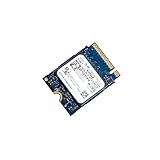


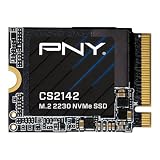

Top 3 picks at a glance
Quick Picks
| Product | Best for | Price |
|---|---|---|
| Crucial P310 2TB (CT2000P310SSD2) | Best Overall Capacity & Speed | $378.99 |
| Samsung BM9C1 Series 512GB | Best OEM Brand Reliability | $138.00 |
| Mavark KIOXIA 512GB (KBG40ZNS512G) | Best Budget Entry Option | $135.00 |
| WD SN740 512GB | Best Mid-Range TLC Performance | $179.00 |
| Fikwot FX953 1TB | Best Value 1TB Expansion | $179.99 |
| PNY CS2142 500GB | Best Compact Retail Alternative | $153.10 |
| OSCOO 1TB Graphene Heatsink | Best Thermal Dissipation | $199.99 |
| Crucial P310 1TB (CT1000P310SSD2) | Best High-Speed 1TB Drive | $185.00 |
How We Picked
To evaluate the top internal storage drives for handheld consoles, we prioritized the standard M.2 2230 physical size class (22mm width by 30mm length). We evaluated models across a broad price spectrum ranging from $135 to $378.99, analyzing theoretical read and write throughput, interface generations (PCIe Gen3 versus PCIe Gen4), and underlying flash cell technology like TLC. Because small handheld chassis offer tight thermal dissipation windows, we focused on drives that balance high-speed bandwidth with low idle power draw. Finally, we verified physical compatibility across major portable platforms, including the Steam Deck, ASUS ROG Ally, MSI Claw, Lenovo devices, and Microsoft Surface ultrabooks.
The 8 Best Picks
1. Crucial P310 2TB M.2 2230 SSD
The Crucial P310 2TB (CT2000P310SSD2) is tailored for enthusiastic gamers who want to carry an enormous game collection right on their handheld without clogging their living room setup with external drives. Utilizing PCIe Gen4 NVMe technology, this drive delivers staggering transfer rates up to 7,100MB/s. It fits seamlessly into modern portable devices like the Steam Deck, ASUS ROG Ally, and MSI Claw. It offers unparalleled speed and massive space for demanding modern AAA titles.
- Pros: Massive 2TB capacity in an ultra-compact 30mm footprint; Industry-leading sequential read speeds up to 7,100MB/s.
- Con: Premium price point at $378.99.
When to skip: Skip this option if you are working with a strict budget or only keep a few casual games installed at any given time.
2. Samsung BM9C1 Series 512GB M.2 2230 NVMe SSD
The Samsung BM9C1 Series 512GB provides solid PCIe Gen4x4 internal performance in a reliable OEM package. Built for laptops, tablets, Mini PCs, Surface devices, and handheld gaming consoles, this drive ensures fast boot times and consistent file transfers. It is ideal for users looking to replace a damaged stock internal drive with a trusted brand name without spending a fortune.
- Pros: Excellent OEM manufacturing quality and system stability; Fast PCIe Gen4x4 architecture at $138.00.
- Con: 512GB storage capacity fills up fast with modern game installs.
When to skip: Skip if you want to store a large library of massive modern games without constantly uninstalling older titles.
3. Mavark KIOXIA Internal SSD 512GB
The Mavark KIOXIA 512GB (Model KBG40ZNS512G) is an economical PCIe Gen 3 x 4 NVMe solution aimed at budget-conscious users. Designed as an OEM replacement for Dell, HP, Lenovo laptops, and portable handheld devices, it delivers consistent baseline speeds while maintaining low power consumption and cooler running temperatures inside small handheld enclosures.
- Pros: Most affordable price tag on the list at $135.00; Highly power-efficient PCIe Gen3 operation.
- Con: Restricted to older PCIe Gen3 bandwidth ceilings.
When to skip: Skip if your handheld console natively supports PCIe Gen4 and you want maximum read and write speeds.
4. WD SN740 512GB M.2 2230 NVMe PCIe 4.0 SSD
Western Digital’s SN740 512GB drive is an OEM favorite among handheld enthusiasts due to its single-sided 30mm design and high-quality TLC NAND flash memory. Operating over PCIe 4.0 Gen4 x4, it offers dependable performance for the Steam Deck, ROG Ally, and Surface Ultrabooks while staying slim enough to fit tight internal slots effortlessly.
- Pros: Single-sided TLC construction guarantees easy physical installation; Reliable PCIe 4.0 performance.
- Con: Price tag of $179.00 sits close to some 1TB alternatives.
When to skip: Skip if you prefer maximum storage capacity per dollar over single-sided TLC drive construction.
5. Fikwot FX953 M.2 2230 SSD 1TB
The Fikwot FX953 1TB NVMe SSD strikes an ideal compromise between high storage capacity and reasonable cost. Capable of read speeds up to 5000MB/s using PCIe Gen 4×4, it offers a dramatic expansion over baseline handheld storage, making it fully compatible with the Steam Deck, ASUS ROG Ally, and Microsoft Surface Pro devices.
- Pros: Generous 1TB storage expansion for $179.99; Fast read throughput up to 5000MB/s.
- Con: Brand recognition is lower compared to legacy storage giants.
When to skip: Skip if you prefer buying exclusively from original semiconductor wafer manufacturers.
6. PNY CS2142 500GB PCIe Gen4 x4 NVMe SSD
The PNY CS2142 500GB is a retail-packaged M.2 2230 drive designed for seamless hardware upgrades. Featuring a PCIe Gen4 x4 internal interface, it delivers brisk loading performance and swift operating system responsiveness for mini PCs, handheld units, and thin laptops.
- Pros: Clean retail package and consumer warranty backing; Crisp PCIe Gen4 performance.
- Con: Price of $153.10 offers modest capacity relative to cost.
When to skip: Skip if your primary goal is finding the absolute lowest price per gigabyte.
7. OSCOO 1TB M.2 2230 NVMe Gen4x4 SSD
The OSCOO 1TB M.2 2230 SSD is designed specifically for power users worried about thermal throttling in tight spaces. Reaching speeds up to 5200MB/s over PCIe Gen4x4, this drive incorporates an integrated graphene heatsink layer that actively manages thermals during sustained game loading sessions in portable consoles.
- Pros: Integrated graphene heatsink helps control operating temperatures; Strong 5200MB/s throughput with 1TB capacity for $199.99.
- Con: Heatsink layer adds slight physical thickness that requires careful insertion.
When to skip: Skip if your handheld chassis has tight, non-standard mechanical clearances that cannot accommodate added thermal layers.
8. Crucial P310 1TB M.2 2230 SSD
The Crucial P310 1TB (CT1000P310SSD2) delivers top-tier Gen4 performance in a full 1TB footprint. Capable of reaching up to 7,100MB/s read speeds, it brings maximum performance to the Steam Deck, ASUS ROG Ally, MSI Claw, and Mini PCs. It ensures quick game load times and smooth overall system responsiveness.
- Pros: Incredible read speeds up to 7,100MB/s; Exceptional speed-to-capacity value at $185.00.
- Con: Runs warmer under continuous maximum-speed data writes than lower-speed drives.
When to skip: Skip if your handheld console hardware is restricted to Gen3 interface speeds and cannot utilize the extra throughput.
Buying Guide
1. Form Factor Specs and Physical Clearance
The M.2 2230 designation refers strictly to physical dimensions: 22mm in width by 30mm in length. In compact handheld consoles and ultra-thin laptops, internal clearance is extremely limited. Pay close attention to single-sided drives versus double-sided variants. Single-sided designs place all NAND flash chips and controllers on one side of the circuit board, ensuring the drive sits flat against the motherboard without bending delicate surface-mount components.
2. PCIe Generations and Power Dissipation
PCIe Gen4 SSDs offer remarkable theoretical transfer rates ranging from 5000MB/s up to 7,100MB/s, while PCIe Gen3 drives max out around 3500MB/s. While faster speeds reduce game loading times, high-bandwidth operations require extra power, typically between 3W to 6W at peak load. If your primary goal is maximizing battery life while lounging on the sofa, a balanced Gen4 or efficient Gen3 drive offers a sweet spot between speed and power efficiency.
3. Storage Capacity versus Pricing Tiers
Prices for compact 2230 drives range from $135 for entry-level 512GB drives up to $378.99 for top-spec 2TB models. Gamers with small indie libraries can easily get by on a 500GB or 512GB drive ($135.00 to $179.00). However, if you want a complete, permanent home media library containing modern AAA titles without tethering to external hard drives, investing in a 1TB ($179.99 to $199.99) or 2TB drive ($378.99) is the most efficient choice for your setup.
Our Verdict
For gamers seeking the absolute pinnacle of capacity and speed, the Crucial P310 2TB ($378.99) stands out as the ultimate upgrade, offering up to 7,100MB/s read speeds and enough space for massive game libraries. If you are looking for the optimal balance between performance and price, the Crucial P310 1TB ($185.00) and the Fikwot FX953 1TB ($179.99) deliver fantastic PCIe Gen4 responsiveness. Budget-conscious builders looking for a clean, affordable baseline replacement can turn to the Mavark KIOXIA 512GB ($135.00) or Samsung BM9C1 512GB ($138.00) to keep their entertainment area neat and clutter-free.
FAQ
Will a 2230 SSD fit all handheld gaming consoles?
Most popular handheld gaming consoles like the Steam Deck, ASUS ROG Ally, and MSI Claw use the standard M.2 2230 form factor (22mm x 30mm). However, always double-check your device’s exact hardware manual before purchasing, as some devices require specific single-sided drives for proper clearance.
Do higher speed PCIe Gen4 drives drain handheld batteries faster?
While PCIe Gen4 drives draw slightly more wattage (up to 6W under maximum load) than older Gen3 drives, they also complete read and write tasks much faster. This allows the SSD to return to an idle low-power state quickly, resulting in minimal impact on real-world battery life during typical home gaming sessions.
Is an internal SSD upgrade better than a MicroSD card?
Yes, an internal NVMe SSD upgrade is significantly faster than any MicroSD card. SSDs offer load speeds between 3500MB/s and 7,100MB/s compared to roughly 100MB/s on top-tier MicroSD cards, resulting in much faster load times, smoother texture streaming, and quicker game updates.
How do thermal pads or graphene heatsinks help in compact setups?
Graphene heatsinks, like the one found on the OSCOO 1TB drive, help spread heat across the drive’s surface area. In small handheld chassis with limited airflow, effective heat dissipation prevents thermal throttling, maintaining peak transfer speeds during long gaming sessions in your home environment.


