
Every PC user eventually faces the same moment: a drive fails, a file gets corrupted, or a ransomware attack encrypts everything in an afternoon. An external backup drive is the cheapest insurance policy in computing, yet the category is cluttered with products that differ only slightly in price, capacity, and bundled software. Choosing the wrong one means either overpaying for features you will never use or saving a few dollars only to discover too late that your only copy of a project folder lived on a drive with no rescue coverage and no encryption.
The eight drives compared here span from a half-terabyte budget stick under forty dollars to an eight-terabyte desktop unit near two hundred seventy. They cover USB-A and USB-C interfaces, portable and desktop form factors, and a range of security and recovery extras. What separates a good backup drive from a mediocre one comes down to three things: capacity that matches your actual workload, an interface your devices support without friction, and whether the bundled software or service gives you a real safety net beyond raw storage.
As an Amazon Associate we earn from qualifying purchases at no extra cost to you.



Top 3 picks at a glance
Quick Picks
| Product | Best for | Price |
|---|---|---|
| Seagate Portable 1TB | First-time backup users | $119.80 |
| Seagate Portable 5TB | Large media and game libraries | $219.96 |
| WD Elements 2TB | Simple plug-and-play | $135.50 |
| Seagate Portable 4TB | Mid-range portable capacity | $189.98 |
| UnionSine 500GB Ultra Slim | Lowest-cost emergency backup | $37.46 |
| WD My Passport 2TB | Security-conscious users | $133.90 |
| Seagate One Touch 8TB | Desktop bulk storage | $269.99 |
| WD Elements 5TB | Portable high-capacity WD | $214.10 |
How We Picked
We narrowed this category on four criteria drawn from published specs and recurring owner feedback. First, capacity-to-price ratio: we calculated cost per terabyte to flag which drives actually deliver value versus those that charge a premium for brand alone. Second, interface compatibility: whether the drive connects natively to the platforms you own, or whether you need adapters and workarounds. Third, included extras: Rescue or Recovery services, bundled encryption, and backup software add measurable long-term value or are pure marketing. Fourth, form factor: a drive you can actually carry and use without a wall adapter beats one that looks better on a shelf but stays in the closet.
The 8 Best Backup Drives External in 2026
Seagate Portable 1TB
This is the drive most people should start with if they have never backed up anything before. USB 3.0 means it connects to a PC, Mac, PlayStation, or Xbox without fuss, and the 1-Year Rescue Service gives you a path to data recovery if the drive itself fails. Owners consistently praise how little setup it requires. The real limitation is the one-terabyte ceiling: a single high-resolution video project or a few game installs will fill it. Skip this if your workload exceeds a couple hundred gigabytes regularly; the 4TB or 5TB siblings make more sense at slightly higher cost.
- Compatible across four major platforms with a single USB 3.0 cable
- 1-Year Rescue Service included at no extra charge
- 1TB capacity becomes a bottleneck quickly for creative or gaming users
Seagate Portable 5TB
Five terabytes of portable storage for just over two hundred dollars positions this as the volume leader in the Seagate lineup. It serves well for photographers with large RAW archives, gamers keeping multiple titles installed, or anyone who wants to mirror an entire desktop drive in one session. The USB 3.0 connection covers PC, Mac, PS4, and Xbox. Owner feedback highlights the generous capacity as the main draw, though some note that sustained transfers on USB 3.0 mechanical drives take time with datasets this large. Skip it if your machines are all USB-C only and you want native connection without an adapter.
- Highest portable capacity in this roundup at a reasonable price point
- 1-Year Rescue Service included
- No native USB-C connector; requires an adapter for modern laptops
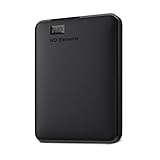
WD Elements 2TB
For anyone who wants a drive that does exactly one job, this is it. USB 3.2 Gen 1 keeps it current with most PCs and Macs without needing drivers or installation software. The plug-and-play experience means you unbox, connect, format if needed, and start copying. Owners appreciate the no-frills approach. The gap here is security: there is no password protection, no hardware encryption, and no bundled backup software. If you store tax documents, medical records, or anything sensitive, look elsewhere. The Elements line suits users who treat backup drives as disposable data vessels rather than vaults.
- USB 3.2 Gen 1 interface with true plug-and-play setup
- Consistently one of the better value propositions per terabyte in the WD range
- No encryption or password protection built in
Seagate Portable 4TB
The four-terabyte model sits in an interesting middle ground. It offers more headroom than the 1TB without reaching the price of the 5TB, and it includes the same 1-Year Rescue Service and USB 3.0 compatibility across PC, Mac, Xbox, and PlayStation. For a small team or a single content creator managing a moderate project library, four terabytes is a practical sweet spot. The SRD0NF1 model number appears in listings with slightly different shell designs, so verify you are getting the portable variant. Skip this if you can find the 5TB at a similar price, since the extra capacity at comparable cost makes the 5TB the better deal.
- Balanced capacity for mid-scale backup needs
- 1-Year Rescue Service and broad platform compatibility
- Cost per terabyte is less favorable than the 5TB model
UnionSine 500GB Ultra Slim
At under forty dollars, this is the lowest-cost external drive in our comparison and by a wide margin. The ultra-slim form factor slides into a laptop bag without adding noticeable bulk, and USB 3.0 keeps transfer times acceptable for the small payloads this capacity is designed for. It serves well as a secondary shuttle drive or a bare-minimum document backup. The downsides are obvious: five hundred gigabytes is tight by any standard, and there is no rescue service or brand-level warranty comparable to Seagate or WD. Skip this entirely if your data exceeds a basic document and photo collection, or if you cannot tolerate the risk of a lesser-known brand failing without recovery support.
- Ultra-slim profile and the lowest price in this roundup
- USB 3.0 interface for reasonable transfer speeds at small file sizes
- Limited to 500GB with no bundled recovery service
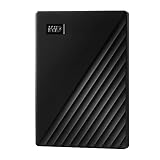
WD My Passport 2TB
The My Passport exists to close the security gap that the Elements line leaves open. Bundled backup software includes ransomware defense and password protection, which means your backed-up files are encrypted and locked even if the physical drive falls into the wrong hands. USB 3.1 compatibility keeps it current on modern systems. At a price slightly under the Elements 2TB, it is one of the few drives here where the security extras cost you nothing extra. Owner reviews frequently cite the software layer as the reason to pay for this model over the Elements. Skip it if you already run your own encryption toolchain and want the absolute lowest price for raw storage.
- Ransomware-protected backup software and hardware password lock included
- USB 3.1 compatibility for current-generation ports
- Marginally more expensive than the Elements 2TB for the same capacity
Seagate One Touch 8TB
This is the only desktop-class drive in our list, and it is also the highest-capacity option. Eight terabytes of storage in a desktop form factor suits creative studios, small offices, or home users who want to archive years of footage, music, and project files in one location. USB-C compatibility with Windows and macOS means it connects to current laptops without adapters, and Rescue Recovery is included. The tradeoff is mobility: this drive needs a dedicated desk space and typically relies on its own power supply rather than bus power alone. Skip it if you need something portable that lives in a bag between locations.
- Largest capacity in this roundup with USB-C native connectivity
- Rescue Recovery service included
- Desktop form factor; not designed to travel in a laptop sleeve
WD Elements 5TB
The portable five-terabyte version of the Elements line undercuts its Seagate rival by about six dollars while delivering the same capacity and the same philosophy: plug it in and start copying. USB 3.2 Gen 1 ensures broad compatibility, and the no-software approach keeps the experience simple. It is the drive for someone who needs a lot of space on the go but has no interest in managing encryption keys or backup schedules. Owner feedback echoes the same themes as the smaller Elements model: reliable, basic, no surprises. Skip it if you need password protection or a recovery service, since neither is included at this tier.
- Competitive price for five terabytes of portable storage
- True plug-and-play with no bundled software to manage
- No security features or rescue recovery service included
Buying Guide
Match Capacity to Your Actual Data, Not Your Worst Case
The most common buyer mistake is purchasing the smallest drive available because it is cheapest, then filling it within weeks and being forced to upgrade at full price. Open your file explorer, check the total size of the folders you want to protect, and double that number to account for growth over the next two or three years. In this roundup, the cost per terabyte drops noticeably at the 4TB and 5TB tiers, so the premium for a larger drive is usually justified within the first year of use. Only choose the 1TB or 500GB options if your total backup footprint is genuinely small and stable.
Interface Compatibility Determines Real-World Usability
USB 3.0, USB 3.1, and USB 3.2 Gen 1 all deliver the same five-gigabit-per-second bandwidth; the naming confusion is a marketing artifact. What matters is the physical connector on your devices. If every machine you own has USB-C ports, a drive with USB-A and no included cable adapter creates friction. The Seagate One Touch 8TB stands out here for native USB-C, while every other drive in this list uses USB-A. Decide what your daily machines have before worrying about speed differences, because none of these mechanical drives will bottleneck a USB 3.x connection in normal backup workloads.
Security Extras Have a Real Cost of Ownership
Password protection and ransomware-aware backup software, like what the WD My Passport bundles, add genuine protection against physical theft or malware that encrypts your primary drive. But they also add a management burden: forgotten passwords lock you out of your own files permanently. Rescue and Recovery services, offered by all Seagate drives in this list, are valuable insurance but require you to act within the one-year window and send the drive away for recovery, which means downtime. Decide whether you prefer software-level security you manage yourself or a service-level safety net the manufacturer handles.
Our Verdict
The WD My Passport 2TB is our top overall pick. It balances a competitive price, current USB 3.1 compatibility, and the only meaningful security bundle in this group, making it the smartest default for anyone who wants their backups to survive theft, ransomware, or casual misfortune. For the budget pick, the UnionSine 500GB wins on price alone if your needs are genuinely small and you accept the shorter warranty horizon. However, if your priority is raw capacity per dollar and you already manage your own encryption, the WD Elements 5TB edges out the Seagate 5TB by a few dollars and delivers the same portable capacity with a slightly newer interface standard.
FAQ
Can I use an external backup drive with both a PC and a Mac?
Yes, but you may need to reformat the drive to exFAT or NTFS depending on which operating system you use most often. The Seagate and WD models in this list all work with both platforms out of the box, typically formatted for one with instructions for reformatting to the other included.
What is the difference between USB 3.0 and USB 3.2 Gen 1?
They are functionally identical. USB 3.0 was renamed to USB 3.2 Gen 1 by the standards body, but both deliver five gigabits per second. The practical difference is zero for backup purposes, since mechanical hard drives cannot saturate that bandwidth anyway.
Do I need a rescue recovery service included with my backup drive?
It depends on how critical your data is. Rescue services provide professional data recovery at no extra cost if the drive fails, but they add a one-year limit and require shipping the drive to a lab. If you already maintain two independent backups, the service is less essential. If this drive is your only copy, it is worth selecting a model that includes it.
Is a 500GB drive still useful in 2026?
For a document-only backup or as a temporary file shuttle between machines, it fills a role. For any workload involving photos, video, or application backups, it is realistically too small. The UnionSine 500GB is best understood as a minimal-risk, low-cost option rather than a primary backup solution.


