
A desktop PC, a NAS, a network switch — none of them handle a sudden power loss gracefully. A bad shutdown corrupts files, damages hard drive platters, and leaves your router offline until you notice. The right UPS power supply bridges that gap long enough to save your work and shut down cleanly, or simply keeps your network alive through a five-minute blip.
What separates a worthwhile unit from a mediocre one comes down to three things: the waveform it produces, how much runtime it actually delivers under load, and whether the surge protection is genuinely certified or just a marketing checkbox. The lineup below spans from a $59 standby box suitable for a single router to a $249 lithium-ion unit that will outlive several lead-acid competitors combined. Picking the right one means matching capacity to the specific devices you cannot afford to lose.
As an Amazon Associate we earn from qualifying purchases at no extra cost to you. Product prices and availability are accurate as of the date shown and are subject to change.


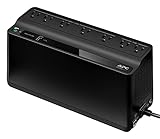


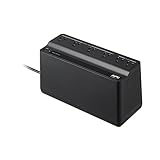

Top 3 picks at a glance
Quick Picks
| Product | Best for | Price |
|---|---|---|
| CyberPower CP1500PFCLCD | Gaming PCs and workstations | $239.95 |
| CyberPower ST425 | Single-router backup | $59.95 |
| APC BE600M1 | Entry-level computer backup | $83.99 |
| CyberPower EC850LCD | Home office desks | $119.95 |
| CyberPower CP1500AVRLCD3 | Multi-outlet AVR protection | $199.95 |
| CyberPower ST625U | Small-form-factor PCs | $79.95 |
| APC BE425M | Modems and smart home hubs | $62.50 |
| GOLDENMATE 1000VA/800W | Long-term weight savings | $249.99 |
How We Picked
We compared published capacity ratings, battery chemistry, waveform type, outlet counts, AVR availability, and real-world owner feedback across hundreds of reviews. The four criteria that matter most in this category are: sufficient wattage headroom for your actual connected load, a pure sine wave if your power supply uses active PFC, runtime that survives the shutdown process, and certified surge protection that covers data lines. Price-to-capability ratio weighted everything else.
The 8 Best UPS Power Supply in 2026
CyberPower CP1500PFCLCD PFC Sinewave
This is the default recommendation for anyone running a modern gaming PC or workstation. The 1000W pure sine wave output means active-PFC power supplies receive clean, compatible power instead of stepped approximations that can trip protection circuits. Twelve outlets give you room for a monitor, external drive, and peripheral hub without chaining power strips.
- Pro: Pure sine wave output is genuinely compatible with modern power supplies
- Pro: AVR corrects brownouts and over-voltages without draining the battery
- Con: Mini-tower chassis is heavier than standby-only alternatives
Skip it if your connected devices draw under 300W total and you only need a router to stay online; you are overpaying for capacity you will never use.
CyberPower ST425 Standby UPS
At under $60, this 425VA/250W standby unit exists for one job: keeping a modem and router alive through brief outages. No line-interactive switching, no AVR, no fancy waveform — just a sealed battery that kicks in during a transfer window owners report as acceptable for networking gear.
- Pro: Lowest entry price for legitimate battery backup
- Pro: Compact enough to hide behind a shelf or inside a cabinet
- Con: Simulated waveform may cause hum or instability in sensitive electronics
Skip it for any computer with an active-PFC PSU; the stepped output is the wrong tool for that job.
APC BE600M1 Battery Backup
APC’s 600VA/330W model sits in a practical middle ground for single-computer setups. Owner feedback consistently praises the PowerChute software for graceful shutdowns and the eight-outlet layout. It is not a high-capacity unit, but 330W covers most office desktops with a monitor connected.
- Pro: PowerChute personal edition integrates cleanly with Windows
- Pro: Eight outlets with four battery-backed and four surge-only
- Con: Simulated sine wave limits compatibility with sensitive audio or workstation hardware
Skip it if you need more than 330W of protected runtime or run equipment that demands pure sine wave input.
CyberPower EC850LCD Ecologic
The 850VA/480W Ecologic targets home-office users who want an LCD display showing load, battery status, and estimated runtime without paying workstation prices. The Eco-mode bypasses battery power entirely when the load is low, extending the life of the sealed lead-acid pack in a room that rarely sees outages.
- Pro: LCD readout makes capacity decisions transparent
- Pro: Eco-mode reduces trickle wear on the battery during quiet stretches
- Con: Five battery-backed outlets is tight once a PC, monitor, and speaker set are plugged in
Skip it if you already know your next upgrade needs 800W+ of runtime or pure sine wave compatibility.
CyberPower CP1500AVRLCD3 Intelligent LCD
Same 1500VA/1000W envelope as the PFCLCD but with a simulated rather than pure sine wave, saving roughly $40. For power supplies that tolerate stepped approximations, the AVR and twelve outlets make this a capable mid-range choice. The LCD panel mirrors the EC850’s visibility at a higher capacity tier.
- Pro: 1000W rated output with automatic voltage regulation
- Pro: Twelve outlets eliminate the need for a supplemental surge strip
- Con: Simulated waveform may conflict with active-PFC designs under heavy load
Skip it if your motherboard reports a PSU compatibility warning or you run audio equipment that hums on non-sine input.
CyberPower ST625U Standby UPS
The 625VA/360W ST625U is the ST425’s larger sibling, adding roughly 100W of headroom for a small-form-factor PC and monitor pair. Standby topology means the battery only engages during an outage, so efficiency is high and heat output is negligible.
- Pro: Adequate wattage for sub-300W mini-ITX builds
- Pro: Standby design runs cool and silent during normal operation
- Con: Only three battery-backed outlets force daisy-chaining for peripheral protection
Skip it if your system idles above 250W or you need USB-connected shutdown signaling.
APC BE425M Battery Backup
APC’s smallest model handles a single modem and router with no pretension. The 425VA/225W rating and four-outlet layout fit under a desk with room to spare, and PowerChute still works here for scheduled shutdowns even at this capacity tier.
- Pro: Brand reliability and firmware support from a long-standing manufacturer
- Pro: Software shutdown utility included even at the lowest price point
- Con: Two battery-backed outlets are limiting if you want to cover a NAS alongside networking
Skip it for anything beyond networking gear; 225W disappears fast once a small desktop enters the equation.
GOLDENMATE 1000VA/800W Lithium UPS
Lithium-ion cells change the math here. At roughly half the weight of equivalent lead-acid units and with a cycle life measured in thousands of charges rather than hundreds, this 1000VA/800W model justifies its $249 price for anyone who plans to keep a UPS in service for a decade. The white finish suits modern desk aesthetics.
- Pro: Lithium cells dramatically reduce chassis weight and long-term replacement cost
- Pro: 800W rating with simulated sine wave covers most mid-range desktops
- Con: Simulated waveform means active-PFC systems should still prioritize the CyberPower PFCLCD
Skip it if your connected load exceeds 700W under stress or you require pure sine wave output for certified hardware compatibility.
Buying Guide
Waveform Type
Standby and line-interactive units typically produce a simulated or stepped sine wave. Modern power supplies with active power factor correction circuits prefer a pure sine wave and can reject, overheat, or shut down on stepped approximations. If your desktop uses an 80 Plus Gold or Platinum rated PSU, match it with a pure sine wave UPS power supply or verify compatibility in the manufacturer’s support documentation.
VA and Wattage Headroom
Published wattage ratings are maximum sustained output, not comfortable operating levels. Add up the nameplate ratings of everything you plan to plug into battery-backed outlets, then select a unit rated at least 25 percent above that total. Running a 300W load on a 330W-rated battery means you get seconds of runtime instead of minutes.
AVR and Outlet Segmentation
Automatic voltage regulation corrects minor over- and under-voltages without switching to battery, preserving charge cycles over the unit’s lifetime. Not every outlet on a UPS is battery-backed; many models split protection into battery-plus-surge and surge-only groups. Map your critical devices to the correct group before installing the unit, or you will discover after the fact that your NAS was plugged into a surge-only socket.
Our Verdict
The CyberPower CP1500PFCLCD is the top pick: pure sine wave, 1000W capacity, AVR, and twelve outlets make it the safest default for any PC owner who wants one UPS power supply that handles every scenario without compatibility caveats. For a budget pick, the CyberPower ST425 at $59.95 covers networking gear with genuine battery backup and nothing else — which is exactly what most people need from a router shelf. The GOLDENMATE lithium model wins outright if you are replacing a unit that has been on your shopping list for years and want the longest service life without periodic battery swaps.
FAQ
Can a UPS power supply damage a computer if the waveform is wrong?
It will not physically damage components, but an active-PFC power supply may shut off during a simulated-sine transfer event, defeating the purpose entirely. Verify your PSU’s compatibility list or choose pure sine wave output when in doubt.
How long do UPS batteries last before replacement?
Sealed lead-acid cells typically deliver three to five years under normal use, depending on ambient temperature and cycle count. Lithium-ion units, like the GOLDENMATE model above, are rated for several thousand cycles and can remain in service for a decade without replacement.
Do I need UPS power supply protection for my router?
If your work or security system depends on a continuous network connection, yes. Even a five-minute outage leaves you offline until the router reboots and reacquires its connection. A $59 standby unit solves this without affecting your computer choice.
What is AVR and do I need it?
Automatic voltage regulation corrects small input fluctuations — brownouts, spikes, and surges within a defined band — without using battery power. If your local grid is unstable or you experience frequent dimming of lights, AVR extends battery life and protects equipment from conditions too minor to qualify as a full outage.
Related guides
- Best Allavino Wine Fridge in 2026: Top Picks Compared: 8 Tested (2026)
- Best Makeup Setting Spray in 2026: How the Top Models Compare: 8 Tested (2026)
- Best Cedarwood Essential Oil in 2026: How the Top Models Compare: 8 Tested (2026)
- Best Good Foundation in 2026: Top Picks for Every Budget: 8 Tested (2026)


