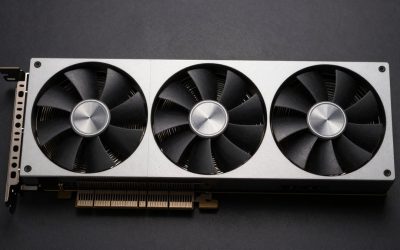
The RX 6700 is the better buy for most gamers in 2026. It roughly matches the GTX 1080 Ti in older games, tends to pull ahead in newer DirectX 12 and Vulkan titles, draws 75 W less power, and can run games that require ray tracing hardware, which the 1080 Ti cannot. The GTX 1080 Ti only makes sense if it is clearly cheaper and you mainly play older DirectX 11 games, where its brute-force design still holds up well.
The GTX 1080 Ti was Nvidia’s Pascal flagship in March 2017, at $699. It is arguably one of the longest-lived high-end GPUs ever made. The RX 6700 arrived in June 2021 as a partner-only, cut-down RDNA 2 card, sitting between the RX 6600 XT and RX 6700 XT. Both cards are far from current hardware, which now means the RTX 50 series, Radeon RX 9000 and Intel Arc B570/B580. On the used market they often appear at similar prices, which is why the comparison still comes up.
As an Amazon Associate we earn from qualifying purchases at no extra cost to you.


Our Top Picks
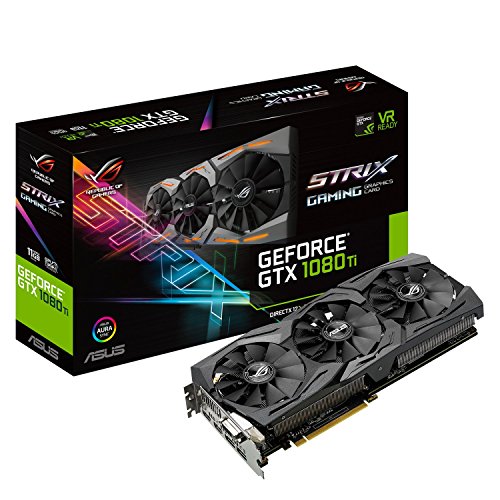


Top 3 picks at a glance
The Specs Compared
| Specification | GeForce GTX 1080 Ti | Radeon RX 6700 |
|---|---|---|
| Architecture / process | Pascal, 16 nm | RDNA 2.0, 7 nm |
| Release date | 10 March 2017 | 9 June 2021 |
| Launch MSRP | $699 | No reference MSRP listed (partner cards only) |
| Shader units | 3584 CUDA cores | 2304 stream processors |
| Boost clock | 1582 MHz | 2450 MHz |
| VRAM | 11 GB GDDR5X | 10 GB GDDR6 |
| Bus / bandwidth | 352-bit / 484.4 GB/s | 160-bit / 320.0 GB/s |
| Cache | 2.75 MB L2 | 3 MB L2 + 80 MB Infinity Cache |
| Interface | PCIe 3.0 x16 | PCIe 4.0 x16 |
| Board power | 250 W | 175 W |
| Power connectors | 1x 6-pin + 1x 8-pin | 1x 8-pin |
| Length / width | 267 mm, 2-slot | 267 mm, 2-slot |
| Outputs | 1x HDMI 2.0, 3x DP 1.4a | 1x HDMI 2.1, 2x DP 1.4a, 1x USB-C |
The 1080 Ti wins on raw numbers: more shaders, a 352-bit bus and higher bandwidth. The RX 6700 makes up the difference with clocks nearly 900 MHz higher, a much newer shader design and an 80 MB Infinity Cache. The architectural gap matters most in modern engines built around DirectX 12 Ultimate features that Pascal never supported.
Raster Performance: Old Games vs New Games
Aggregated benchmark data puts the two cards almost level overall. One comparison site has the RX 6700 just 1% ahead across its combined benchmarks. Individual games show a clear pattern, though. The 1080 Ti does well in older DirectX 11 titles such as GTA V. The RX 6700 tends to lead in newer DirectX 12 games such as Shadow of the Tomb Raider, sometimes by large margins at 1080p. Data attributed to TechPowerUp puts the RX 6700 within a few percent of the RTX 2080 Super. The GTX 1080 Ti sits closer to RTX 2070 Super level in most modern review suites.
Putting this together, a reasonable expectation in 2026 is:
- Older DX11 games: roughly even, and sometimes the 1080 Ti leads by 10-20%
- Modern DX12/Vulkan games: RX 6700 about 5-20% faster, depending on the engine
- 4K: the 1080 Ti’s wide bus narrows the gap, but neither card is a real 4K card today
In recent demanding titles at 1080p high, expect roughly 55-85 FPS from the RX 6700. The 1080 Ti is somewhat lower in newer engines. Frame rates vary with settings, CPU and game patch.
Missing Features on Pascal
This is the main reason the comparison tilts toward the RX 6700. The GTX 1080 Ti lacks:
- Hardware ray tracing. Games that require it, such as Indiana Jones and the Great Circle and Doom: The Dark Ages, will not run on the 1080 Ti.
- Mesh shaders and the full DirectX 12 Ultimate feature set. Some modern engines, Alan Wake 2 being an early example, run noticeably worse on hardware without mesh shaders.
- DLSS. DLSS needs Tensor cores, which Pascal does not have. The 1080 Ti can still use FSR and Intel XeSS in games that support them.
Driver support is also winding down. Nvidia announced that its 580 driver branch is the last to include Game Ready support for Pascal, Maxwell and Volta GPUs, with security updates continuing for a limited period after that. New games will get no Pascal-specific optimizations from here on.
The RX 6700 supports DirectX 12 Ultimate, hardware ray tracing (modest by today’s standards), FSR 3.1 with frame generation, and AMD Fluid Motion Frames 2 in the driver. It does not officially support FSR 4, which is built for RDNA 4. RT performance is limited: Tom’s Hardware’s testing had the RX 6700 about 10% behind the RTX 3060 with ray tracing on. Still, it can run RT-mandatory games at 1080p with reasonable settings, and the 1080 Ti cannot start them at all.
VRAM: 11 GB vs 10 GB
Here the 1080 Ti has a small, real advantage. Its 11 GB of GDDR5X is slightly more than the RX 6700’s 10 GB, and both are comfortably above the 8 GB that limits many current cards. In practice both handle 1080p high textures and most 1440p games without running out of memory. At 1440p with ultra texture packs, the extra gigabyte may help in a few titles, but it rarely decides the comparison.
Power and PSU Calculation
The power gap is significant: 250 W against 175 W, with a 6-pin plus 8-pin connector on the 1080 Ti against a single 8-pin on the RX 6700. Using GPU board power + CPU + about 150 W headroom:
- GTX 1080 Ti + 125 W CPU: 250 + 125 + 150 = 525 W, so use a quality 600-650 W unit
- RX 6700 + 125 W CPU: 175 + 125 + 150 = 450 W, so a quality 550 W unit is enough
For someone gaming 20 hours a week, a 75 W difference works out to about 78 kWh a year, which is a modest but real cost depending on local electricity rates. The bigger practical benefit is lower heat and noise, especially in small cases.
Both cards are listed at 267 mm and dual-slot, so case fit is similar. Partner 1080 Ti models with large triple-fan coolers can exceed 300 mm. The Founders Edition 1080 Ti uses a blower cooler that exhausts out the back but runs loud under load.
Used-Market Reality
Both cards are only sold used now. GTX 1080 Ti cards usually go for around $120-$180, depending on cooler and condition. RX 6700 10GB cards usually sell for around $170-$240. When buying a 1080 Ti, remember that many units are seven to nine years old. Fans, thermal paste and thermal pads may need attention, and some were used for mining. Ask for a short stress test showing temperatures. Check RX 6700 listings carefully, since sellers sometimes mix it up with the RX 6700 XT.
Pick X If / Pick Y If
| Priority | GTX 1080 Ti | RX 6700 |
|---|---|---|
| New AAA releases (2024-2026) | Limited; some will not run | Better choice |
| Older DX11 library at 1080p/1440p | Good, if cheap | Also good |
| Ray-traced or RT-mandatory games | Not supported | Supported (modest RT) |
| Lower power / quieter PC | 250 W | 175 W, better |
| Long-term driver support | Ending | Ongoing |
| Lowest possible spend | Usually cheaper used | Costs more but lasts longer |
The GTX 1080 Ti has had a remarkable run, but in 2026 its missing features matter more than its raw power. The safer pick for anyone playing current games is the RX 6700. The 1080 Ti remains a fine budget card for older libraries, as long as the price reflects its age.
Frequently Asked Questions
Is the RX 6700 faster than the GTX 1080 Ti?
Overall they are close, and aggregated benchmarks show only a percent or two between them. In modern DirectX 12 and Vulkan games the RX 6700 is usually ahead, while the GTX 1080 Ti can still lead in some older DirectX 11 titles. The more important difference is feature support, not raw speed.
Can the GTX 1080 Ti run games that require ray tracing?
No. The GTX 1080 Ti has no ray tracing hardware, so games with mandatory RT, like Indiana Jones and the Great Circle and Doom: The Dark Ages, will not run. The RX 6700 has RDNA 2 ray accelerators and meets those requirements, though at modest settings.
Is the GTX 1080 Ti still getting driver updates?
Nvidia has said its 580 driver branch is the last with Game Ready support for Pascal cards like the GTX 1080 Ti. Security updates continue for a limited time, but new game optimizations will not come to Pascal. That is a strong reason to prefer a newer card for current games.
What PSU do I need for a GTX 1080 Ti?
A quality 600-650 W power supply is recommended with a typical gaming CPU. The card draws up to 250 W and needs one 6-pin and one 8-pin PCIe connector. The RX 6700 can run on a good 550 W unit with a single 8-pin.
Can the GTX 1080 Ti use DLSS or FSR?
The GTX 1080 Ti cannot use DLSS because it lacks Tensor cores. It can use AMD FSR (including FSR 3 frame generation in supported games) and Intel XeSS, which run on most GPUs. These help it stay playable in newer titles at 1080p and 1440p.
Related guides
More from Amazon
Programs that pair well with the guide above. Offers and eligibility are set by Amazon and may change.
A free business account with business pricing and bulk-buying tools for work, shop or home office.
Create a business accountFree shipping on eligible items, Prime Video and more. Eligible new members can start with a free trial.
Start a Prime free trialAudiobooks and podcasts to listen to on the go. Eligible new members can start with a free trial.
Try Audible freeAd-free music streaming. Eligible new subscribers can start with a free trial.
Try Music Unlimited freeAs an Amazon Associate we earn from qualifying purchases.