
When Intel dropped the Core Ultra 9 285K, the first wave of intel 285k review articles read like eulogies. Multithreaded gains were modest over the 14th-gen chips they replaced, and gaming benchmarks showed the 285K trailing its own predecessor in several titles. That was the reality, and pretending otherwise would be dishonest.
What emerged after the initial launch window is a more nuanced picture. BIOS updates, improved scheduler handling, and aggressive pricing shifted the value equation. The 285K stopped being the chip you bought for raw frame rates and became the chip you bought for productivity throughput at low power. Choosing the right one now means understanding which workload you actually run, whether your motherboard platform locks you into a dead socket, and whether saving a hundred dollars on a cheaper SKU costs you cores you will use within eighteen months.
As an Amazon Associate we earn from qualifying purchases at no extra cost to you.


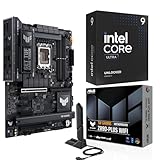


Top 3 picks at a glance
Quick Picks
| Product | Best for | Price |
|---|---|---|
| Intel Core Ultra 9 285K | Balanced productivity build | $498 |
| Intel Core Ultra 7 270K Plus | High-core value seeker | $299.82 |
| Intel Core Ultra 9 285K + Mavark Pen Light | Creator bundle buyer | $769 |
| Intel Core Ultra 7 265KF | Budget gaming build | $284 |
| 285K + TUF Gaming Z890-Plus Bundle | One-stop Z890 platform | $859.99 |
| 285K + MAG Z890 Tomahawk Bundle | Platform bundle with better VRM | $859.99 |
| Intel Core i7-14700K | Upgrade from older Intel platform | $365.99 |
| Intel Core i9-14900K | Legacy LGA 1700 gaming | $459 |
How We Picked
We evaluated each option on four criteria that actually determine your experience: multithreaded throughput relative to power draw, gaming frame rates after post-launch firmware fixes, platform longevity (whether the socket supports future CPU upgrades), and real-world pricing at the time of writing. A chip that scores well on benchmarks but costs more than a faster alternative fails the value test. We also weighed bundled availability, because for many buyers the motherboard is as important a purchase decision as the processor itself.
The 8 Best Intel 285K Review in 2026
Intel Core Ultra 9 Processor 285K
The 285K is the reference point for any intel 285k review because it defines what Arrow Lake delivers at the top of the stack. Twenty-four cores across eight P-cores and sixteen E-cores push multithreaded productivity hard, and its 5.7 GHz peak gives it respectable single-thread speed once BIOS optimizations are applied. The real win is power efficiency: it delivers competitive rendering throughput at dramatically lower wattage than the 14900K it replaces.
- Pro: Excellent multithreaded performance per watt
- Pro: Unlocked multiplier for easy overclocking
- Con: Gaming performance still trails the i9-14900K in several titles
Skip this if your workload is exclusively gaming and you already own a fast LGA 1700 board.
Intel Core Ultra 7 Processor 270K Plus
This is the sleeper SKU that makes the 285K look overpriced for anyone who does not need 5.7 GHz. With the same 24-core layout and a 5.5 GHz ceiling, it delivers nearly identical multithreaded scores at roughly sixty percent of the price. For content creators who render overnight and do not care about the last fifty MHz, this is the rational purchase.
- Pro: Same core count as the 285K at a fraction of the cost
- Pro: Unlocked, so moderate overclocking recovers most of the clock gap
- Con: Lower boost clock means slightly worse single-thread responsiveness in latency-sensitive apps
Skip this if you run applications that scale primarily off a single core and need every available MHz.
Intel Core Ultra 9 285K Arrow Lake with Mavark Pen Light
A bundle play that targets digital artists and streamers who want a pen display alongside their new chip. The processor itself is the same 285K silicon, so performance matches the standalone unit exactly. The $769 price reflects the pen accessory, which means you are paying roughly $270 for a drawing tablet on top of the CPU.
- Pro: Convenient single-purchase for creators assembling a new workstation
- Pro: Identical 285K performance to the standalone version
- Con: Poor value if you already own a pen display or monitor
Skip this if you do not need a pen light; buying the 285K standalone saves you substantial money.
Intel Core Ultra 7 265KF
The entry point into the Arrow Lake platform without integrated graphics, which means it demands a discrete GPU. At $284 it is one of the cheapest ways onto LGA 1851, and its twenty cores handle mainstream multitasking and gaming without complaint. Clock speed peaks at 5.5 GHz, matching the 270K Plus, but you lose four E-cores compared to the top SKU.
- Pro: Lowest price of entry for the modern Intel platform
- Pro: Strong gaming performance for its price bracket
- Con: No integrated graphics, so a dead iGPU cannot serve as a hardware accelerator in editing software
Skip this if you rely on Intel Quick Sync for video encoding, since the 265KF lacks the graphics engine that enables it.
Micro Center Combo — 285K with TUF Gaming Z890-Plus WiFi
A platform-in-a-box solution that removes the guesswork from Z890 board selection. The TUF Gaming Z890-Plus brings WiFi 7, solid VRM thermals for sustained all-core loads, and a feature set that covers most enthusiast needs without the premium branding tax of ROG boards. Total cost at $859.99 works out to roughly $360 for the board, which is competitive for a Z890 with this feature list.
- Pro: Eliminates compatibility anxiety by pairing a known-good board with the CPU
- Pro: WiFi 7 future-proofs the networking side of the build
- Con: Micro Center availability requires an in-store purchase at one of their locations
Skip this if you already own a Z890 board or need mail-order delivery.
Micro Center Combo — 285K with MAG Z890 Tomahawk WiFi
MSI’s Tomahawk line has earned a reputation for delivering stronger VRM design and better BIOS support at a lower price than equivalent ROG boards. This bundle pairs that platform with the 285K at the same $859.99 as the ASUS option, making it a direct competitor. The Tomahawk typically offers more M.2 slots and slightly better power delivery headroom for aggressive overclocking.
- Pro: More robust power delivery suits heavy all-core overclocking better than the TUF
- Pro: MSI’s BIOS has improved noticeably in the Z890 generation
- Con: Same Micro Center in-store-only restriction applies
Skip this if your priority is WiFi module compatibility with a specific router brand rather than raw VRM quality.
Intel Core i7-14700K
The last great LGA 1700 chip, and a legitimate intel 285k review comparison point because it remains available and frequently discounted. Twenty cores with integrated graphics at $365.99 means you keep your existing motherboard and DDR4 memory if you are upgrading from a 12th or 13th-gen build. Gaming performance is among the best of the Raptor Lake generation.
- Pro: Drop-in upgrade that preserves your current platform investment
- Pro: Integrated graphics with Quick Sync for video encoding
- Con: LGA 1700 is a dead socket with no future CPU path
Skip this if you are building a new system from scratch, since the Arrow Lake platform offers a longer upgrade runway.
Intel Core i9-14900K
The outgoing flagship still holds its own in pure clock speed and gaming, and at $459 it undercuts the 285K while delivering higher frames in several tested titles. If your workload is gaming-dominant and you already own a quality Z790 board, this is the pragmatic choice. The tradeoff is power consumption and thermal output, which run substantially hotter than Arrow Lake under sustained load.
- Pro: Faster gaming than the 285K in many current titles
- Pro: Proven platform with mature BIOS and driver support
- Con: Draws significantly more power and generates more heat under all-core loads
Skip this if you value low noise, low power, or long-term platform viability.
Buying Guide
Core Count vs. Clock Speed
Arrow Lake changed the conversation by making core count the primary productivity metric rather than raw frequency. The E-cores handle threaded workloads while P-cores manage responsiveness. If you render, compile, or encode, the 24-core chips at $299.82 and $498 deliver nearly identical multi-thread scores. If you game, the single-thread clock ceiling matters more, which is why the i9-14900K still wins some benchmarks despite being a year older.
Platform Longevity and Socket Choice
LGA 1851 is Intel’s current socket and will receive at least one more generation of desktop CPUs. LGA 1700 is finished. If you are investing in a new Z890 motherboard, buying into LGA 1700 means your board becomes obsolete the moment your next upgrade cycle arrives. This single consideration eliminates the 14700K and 14900K for net-new builders.
Bundled Motherboard Value
Micro Center bundles at $859.99 for the 285K plus a Z890 board represent a fair deal, but the effective board price depends on whether you would have chosen the same model anyway. Compare the bundle total against buying the CPU standalone plus your preferred board separately. The value is in convenience and in-store availability, not necessarily in a discount.
Our Verdict
The top pick is the Intel Core Ultra 7 270K Plus at $299.82. It delivers the same 24-core architecture and near-identical multithreaded throughput as the 285K, costs less than 60 percent as much, and leaves budget for a better motherboard or GPU. For the dedicated builder who wants maximum core clocks without question, the 285K at $498 earns its place. The budget gaming pick is the Core Ultra 7 265KF at $284, which puts you on the modern platform at the lowest entry cost. However, if your entire use case is gaming and you already own a Z790 board, the i9-14900K at $459 will still produce higher frame rates than anything Arrow Lake has released, and that alone may justify skipping the platform transition.
FAQ
Is the Intel 285K worth buying for gaming?
Not primarily. The 285K trails the i9-14900K in most current game benchmarks due to its lower clock speeds and changed cache architecture. It becomes worthwhile if your workload blends gaming with heavy productivity tasks where its core count and efficiency advantage matter.
What motherboard do I need for the 285K?
Any Z890 or B860 motherboard with the LGA 1851 socket. Z890 boards offer overclocking support and more connectivity, while B860 provides a lower-cost entry point with sufficient features for non-overclocking builds.
Why is the 270K Plus the same core count as the 285K but so much cheaper?
Intel bins its Arrow Lake dies based on achievable clock speeds and voltage behavior. The 270K Plus shares the same 8P+16E layout but ships with a 5.5 GHz ceiling instead of 5.7 GHz. In real-world multithreaded tasks, that gap translates to a low single-digit percentage difference.
Can I use DDR4 memory with the 285K?
No. Arrow Lake requires DDR5 memory on LGA 1851 motherboards. Plan for a fresh RAM purchase when building on this platform, and factor DDR5 pricing into your total system cost when comparing against a 14th-gen upgrade that might let you reuse existing DDR4.


