
Top 3 picks at a glance
Best Counter-Depth Refrigerators According to Consumer Reports: How to Compare Them
The best counter-depth refrigerator for your home is the model that fits your measured opening, keeps food at stable temperatures, and offers enough usable storage—not simply the one with the highest score or the shallowest-looking doors. Use Consumer Reports’ current refrigerator ratings to compare verified test results, then confirm dimensions, capacity, noise, energy use, and reliability before choosing a specific model.
Consumer Reports’ ratings and model availability can change, and some test details may require a subscription. Check the current listing for the exact model number you plan to buy; names and features can differ across sizes or finishes. The comparison method below helps make those results useful without treating a rating as a substitute for a fit check.
As an Amazon Associate we earn from qualifying purchases at no extra cost to you.
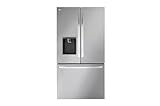


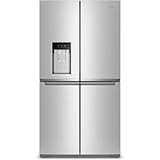
How to use Consumer Reports results
Start with the refrigerator type and configuration you actually want: French-door, side-by-side, or bottom-freezer. Then compare models within that group. A score for one style or size may not predict how a different configuration will work in your kitchen.
- Temperature performance: Look for results on how well the refrigerator and freezer hold their target temperatures and resist swings. Consistency matters for food quality and safe storage.
- Uniformity: Check whether temperatures vary substantially from one area to another. Large differences can mean some foods need more careful placement.
- Energy use: Compare the reported annual electricity use, preferably among models with similar capacity and features.
- Noise: Give this more weight in an open-plan home or a kitchen close to bedrooms. A quiet rating can matter more in daily life than a small difference in energy use.
- Reliability and owner feedback: Treat these as supporting evidence, not a guarantee. Reliability estimates typically concern a model’s brand or product category and may not predict the experience with an individual unit.
Before buying, verify that the rating applies to the exact model number, including its suffix. A similar name can refer to a different width, dispenser, finish, or interior layout—and potentially a different tested product.
Compare the measurements that determine fit
“Counter-depth” is not a standardized promise that a refrigerator will sit flush with every counter. The cabinet may align with the counters while the doors and handles project beyond them. Measure the opening’s width, height, and depth, plus nearby walls, trim, and the path into the kitchen.
| Measurement or figure | What to compare | Why it matters |
|---|---|---|
| Opening width | Usable space between cabinets or walls, measured at more than one height | Walls and cabinets may not be perfectly square; leave the manufacturer’s required side clearance. |
| Opening height | Floor to the lowest obstruction, including overhead cabinets | Include room for required top clearance and for leveling the appliance. |
| Depth | Wall to counter edge, then compare cabinet, door, and handle depths separately | A cabinet-depth measurement alone does not show how far the closed doors extend. |
| Door swing | Clearance with doors open, including nearby walls and islands | Drawers and crisper bins may need more space to pull out than the doors need to open. |
| Capacity | Published cubic feet, shelf layout, and drawer dimensions | Nominal capacity does not tell you whether bulky containers or weekly groceries will fit conveniently. |
Use the installation guide for the precise clearance requirements. Also measure the delivery route: doorways, hallways, stair turns, and the refrigerator’s required tilt can rule out a model that fits the kitchen opening.
Compare usable capacity, not just cubic feet
Counter-depth models usually trade some interior volume for a shallower profile. Two refrigerators with similar published capacity can still feel quite different. Look at shelf width and depth, the number and shape of door bins, freezer organization, and whether adjustable shelves can accommodate tall items.
A practical check is to list what regularly occupies the refrigerator: a large milk jug, sheet pan, tall bottles, meal-prep containers, or wide platters. Compare those items with the shelf and bin dimensions in the product manual. If possible, bring a tape measure when inspecting a model in person; do not assume a large-looking display model has the same dimensions as the version you are considering.
Turn energy figures into an annual cost
The EnergyGuide label gives an estimated yearly electricity use in kilowatt-hours. To estimate operating cost, multiply that figure by your electricity rate. For example, a refrigerator rated at 600 kWh per year costs about $108 annually at $0.18 per kWh: 600 × $0.18 = $108. At that same rate, a 700 kWh model would cost about $126 per year, a difference of $18.
This is a comparison estimate, not a promise of your household’s bill. Actual use varies with room temperature, door openings, temperature settings, and maintenance. Compare similar sizes and configurations, and consider whether extra features—such as through-the-door ice and water—are worth their added cost and potential impact on storage.
Match the refrigerator to your kitchen
| Your situation | Prioritize | Trade-off to check |
|---|---|---|
| Narrow aisle or nearby island | Door-swing clearance and accessible drawers | French-door layouts may be easier to open in tight spaces, but check both doors and drawer extension. |
| Large household or frequent bulk shopping | Usable shelf area, freezer capacity, and flexible storage | A shallow design may require more frequent restocking or more careful arrangement. |
| Open-plan kitchen | Consumer Reports’ noise results and measured energy use | Ice makers and dispensers add convenience but may bring extra operating noise and complexity. |
| Cabinet-front appearance is the priority | Exact cabinet, door, and handle depths plus finish options | “Counter-depth” does not necessarily mean flush; handles commonly extend beyond the counter. |
| Long-term ownership matters most | Temperature results, reliability information, warranty terms, and repair access | A strong rating cannot guarantee trouble-free service or local availability of parts. |
A sensible shortlist process
-
Set the fit limits. Record the opening dimensions, door-swing space, delivery route, and required clearances from the installation manual.
-
Choose the layout. Decide whether French-door, side-by-side, or bottom-freezer access best suits the food you store and the room you have.
-
Filter Consumer Reports’ current results. Compare temperature performance, energy use, noise, and reliability information among exact models in the same general category.
-
Check real storage needs. Compare interior dimensions and layout with your largest everyday items. Do not use cubic feet as the only capacity test.
-
Confirm ownership details. Review the warranty, delivery and installation requirements, ice-maker configuration, and service options in your area.
The strongest choice is the model that passes all three tests: it fits the kitchen with room for doors and drawers to work, stores your usual groceries comfortably, and performs well in the current independent test results. If two options are close, let the more important daily constraint—quiet operation, usable freezer space, lower estimated energy cost, or easier access—break the tie.


