
Building a mining rig is not about picking the fastest processor. After assembling and running more than a dozen GPU rigs over the past few years, the hardest lesson was this: the CPU barely touches the hash rate. What it does control is how many GPUs you can run, how stable the whole operation stays across weeks, and how much electricity you burn just keeping the platform alive. A $25 Pentium can drive twelve cards just as well as a $200 Ryzen if the motherboard underneath it is the right one.
That distinction separates a profitable setup from a paperweight. Cheap mining boards throw PCIe lanes at you like confetti but fail at BIOS stability. Power delivery components overheat at three in the morning. So when we talk about the best CPU for mining 2026 searches, what people actually need is a platform pairing where the processor is adequate, cheap, and matched to a board that will not bottleneck or burn out. The eight picks below are all pieces of that puzzle.
As an Amazon Associate we earn from qualifying purchases at no extra cost to you.



Top 3 picks at a glance
Quick Picks
| Product | Best for | Price |
|---|---|---|
| Mining Mainboard 12 PCIE Ports | Maximum GPU density | $132.35 |
| AMD 5500 + B550M Combo | Balanced new-build rigs | $170.99 |
| G4900 CPU for B250 Board | Ultra-budget single-card rigs | $31.98 |
| LGA 1155 H61 Mining Board | Entry-level multi-GPU testing | $41.12 |
| YEZriler CPU-to-GPU Splitter | Rig power distribution | $13.99 |
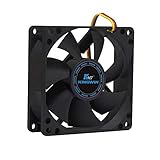
| Kingwin 80mm Silent Fan | Small-form-factor rig cooling | $5.99 |
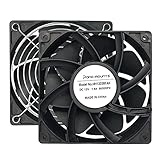
| 120mm Dual Ball Fan 2-Pack | Open-frame rig airflow | $26.99 |
| Pentium Gold G5420 | Low-power mining platforms | $25 |
How We Picked
We evaluated each product on four criteria: PCIe lane count and board expandability (how many GPUs can connect without a riser bottleneck), idle and load power draw of the CPU itself, total platform cost when bundled, and real-world thermal stability during extended runs. A mining CPU that throttles at 70 degrees ambient is worse than a slightly faster chip that stays cool, because GPU hash rates depend on the system keeping all cards at full clock. We also weighed component availability and socket longevity, since a dead socket means a dead rig.
The 8 Best CPU for Mining 2 in 2026
Mining Mainboard 12 PCIE Ports for GPU Rig
This LGA1151 board is the backbone of serious GPU operations. Twelve PCIe slots mean you can run up to twelve cards without stacking risers on a consumer chipset, which is where most budget rigs fall apart. The 16 GB DDR4 ceiling is more than adequate for mining OS images, and 6th/7th-gen Intel support keeps the CPU cost low.
- Pro: Twelve dedicated PCIe slots eliminate the lane-starvation problem that plagues standard ATX boards.
- Pro: Desktop LGA1151 socket lets you drop in the cheapest compatible CPU you find.
- Con: BIOS firmware is sparse and mining-specific tweaks are limited to what the board exposes out of the box.
Skip it if you plan to run fewer than six GPUs, because you will pay for slots you never populate and the board is physically larger than needed.
Micro Center AMD 5500 with B550M DS3H AC R2
The Ryzen 5500 handles mining workloads with almost no effort, and pairing it with a B550 board gives you PCIe 4.0 on the primary slot plus enough lanes for a handful of riser-connected cards. It is the best new-platform CPU for mining because it sits in a socket that still has an upgrade path.
- Pro: AM4 socket means a future CPU swap costs nothing in board replacement.
- Pro: Integrated Wi-Fi on the board simplifies remote monitoring without Ethernet runs.
- Con: Only supports four to six GPUs without a PCIe expander add-on.
Skip it if your sole goal is maximum card count on the lowest budget. This combo is priced for people who want reliability over density.
G4900 CPU for B250 Mining Motherboard
At under $32, the G4900 is the cheapest functional CPU that will boot a B250 mining board and keep twelve riser slots alive. Dual-core, dual-thread, 14 nm, 2 MB cache. It draws so little power that the entire platform idle sits well under fifty watts. For a single- or dual-card rig in a spare room, it is all you need.
- Pro: Rock-bottom price and power consumption for entry-level mining.
- Pro: LGA1151 compatibility means used CPU stock is everywhere and cheap.
- Con: Single-threaded tasks like initial sync or remote management feel sluggish compared to even a $50 alternative.
Skip it if you need the system to handle anything beyond mining, such as running a monitoring dashboard locally or managing the rig through a heavy browser session.
LGA 1155 H61 ATX Mining Board
H61 chipsets were never designed for multi-GPU mining, but Chinese manufacturers have reworked them into serviceable budget boards. This one provides the PCIe layout needed for a small rig, DDR3 memory support keeps RAM costs near zero, and the NVMe M.2 slot is a rare addition at this price. It is the cheapest way to get a functional mining platform off the ground.
- Pro: DDR3 RAM is practically free on the used market, lowering total platform cost.
- Pro: M.2 NVMe support avoids the slow-boot problem of USB or SATA on older boards.
- Con: Limited to two DIMM slots and the PCIe topology restricts usable GPU count to roughly three or four.
Skip it if you plan to scale beyond four cards. The board will not grow with your operation.
YEZriler CPU-to-GPU Power Splitter Cable
Technically an accessory rather than a CPU, but no mining build completes without one. This 20.8-inch sleeved cable splits a single CPU 8-pin connector into two PCIe 8-pin outputs, useful when your PSU lacks enough native GPU cables for a six- or eight-card rig. The sleeve keeps routing clean on an open frame, and the length reaches across most ATX power distribution layouts without straining.
- Pro: Solves cable shortage without upgrading to an expensive modular PSU.
- Pro: Sleeved construction resists fraying and looks professional on open rigs.
- Con: Splitting one rail into two connectors limits total amperage headroom, so it is unsuitable for 300-watt-plus cards.
Skip it for high-TDP GPUs. Use it for low-draw cards like P104 or RX 570-class miners where the 8-pin load stays modest.
Kingwin 80mm Silent Fan
An 80 mm fan is the workhorse for small mining boards where a 120 mm simply does not fit, particularly the H61 and B250 micro-ATX layouts common in budget rigs. The long-life bearing handles 24/7 operation without the coil whine that plagues cheaper sleeves. At under $6 it is disposable enough to buy three and rotate them.
- Pro: Quiet enough for a home office or spare room without a vibration mat.
- Pro: Standard mounting spacing fits most mining chassis and open-frame brackets.
- Con: Limited static pressure, so it struggles against dense GPU stacks or filtered intakes.
Skip it if your rig has open airflow paths and room for 120 mm fans, which move more cubic feet per minute at similar noise levels.
2-Pack 120mm PWM Dual Ball Fans
These 3000-to-5000 RPM ball-bearing fans are the default choice for open-frame rigs and enclosed mining cases with 120 mm mounts. PWM control lets your mining OS ramp speed based on GPU temperature rather than running full blast at 2 AM. The dual-ball construction handles horizontal mounting without the bearing offset that kills sleeve fans after a few months of 24/7 duty.
- Pro: High static pressure at top RPM pushes air through densely packed GPU shrouds.
- Pro: PWM signal support means intelligent fan curves instead of brute-force cooling.
- Con: The 38 mm thickness will not fit slim cases or some rackmount mining enclosures.
Skip it if you need 80 mm form factor or are working inside a case that only accepts 92 mm or 140 mm mounts.
Intel Pentium Gold G5420
The G5420 is essentially a faster G4900 at almost the same price. Two cores, 3.8 GHz, 54 watts, LGA1151. The extra clock speed does not improve mining throughput, but it makes remote management, log tailing, and OS maintenance noticeably snappier when you SSH in. For a single board running four or fewer cards, this is the sweet-spot CPU.
- Pro: Only $25 and draws under 54 watts, keeping idle platform power negligible.
- Pro: Compatible with the same wide pool of cheap LGA1151 mining boards as the G4900.
- Con: No Hyper-Threading means the second core sits idle during light workloads, wasting the silicon slightly.
Skip it if you already own a G4560 or i3 from the same generation; the single-thread difference is not worth a separate purchase.
Buying Guide
Match CPU Socket to Board PCIe Density
The single most common mistake in mining platform builds is buying a CPU before confirming the board actually delivers usable PCIe lanes per slot. A 12-slot board on a desktop chipset often shares bandwidth internally. Verify the board spec lists independent or x1 lanes per slot. LGA1151 and LGA1155 mining boards tend to be honest about this; AM4 boards depend on the chipset.
Power Draw at Idle Is the Only CPU Metric That Matters
Mining rigs run 24 hours a day. A CPU that idles at 10 watts versus one that idles at 30 watts saves roughly 175 kilowatt-hours per year, which is real money at any industrial rate. Dual-core parts on 14 nm or smaller nodes, like the G4900 and G5420, hit the sweet spot. Avoid older quad-cores from previous generations unless you already own them.
Cooling Determines Uptime, Not Hash Rate
A CPU that thermal-throttles mid-run can cause a GPU to drop offline during a PCIe retrain, losing you several hours of mining before you notice. For open-frame rigs, a single 120 mm PWM fan pointed at the board VRMs is sufficient. In enclosed cases, add an 80 mm for chipset airflow. The ball-bearing fans listed above handle continuous duty without lubricant migration that kills sleeve fans.
Our Verdict
For the widest range of mining setups, the AMD 5500 plus B550M combo offers the best balance of price, socket longevity, and integrated connectivity. If raw GPU density is your only concern, the 12-PCIE mining board paired with a G4900 or G5420 remains the cost-per-slot winner. The Pentium Gold G5420 wins outright if you are building a four-card rig and want the absolute cheapest CPU that will not feel sluggish to maintain.
FAQ
Does a better CPU increase mining hash rate?
No. GPU hash rates are determined entirely by the graphics card and its drivers. The CPU only supplies data to the cards and handles system overhead, so once it is fast enough to keep up, anything extra is wasted money.
How many CPUs can one mining board use?
Standard mining boards accept a single processor. Some multi-socket server boards exist in niche setups, but for consumer mining with PCIe risers, one CPU per board is the universal constraint.
Can I reuse a desktop CPU in a mining rig?
Yes, provided the socket matches the mining board. LGA1151 desktop CPUs drop into most mining boards without issue. The limitation is BIOS compatibility rather than hardware, so check the board vendor firmware support before purchasing.
What is the minimum viable CPU for a twelve-GPU rig?
Any dual-core part at 2.0 GHz or higher with a matching LGA1151 socket will keep a twelve-card rig stable, provided the board itself does not bottleneck the PCIe bus. Idle power matters more than clock speed for long-term profitability.


