
SSD stands for Solid State Drive and HDD stands for Hard Disk Drive — and for most PC gamers in 2026, the practical answer is simple: put your operating system and games on an SSD, and only add an HDD if you need cheap bulk storage for video archives or backups. The rest of this guide explains what those full forms actually mean, how the two technologies differ in speed, cost per terabyte, and lifespan, and which one fits your build.
As an Amazon Associate we earn from qualifying purchases at no extra cost to you.


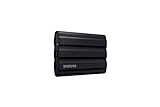
Top 3 picks at a glance
SSD vs HDD Full Form: What Each Name Actually Means
An SSD (Solid State Drive) stores data on NAND flash memory chips. “Solid state” means there are no moving parts — data is read and written electronically by a controller, which is why SSDs access files almost instantly and survive drops that would kill a mechanical drive.
An HDD (Hard Disk Drive) stores data magnetically on spinning circular platters. A physical actuator arm moves a read/write head across the disk surface — typically spinning at 5,400 or 7,200 RPM — to find each file. That mechanical seek process is the reason HDDs are slower, noisier, and more fragile, but also why the technology scales to huge capacities cheaply.
SSD vs HDD at a Glance
| Spec | 7200 RPM HDD | SATA SSD | NVMe Gen4 SSD | NVMe Gen5 SSD |
|---|---|---|---|---|
| Sequential read speed | ~150–250 MB/s | ~500–560 MB/s | ~5,000–7,400 MB/s | ~10,000–14,500 MB/s |
| Random access latency | ~5–10 ms (mechanical seek) | ~0.1 ms | ~0.02 ms | ~0.02 ms |
| Typical price per TB (2026) | ~$15–$25 | ~$50–$70 | ~$55–$85 | ~$90–$140 |
| Common capacities | 1–24 TB | 250 GB–4 TB | 500 GB–8 TB | 1–4 TB |
| Endurance metric | Workload rating (~55–180 TB/year) | ~150–600 TBW per 1 TB | ~600–1,200 TBW per 1 TB | ~700–1,400 TBW per 1 TB |
| Noise / power | Audible spin + seek clicks, ~6–9 W | Silent, ~2–4 W | Silent, ~5–8 W | Silent, ~8–11 W (heatsink advised) |
Speed: The Gap Is Bigger Than the Numbers Suggest
Sequential throughput is only part of the story. Game loading, Windows boot, and level streaming depend heavily on random reads — and this is where an HDD’s mechanical arm hurts most. While a Gen4 NVMe drive answers requests in ~0.02 ms, an HDD physically moves a head across a platter, taking ~100x longer per request.
Here’s a worked example — transferring a 150 GB game install between drives of equal speed:
- 7200 RPM HDD at ~180 MB/s: 150,000 ÷ 180 ≈ 833 seconds (~14 minutes)
- SATA SSD at ~540 MB/s: 150,000 ÷ 540 ≈ 278 seconds (~4.5 minutes)
- Gen4 NVMe at ~5,000 MB/s real-world: 150,000 ÷ 5,000 ≈ 30 seconds
That same gap shows up in daily use: Windows boots in seconds instead of a minute, and open-world games with fast travel or asset streaming stutter noticeably less on NVMe. Drives like the Samsung 990 Pro or WD Black SN850X remain solid Gen4 benchmarks in 2026, while Gen5 models such as the Crucial T705 mainly benefit users with supported motherboards and workloads like 8K video editing or DirectStorage-heavy titles.
Price per TB: The One Area HDDs Still Win
The math is straightforward. A 20 TB HDD typically sells for around $300–$350, which works out to roughly $15–$17 per TB. A 4 TB NVMe drive at $240–$280 lands around $60–$70 per TB — roughly 4x more expensive per gigabyte, and NVMe barely exists above 8 TB at consumer prices at all.
The crossover logic: if you need speed on the data you touch daily (OS, games, project files), the SSD premium is worth it at 1–4 TB. If you need capacity you mostly don’t touch — a Plex library, raw footage archive, or system image backups — an HDD at 8 TB+ is dramatically cheaper per byte. Just budget for redundancy, since a single 20 TB drive is also a single point of failure.
Lifespan and Reliability: TBW vs Moving Parts
SSDs wear out through writes, measured in TBW (terabytes written). But the numbers are less scary than they look. Take a 1 TB drive rated at 600 TBW and a fairly heavy user writing ~40 GB/day:
600,000 GB ÷ 40 GB/day = 15,000 days ≈ 41 years before hitting the rated endurance. Even a content creator writing 200 GB/day gets ~8 years. For typical gaming use, you’ll replace the drive for capacity reasons long before the NAND wears out — controller failure is the more realistic risk.
HDDs have no write-cycle limit — you can rewrite the same sectors indefinitely — which makes them genuinely better for continuous-write workloads like NVR surveillance recording. Their weakness is mechanical: motors and bearings wear out, and most consumer drives are realistically a 3–5 year proposition under daily use. One more edge case: for cold archival storage (a drive you unplug and shelve), an HDD holds data more reliably, since unpowered SSDs can lose charge over years.
One buying detail spec sheets bury: for large HDDs, check whether the drive uses CMR (conventional magnetic recording) or SMR (shingled). SMR drives — common in cheaper capacities — can collapse to ~10–20 MB/s on sustained rewrites. NAS-oriented lines like Seagate IronWolf or Toshiba N300 are CMR and state so on the spec sheet.
Which Should You Buy? Match the Drive to the Job
| Your situation | Recommended drive | Why |
|---|---|---|
| Boot drive + main game library | 1–2 TB NVMe Gen4 | Best speed-per-dollar; Gen5 adds little for game loads |
| Tight-budget build | 500 GB–1 TB DRAM-less Gen4 or SATA SSD | Still ~10x faster loads than any HDD |
| Video editing scratch / heavy DirectStorage use | 2 TB Gen5 NVMe + heatsink | Only worth it if your board has a Gen5 M.2 slot |
| 10+ TB media library or backup target | 7200 RPM CMR HDD (8–20 TB) | ~$15–$20/TB; speed doesn’t matter for archives |
| Laptop or small-form-factor build | NVMe SSD only | Lower power draw, silent, survives movement |
| Console storage expansion | Gen4 NVMe meeting the console’s spec (heatsink required on PS5) | HDDs only work for last-gen game storage |
| 24/7 surveillance or continuous recording | Purpose-built HDD | Unlimited rewrites; TBW limits don’t apply |
The most common — and most sensible — 2026 desktop setup is still hybrid: a 2 TB Gen4 NVMe as the primary drive, plus a 8–12 TB HDD for anything that doesn’t need speed. Total cost usually lands around $300–$450 for 10–14 TB of combined storage, versus $600+ to do it all on flash.
FAQ
Do HDDs still make sense for gaming in 2026?
Rarely. Many current titles assume SSD-level streaming speeds, and some explicitly require one. An HDD is acceptable for older games, indie titles, or as a “cold storage” drive you shuffle games onto via Steam’s storage manager — but your active library belongs on an SSD.
Can I use an SSD and HDD together in one PC?
Yes, and it’s the recommended setup for high-capacity builds. Install Windows and games on the SSD; point your Downloads, media folders, and backup software at the HDD. No special configuration is needed beyond assigning drive letters.
Is a Gen5 SSD worth it over Gen4?
For pure gaming, mostly no — load time differences between Gen4 and Gen5 are typically under a second in current titles. Gen5 pays off for large file transfers, scratch disks, and future-proofing a high-end board, but it costs more per TB and runs hotter.
Which lasts longer overall?
Under normal use, either will outlive its warranty. SSDs die by controller failure or (rarely) exhausted writes; HDDs die by mechanical wear, typically within 3–5 years of daily spinning. For irreplaceable data, the answer isn’t picking the longer-lived drive — it’s keeping a backup on a second one.


