Our Short List of 3

- Best for: claw and fingertip players with medium hands who want a flagship sensor on a mid-range tier.
- Weight: 53 grams
- Sensor: PixArt PAW3395 optical, up to 26,000 DPI
- Tracking: 650 IPS speed, 50G acceleration
- Polling rate: 1,000 Hz out of the box, 4K ready with a separate Pulsar dongle

- Best for: players who want one light mouse shared between a gaming desktop and a laptop.
- Weight: 54 grams without cable and dongle
- Sensor: ROG AimPoint optical, up to 36,000 DPI
- Tracking: 650 IPS speed, 50G acceleration
- Switches: ROG Micro Switches

- Best for: players who want the polished flagship with the longest spec sheet and the least fuss.
- Weight: 60 grams
- Sensor: HERO 2 optical, up to 44,000 DPI
- Report rate: up to 8 kHz
- Switches: LIGHTFORCE hybrid optical-mechanical
All 4 Picks at a Glance
| Product | Specs | Action |
|---|---|---|
| Pulsar X2V2 (White, Medium) |
| Check price on Amazon |
| ASUS ROG Harpe Ace Aim Lab Edition (Black) |
| Check price on Amazon |
| Logitech G PRO X Superlight 2 (Black) |
| Check price on Amazon |
 Razer DeathAdder V3 Pro (Black) |
| Check price on Amazon |
The real decision in this class is not which mouse is lightest on paper, but how much weight you can remove before your aim loses its braking feel. A 54 gram mouse flicks faster and tires the wrist less over a long session, while a mouse in the low sixties keeps a touch more stability for tracking and calm, controlled swipes.
That split runs through all five picks below. Ranked shooter players get the Razer Viper V3 Pro and Pulsar X2V2, palm-grip players get the ergonomic Razer DeathAdder V3 Pro, multi-device users get the tri-mode ASUS ROG Harpe Ace Aim Lab Edition, and anyone who wants one safe flagship gets the Logitech G PRO X Superlight 2. Every pick stays under 65 grams.
Our Top Picks
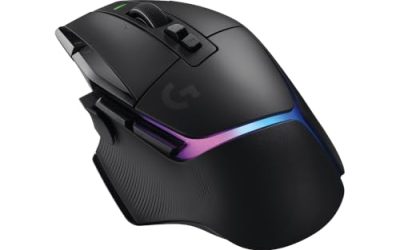
- Logitech G Pro X Superlight 2 Lightspeed WirelessClassic1.57 x 2.5 x 4.92 inches0.1 poundsCheck on Amazon
- Razer DeathAdder V3 Pro Wireless Gaming Mouse1000 Hz5.01 x 2.65 x 1.69 inches0.1 poundsCheck on Amazon
Top 3 picks at a glance
Quick Picks
As an Amazon Associate we earn from qualifying purchases.
| Product | Best for | Key spec from title |
|---|---|---|
| Razer Viper V3 Pro (Black) | Ranked FPS players who want true 8K polling from the box | 54 g with the HyperPolling dongle included |
| Pulsar X2V2 (White, Medium) | Claw and fingertip players on a mid-range tier | 53 g symmetrical shell with a PAW3395 sensor |
| ASUS ROG Harpe Ace Aim Lab Edition (Black) | Players who switch between a gaming PC and a laptop | 54 g tri-mode mouse with a 36,000 DPI sensor |
| Logitech G PRO X Superlight 2 (Black) | Anyone who wants the safe flagship all-rounder | 60 g with a HERO 2 sensor and 95-hour battery |
| Razer DeathAdder V3 Pro (Black) | Palm-grip players who find symmetrical mice cramped | 63 g ergonomic shell with a Focus Pro 30K sensor |
How to Choose
Weight Changes How Your Aim Stops, Not Just How It Moves
Dropping from a traditional 90 gram mouse into the 50s makes flicks feel almost free, because there is less mass to accelerate and less mass to halt. The trade-off shows up in micro-corrections: an ultra-light mouse can feel twitchy until your hand recalibrates. Players who track targets with smooth, continuous motion often settle in the low sixties, where the extra grams add a small amount of natural damping. Treat the listed weight as a handling choice, not a score, and match it to the sensitivity and pad size you already use.
Shape and Grip Decide More Than Sensor Numbers
Every sensor in this roundup tracks far beyond what a human hand can expose, so fit is the deciding factor. Symmetrical shells like the Viper V3 Pro and X2V2 suit claw and fingertip grips, while the DeathAdder V3 Pro fills the palm of a right hand. Measure your hand, note your grip honestly, and check the hump position: a rear hump supports claw grips, a centred hump supports palm contact. A well-fitting 63 gram mouse will out-aim a poorly fitting 53 gram mouse within a week of use.
Polling Rate Only Helps When the Whole Chain Supports It
A 1,000 Hz report rate already updates your position every millisecond, and 8,000 Hz cuts that interval further, which can smooth cursor motion on high-refresh monitors. The catch is everything around it: the higher rate needs the right receiver, it raises CPU load slightly, and it drains a wireless battery several times faster. Check whether the fast dongle is in the box, as it is with the Viper V3 Pro, or sold separately, as with the DeathAdder V3 Pro and X2V2. Buy the polling you can actually feed.
Battery Life Is Quoted at Gentle Settings
Headline battery figures are measured at 1,000 Hz with lighting off, so treat them as a best case for ordinary play rather than a promise at maximum settings. A mouse rated for 90 or 95 hours will usually need a charge every couple of weeks of evening play, and far sooner at 8,000 Hz. USB-C charging is now standard in this class, and Logitech adds POWERPLAY mat charging on the Superlight 2. Bluetooth, offered by the Harpe Ace, is a useful second radio for a laptop, never the mode for ranked play.
The 5 Best Options
Razer Viper V3 Pro (Black)
The Viper V3 Pro is the pick for competitive shooter players who want the full high-polling setup without buying accessories later. Its symmetrical 54 gram shell keeps a low, safe profile that works for claw and fingertip grips, and the HyperPolling wireless dongle sits in the box, so true 8,000 Hz polling works from day one. The Focus Pro 35K optical sensor, Gen-3 optical switches and large PTFE feet complete a package built around fast flicks and repeatable stops.
Specs
- Weight: 54 grams (black)
- Sensor: Razer Focus Pro 35K optical, up to 35,000 DPI
- Polling rate: up to 8,000 Hz via the included HyperPolling dongle
- Switches: Razer Optical Mouse Switches Gen-3
- Buttons: 8 programmable controls
- Battery life: up to 95 hours at 1,000 Hz
- Connectivity: HyperSpeed wireless, wired USB-C
- Dimensions: 127.1 x 63.9 x 39.9 mm
- Model number: RZ01-05120100-R3U1
Best for: ranked FPS players who want 8K polling and a proven symmetrical shape in one purchase.
Watch out for: battery life falls sharply at 8,000 Hz, and the white version weighs 55 grams under a different listing, so confirm the colour before ordering.
ASIN: B0CW25XR5R
Pulsar X2V2 (White, Medium)
- Best for: claw and fingertip players with medium hands who want a flagship sensor on a mid-range tier.
- Weight: 53 grams
- Sensor: PixArt PAW3395 optical, up to 26,000 DPI
- Tracking: 650 IPS speed, 50G acceleration
- Polling rate: 1,000 Hz out of the box, 4K ready with a separate Pulsar dongle
claw and fingertip players with medium hands who want a flagship sensor on a mid-range tier.
4K polling needs Pulsar’s separate dongle, and the Mini size uses its own listings, so double-check the size in the listing title.
The X2V2 is where the mid-range tier stops feeling like a compromise. Pulsar pairs a flagship-grade PixArt PAW3395 sensor with a 53 gram symmetrical shell, a wide waist and a low hump that claw and fingertip players tend to lock onto immediately. Optical main switches keep clicks crisp, and the shape comes in two sizes, which is rare at this tier. For medium hands that play fast, low-sensitivity shooters, it delivers the core ultralight experience without the flagship outlay.
ASUS ROG Harpe Ace Aim Lab Edition (Black)
- Best for: players who want one light mouse shared between a gaming desktop and a laptop.
- Weight: 54 grams without cable and dongle
- Sensor: ROG AimPoint optical, up to 36,000 DPI
- Tracking: 650 IPS speed, 50G acceleration
- Switches: ROG Micro Switches
players who want one light mouse shared between a gaming desktop and a laptop.
the shell is long and fairly flat, so palm-grip players with large hands may find it less filling than the DeathAdder shape.
The Harpe Ace suits players who game on one machine and work or travel with another. It is a 54 gram mouse built from bio-based nylon, with tri-mode connectivity that covers SpeedNova 2.4 GHz wireless for play, Bluetooth for a laptop, and a wired mode that doubles as charging. The ROG AimPoint sensor is rated with under one percent CPI deviation, and the box adds grip tape plus spare feet, small extras most rivals skip.
Logitech G PRO X Superlight 2 (Black)
- Best for: players who want the polished flagship with the longest spec sheet and the least fuss.
- Weight: 60 grams
- Sensor: HERO 2 optical, up to 44,000 DPI
- Report rate: up to 8 kHz
- Switches: LIGHTFORCE hybrid optical-mechanical
players who want the polished flagship with the longest spec sheet and the least fuss.
running the full 8 kHz report rate shortens the gap between charges, and each colour is a separate listing, so verify the black model number when ordering.
The Superlight 2 is the default recommendation when someone wants one mouse that does everything well. At 60 grams it keeps a little more composure in tracking-heavy games than the 54 gram rivals, while the HERO 2 sensor, 8 kHz report rate and LIGHTFORCE hybrid switches cover the performance checklist. A 95-hour battery, USB-C charging and POWERPLAY mat compatibility make it the easiest of the five to live with day after day.
Razer DeathAdder V3 Pro (Black)
- Best for: palm-grip players and larger hands that find symmetrical ultralights cramped.
- Weight: 63 grams (black)
- Sensor: Razer Focus Pro 30K optical, up to 30,000 DPI
- Polling rate: 1,000 Hz out of the box, 8,000 Hz with a separate HyperPolling dongle
- Switches: Razer Optical Mouse Switches Gen-3, rated for 90 million clicks
palm-grip players and larger hands that find symmetrical ultralights cramped.
8,000 Hz polling needs Razer’s separate dongle, and the full-size shape is a poor match for small hands and fingertip grips.
The DeathAdder V3 Pro is the ergonomic answer in a field of symmetrical shells. Its right-handed shape gives palm and relaxed claw players full contact and support, yet it still weighs only 63 grams, lighter than many ambidextrous rivals. The Focus Pro 30K sensor tracks even on glass, the Gen-3 optical switches are rated for 90 million clicks, and the 90-hour battery keeps charging cables off the desk for weeks of ordinary play.
Which One Fits Your Situation
You Play Ranked Shooters Every Night
Choose the Razer Viper V3 Pro. The included HyperPolling dongle gives you genuine 8,000 Hz wireless polling without a second purchase, the 54 gram symmetrical shell rewards fast flicks and hard stops, and the Focus Pro 35K sensor leaves no tracking excuses. It is the most complete competitive package in this group.
Your Hand Aches or Cramps With Flat Mice
Choose the Razer DeathAdder V3 Pro. The tall, right-handed ergonomic shell fills your palm and supports a relaxed grip, spreading contact instead of pinching it into your fingertips. At 63 grams it does this without giving back the heavy, dragging feel that pushed you toward lightweight mice in the first place.
One Mouse Has to Cover a Desktop and a Laptop
Choose the ASUS ROG Harpe Ace Aim Lab Edition. Bluetooth pairing handles the laptop, the SpeedNova receiver handles ranked play on the desktop, and wired mode covers charging without downtime. At 54 grams it also disappears into a laptop bag, and the included grip tape helps on the move during travel days.
You Want Flagship Hardware Without the Flagship Tier
Choose the Pulsar X2V2. The PAW3395 sensor matches the tracking hardware in far pricier mice, the 53 gram shell is among the lightest here, and the two size options protect the fit. You give up the in-box high-polling dongle, which most players never miss at 1,000 Hz in ordinary daily play.
Common Mistakes
- Chasing the lowest gram count while ignoring shape, then blaming the mouse when a cramped grip ruins your aim.
- Turning on 8,000 Hz polling full time and treating the much shorter battery life as a defect instead of a trade-off.
- Ordering the wrong colour or size listing, when weights and even dimensions differ between variants of the same mouse.
- Comparing headline DPI numbers, which every modern sensor inflates far beyond any usable sensitivity.
- Assuming a separate high-polling dongle is included, when several brands sell it as an add-on.
Frequently Asked Questions
How light does a gaming mouse need to be?
Anything in the 50 to 65 gram band counts as lightweight today, and all five mice here sit inside it. Below roughly 55 grams, flicks feel effortless but stopping takes practice. In the low sixties, tracking feels calmer. Pick by the games you play most, not by the smallest number on the box.
Does 8,000 Hz polling actually change anything?
It shortens the gap between mouse reports, which can make cursor motion look smoother on a high-refresh monitor and shave a fraction of input delay. The gains are small next to shape and weight, and the mode cuts wireless battery life hard. Treat it as a bonus for competitive play, not a requirement.
Are lightweight mice fragile because the shells are thinner?
Not in this group. These mice reach their weights through material choice and internal layout rather than perforated shells, and the optical switches here carry ratings up to 90 million clicks. A light mouse still deserves a desk rather than a backpack pocket, but everyday durability is not the sacrifice it once was.
Is wireless fast enough for competitive play now?
Yes. The 2.4 GHz links on these mice report at 1,000 Hz or higher with latency that matches a cable in normal play, and every pick can also run wired while it charges. The practical limits are battery management and receiver placement, both easy to handle with the included extension cables and adapters.
Related guides
More from Amazon
Programs that pair well with the guide above. Offers and eligibility are set by Amazon and may change.
A free business account with business pricing and bulk-buying tools for work, shop or home office.
Create a business accountFree shipping on eligible items, Prime Video and more. Eligible new members can start with a free trial.
Start a Prime free trialAudiobooks and podcasts to listen to on the go. Eligible new members can start with a free trial.
Try Audible freeAd-free music streaming. Eligible new subscribers can start with a free trial.
Try Music Unlimited freeAs an Amazon Associate we earn from qualifying purchases.