The best everyday headset depends on whether you want to wear it for music and calls or for gaming too: the Sony WH-1000XM5 is the best all-purpose wireless pick for noise cancelling and battery life, the SteelSeries Arctis Nova 7 Wireless is the best everyday gaming-and-music headset with a real boom mic, and the Logitech Zone Vibe 125 or a similar wireless office headset suits calls on a budget. Choose by where you use it most, because no single headset is the best at commuting, working and competitive gaming at once.
Quick comparison of everyday headset picks
Specifications follow the manufacturers’ published figures and are rounded. Battery life depends on volume and features such as noise cancelling.
| Headset | Best for | Connection | Battery (spec) | Mic type | Price range |
|---|---|---|---|---|---|
| Sony WH-1000XM5 | Music, commuting, calls | Bluetooth, wired 3.5 mm | About 30 hours with ANC | Built-in beamforming mics | $300 to $400 |
| SteelSeries Arctis Nova 7 Wireless | Gaming plus everyday use | 2.4 GHz and Bluetooth | About 38 hours | Retractable boom | $150 to $200 |
| HyperX Cloud III (wired) | Budget gaming and calls | 3.5 mm and USB | Not applicable | Detachable boom | $80 to $100 |
| Logitech Zone Vibe 125 | Office calls and music | Bluetooth and USB receiver | About 20 hours | Noise-reducing mic | $100 to $130 |
| Bose QuietComfort Headphones | Comfort and noise cancelling | Bluetooth, wired | About 24 hours | Built-in mics | $300 to $350 |
Best overall for everyday use: Sony WH-1000XM5
Sony’s flagship over-ear model combines strong active noise cancelling, a light build, multipoint Bluetooth and a battery that lasts a work week of commuting, per the manufacturer’s spec sheet of about 30 hours with noise cancelling on. It handles calls well thanks to beamforming mics, and it has a wired mode for flights and PCs. The trade-offs are the price, a non-folding flat design that takes more bag space, and Bluetooth latency that is not ideal for fast games. If you play on a console or PC, use a 2.4 GHz dongle headset instead.
Best for gaming and daily use: SteelSeries Arctis Nova 7 Wireless
This headset pairs a 2.4 GHz USB dongle for low-latency gaming with Bluetooth for your phone, so you can listen to a game and a podcast at the same time on supported setups. A retractable boom mic hides when you do not need it, and the battery is rated near 38 hours. It suits players who want one headset on the desk and on a walk to the shop. The trade-off is that the sound is tuned for gaming and chat, so it is less refined for music than an audiophile or flagship noise-cancelling model.
Best budget: HyperX Cloud III or comparable wired headset
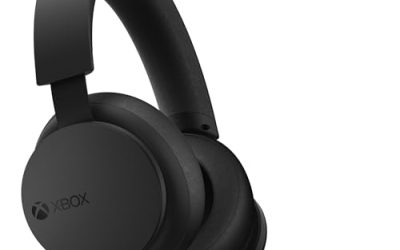
A wired headset avoids batteries and pairing, offers no wireless lag and usually costs under $100. The HyperX Cloud III has a comfortable memory-foam cushion and a detachable mic, which is helpful if you want to use it as plain headphones on the sofa. The downsides are the cable, no noise cancelling and a plugged-in tether to your device.
Best for working from home: Logitech Zone Vibe 125 class
Office-oriented headsets focus on microphone clarity, light weight and long wear comfort. A model such as the Zone Vibe 125 uses a noise-reducing mic and a USB receiver for stable connection with a laptop, and its tuning prioritizes voice. The trade-off is fewer bass details for music and a design that looks plain on camera or at a gaming desk.
Worked example: battery runtime
Battery life specs are measured at moderate volume, so your own result depends on how you use the headset. Take a headset with a 30-hour rating. If you use it four hours a day for work and one hour for music in the evening, that is five hours a day, so it lasts six days. If a 10-minute quick charge adds about 3 hours (a figure Sony quotes for the XM5), then a short charge before your commute covers the gap. With a 38-hour rating, as in the Arctis Nova 7 Wireless spec, the same five hours a day gives seven to eight days. Plan to charge weekly, and avoid keeping a lithium battery fully drained for days.
Worked example: Bluetooth vs 2.4 GHz latency
Typical Bluetooth audio with standard SBC or AAC codecs adds roughly 100 to 200 ms of delay, depending on the device. A 2.4 GHz dongle often cuts that to around 20 to 40 ms. At 60 frames per second a frame takes 16.7 ms, so 150 ms of delay is nine frames, enough to notice when footsteps in a shooter arrive late or a video’s lips and voice drift apart. Video apps usually correct for delay, but games do not. That is why an everyday headset for music and calls can be Bluetooth-only, but a headset you also use for competitive play should have a dongle or a wired option.
Decision matrix
| Your main use | Choose | Why | Skip |
|---|---|---|---|
| Commuting and flights | Sony WH-1000XM5 or Bose QuietComfort Headphones | Strong noise cancelling, comfort | Open-back or boom-mic gaming sets |
| PC gaming plus calls | SteelSeries Arctis Nova 7 Wireless | Low-latency dongle and a real mic | Bluetooth-only headphones |
| Tight budget | HyperX Cloud III wired | Low price, no charging | Wireless sets under $60 |
| Meetings all day | Logitech Zone Vibe class | Voice-tuned mic, light weight | Heavy gaming headsets |
| Listening on a PC and phone together | Dual-connection model | Switch between sources | Single-device dongle sets |
How to choose an everyday headset
- Decide wired or wireless first. Wired gives the best value per dollar and zero latency. Wireless adds freedom but also battery maintenance.
- Check clamp force and weight. A headset above about 300 g can feel heavy after four hours. Most comfortable models fall between 250 g and 290 g.
- Look at microphone design. A boom mic near your mouth usually sounds clearer than built-in mics in a noisy room, while built-in beamforming mics are good enough for normal calls.
- Prefer multipoint. Being able to connect to two devices at once avoids re-pairing between a laptop and a phone.
- Do not chase surround claims. Virtual 7.1 modes are software effects. Stereo drivers with good tuning are more important.
Frequently Asked Questions
Can I use gaming headsets for everyday music and calls?
Yes. Models with Bluetooth, like the Arctis Nova 7 Wireless, switch to a phone easily, and detachable-mic designs look like normal headphones. Their tuning is usually brighter in the treble and bass than headphones aimed at music fans.
Is active noise cancelling worth it?
For commuting, open offices and flights, yes. It removes steady low-frequency sounds such as engines and fans. For gaming at home it matters less, and it uses battery, so you can turn it off.
Do wireless headsets sound worse than wired?
With modern codecs and 2.4 GHz connections the difference is small for most listeners. A wired connection can still be better if you want maximum quality or zero latency, and it removes the battery limit.
How long do headsets usually last?
Most last three to five years. Ear cushions wear first and are often replaceable, while the battery in wireless models gradually loses capacity after hundreds of cycles.
What is the difference between USB and 3.5 mm headsets?
A 3.5 mm headset uses your device’s built-in audio chip, so quality depends on it. A USB headset has its own digital-to-analog converter and often a better mic path, but it may not work with phones or some consoles without adapters.
Related guides
More from Amazon
Programs that pair well with the guide above. Offers and eligibility are set by Amazon and may change.
A free business account with business pricing and bulk-buying tools for work, shop or home office.
Create a business accountFree shipping on eligible items, Prime Video and more. Eligible new members can start with a free trial.
Start a Prime free trialAudiobooks and podcasts to listen to on the go. Eligible new members can start with a free trial.
Try Audible freeAd-free music streaming. Eligible new subscribers can start with a free trial.
Try Music Unlimited freeAs an Amazon Associate we earn from qualifying purchases.