Between the cheap-but-slow mechanical hard drive and the fast-but-pricier SSD sits an old compromise: the SSHD, or solid-state hybrid drive. It bolts a small chunk of flash onto a spinning disk and tries to give you SSD-like responsiveness for the files you use most, at HDD-like capacity and cost. The question in a world of affordable SSDs is whether that compromise still makes any sense.
As an Amazon Associate we earn from qualifying purchases at no extra cost to you.


Our Top Picks
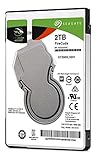
 Seagate FireCuda 2TB Solid State Hybrid Drive Performance2TB5.79 x 4 x 1.03 inches1.2 poundsCheck on Amazon


Top 3 picks at a glance
How a hybrid drive works
An SSHD is mostly a normal hard drive—platters, heads, the usual mechanics—paired with a small NAND cache, typically 8–32 GB. The drive’s firmware watches which data you access most often and quietly copies it into the flash. Next time you open that program or boot the OS, it loads from the fast cache instead of the slow platters. You do not manage any of this; it is automatic and invisible to the operating system.
The catch is right there in the numbers: 8–32 GB of cache against a 1–4 TB drive. Only your most repetitive accesses benefit. Anything outside the cache—a large game you launch occasionally, a big video file—runs at plain hard-drive speed.
| Metric | HDD | SSHD | SATA SSD | NVMe SSD |
|---|---|---|---|---|
| Sequential read | ~120–160 MB/s | ~120–160 MB/s* | ~550 MB/s | 3,000–7,000 MB/s |
| Cached/random feel | Slow | SSD-like for hot data | Fast | Fastest |
| Capacity range | 1–20+ TB | 1–4 TB | 0.25–8 TB | 0.5–8 TB |
| Cost per TB | Lowest | Low | Moderate | Moderate–high |
*Uncached transfers run at underlying HDD speed; only frequently used data hits the flash.
Where an SSHD made sense
The hybrid drive had its moment in laptops and consoles with a single drive bay, where you could not fit both an SSD and a big HDD. It sped up boot and your most-played game without giving up terabytes of space, all in one 2.5-inch drive. On a fixed budget with only one slot, it was a genuine upgrade over a plain hard disk.
Why it rarely makes sense now
SSD prices have fallen far enough that the hybrid’s core advantage—cost per gigabyte with some speed—has mostly evaporated. Today the far better pattern is a modest SSD for the OS and active games plus a large plain HDD for bulk storage. That “tiered” setup gives you full SSD speed on everything you put on the SSD, not just whatever the cache happened to guess, and a cheap high-capacity HDD for archives. For any system with two drive slots, that beats an SSHD outright.
Frequently asked questions
Is an SSHD as fast as a real SSD?
Only for the small slice of data living in its flash cache, and only after the drive has “learned” your habits. Everything else runs at ordinary hard-drive speed, so overall it feels like a quick HDD, not like an SSD.
Should I buy an SSHD for a new build today?
Almost never. If you have room for two drives, pair a small SSD with a large HDD. If you have only one slot and the budget, a straight SSD is simpler and faster. An SSHD is mainly a stopgap for a single-bay device on a tight budget.
Bottom line
An SSHD is a clever old compromise that automatically caches your hot data in a little flash buffer, delivering big capacity with a taste of SSD speed. It shone in single-bay laptops and consoles, but cheap SSDs have made the separate SSD-plus-HDD tiered setup the smarter choice almost everywhere. Buy a hybrid only when a single drive slot and a strict budget leave you no better option.
Related guides
More from Amazon
Programs that pair well with the guide above. Offers and eligibility are set by Amazon and may change.
A free business account with business pricing and bulk-buying tools for work, shop or home office.
Create a business accountFree shipping on eligible items, Prime Video and more. Eligible new members can start with a free trial.
Start a Prime free trialAudiobooks and podcasts to listen to on the go. Eligible new members can start with a free trial.
Try Audible freeAd-free music streaming. Eligible new subscribers can start with a free trial.
Try Music Unlimited freeAs an Amazon Associate we earn from qualifying purchases.