The best compact mirrorless camera for most buyers in 2026 is an APS-C body such as the Canon EOS R50 or Fujifilm X-M5. They weigh roughly 350–400 g with battery, shoot 4K video, and give you a real interchangeable-lens system. If you want a viewfinder and stabilization, step up to the Sony a6700. If you want full-frame quality in a small body, the Sony a7C II and Panasonic Lumix S9 are the compact options.
As an Amazon Associate we earn from qualifying purchases at no extra cost to you.
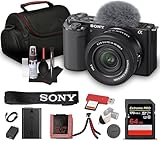


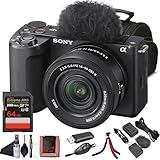
Our Top Picks
Top 3 picks at a glance
Quick comparison of the picks
| Pick | Best for | Key specs (per manufacturer) | Price tier |
|---|---|---|---|
| Canon EOS R50 | Best overall for beginners | 24.2 MP APS-C, built-in EVF, 4K up to 30p, about 375 g with battery | Budget to mid-range |
| Fujifilm X-M5 | Best for travel and style | 26.1 MP APS-C, 6.2K video, no EVF, about 355 g with battery | Mid-range |
| Sony ZV-E10 II | Best for vlogging | 26 MP APS-C, 4K up to 60p, flip-out screen, no EVF | Mid-range |
| Sony a6700 | Best enthusiast APS-C | 26 MP APS-C, in-body stabilization, EVF, 4K up to 120p (cropped), about 490 g | Upper mid-range |
| Nikon Z50 II | Best for stills and handling | 20.9 MP APS-C, EVF, 4K up to 60p, about 550 g | Mid-range |
| OM System OM-5 | Best weather-sealed small kit | 20 MP Micro Four Thirds, in-body stabilization, weather sealing, about 410 g | Upper mid-range |
| Panasonic Lumix S9 | Best compact full-frame for video and style | 24.2 MP full-frame, L-mount, no EVF, roughly 480 g | Premium |
| Sony a7C II | Best compact full-frame overall | 33 MP full-frame, in-body stabilization, EVF, roughly 515 g body | Premium |
Weights are approximate and come from manufacturer spec sheets. Always check the current listing, because bodies get refreshed and bundles change.
Best overall: Canon EOS R50
The EOS R50 suits first-time buyers who want a small body with a built-in viewfinder, reliable autofocus and simple menus. It has a 24.2 MP APS-C sensor, subject-detection autofocus and a guided interface that helps newcomers. Canon’s RF-S lenses are small and inexpensive.
Trade-off: there is no in-body stabilization, and the RF-S lens range is thinner than Sony’s E-mount. Third-party lens support on RF mount is also more restricted than on Sony or Fujifilm.
Best for travel and style: Fujifilm X-M5
At about 355 g, the X-M5 is among the lightest interchangeable-lens bodies with a modern 26.1 MP APS-C sensor. It offers Fujifilm’s film simulations for good JPEGs straight from the camera, plus strong video specs and a vari-angle screen. Pair it with a small prime and it fits a jacket pocket.
Trade-off: it has no electronic viewfinder and no in-body stabilization. If you shoot in bright sun, you will rely on the rear screen.
Best for vlogging: Sony ZV-E10 II
This is the pick if the camera faces you more than the scenery. It has a flip-out screen, strong face and eye tracking, 4K up to 60p and a wide E-mount lens catalog that includes cheap wide zooms and fast Sigma primes. The sensor is a 26 MP APS-C unit.
Trade-off: there is no viewfinder, and stabilization is electronic rather than in-body, so handheld walking footage needs a stabilized lens or software correction.
Best enthusiast APS-C: Sony a6700
The a6700 adds in-body stabilization, an EVF, more physical controls and the more advanced autofocus processing of Sony’s recent bodies. It is the most capable camera here that still counts as compact. Photographers who shoot action, wildlife or low-light handheld video get the most from it.
Trade-off: it is bigger and pricier than the entry bodies, and the 4K 120p mode crops the image. Menus are deep.
Best for stills and handling: Nikon Z50 II
The Z50 II has a comfortable grip, a good EVF and Nikon’s current autofocus system. It also offers 4K up to 60p and a modern processor. It suits people who want a camera that feels like a camera.
Trade-off: at roughly 550 g it is the heaviest APS-C pick here, and the sensor resolution is the lowest on the list. There is no in-body stabilization.
Best weather-sealed small kit: OM System OM-5
Micro Four Thirds is the one format where small bodies and small lenses work together. The OM-5 pairs in-body stabilization with weather sealing, and the lenses are far smaller than APS-C or full-frame equivalents, especially for telephoto reach. It suits hikers and travelers who want to carry a long zoom.
Trade-off: the smaller sensor gives less low-light headroom and less background blur than larger formats.
Best compact full-frame: Sony a7C II and Panasonic Lumix S9
The Sony a7C II (33 MP, in-body stabilization, EVF) is the all-rounder. The Lumix S9 (24.2 MP, L-mount, no EVF) is the lifestyle and video-focused alternative with a very small footprint. Full-frame buys you better high-ISO noise performance and shallower depth of field.
Trade-off: the body is compact, but full-frame lenses are not. A fast 35 mm f/1.4 or a 24–70 mm f/2.8 zoom will make the kit much bulkier than the camera suggests.
How to choose: the numbers that matter
1. Calculate the real kit size, not the body size
Sensor size determines lens size. Equivalent focal length is the lens focal length multiplied by the crop factor: 1.5x for most APS-C (Canon’s APS-C is 1.6x), 2x for Micro Four Thirds.
- A 35 mm lens on APS-C (1.5x) frames like roughly 52 mm on full-frame.
- A 25 mm lens on Micro Four Thirds (2x) frames like 50 mm.
- To match the depth of field and light gathering of a 50 mm f/1.8 on full-frame, you need about f/1.2 on APS-C or f/0.9 on Micro Four Thirds. In practice, f/1.8 on APS-C gives roughly the background blur of f/2.7 on full-frame, and f/1.8 on Micro Four Thirds gives roughly f/3.6.
Smaller sensors give you smaller lenses, but also less background blur and less low-light advantage. Treat each format as a trade, not a flaw.
2. Work out video storage before choosing cards
Video bitrate decides card size. At a typical 4K bitrate of 100 Mbps, you record 12.5 MB per second, or 45 GB per hour (100 ÷ 8 × 3600 ÷ 1000). At 200 Mbps it is about 90 GB per hour. A 128 GB card therefore holds about 2.8 hours at 100 Mbps, but only about 1.4 hours at 200 Mbps. The exact bitrates vary by camera and mode, so check the manual for your chosen setting.
3. Match your situation to a camera
| Your situation | Priority | Choose |
|---|---|---|
| First camera, mostly stills and family photos | Easy menus, EVF, cheap lenses | Canon EOS R50 |
| Street and travel, lightest possible kit | Weight, JPEG quality | Fujifilm X-M5 |
| YouTube or talking-head video | Flip screen, autofocus, mic input | Sony ZV-E10 II |
| Sports, kids, wildlife, handheld low light | Stabilization, tracking AF | Sony a6700 |
| Hiking in wet weather with a long zoom | Sealing, small telephoto | OM System OM-5 |
| Professional-level quality, small bag | Full-frame files, stabilization | Sony a7C II |
| Cinematic video in the smallest full-frame body | Full-frame video, L-mount | Panasonic Lumix S9 |
4. Check three features that spec sheets bury
- Viewfinder: without an EVF you depend on the rear screen. This matters outdoors and for tracking moving subjects.
- Stabilization: in-body stabilization helps with any lens, including old or fast primes. Without it you depend on stabilized lenses, which are bigger.
- Lens ecosystem: check whether the lenses you want exist for the mount, and whether third-party makers support it. Sony E-mount and Micro Four Thirds have the broadest choice.
5. Consider a fixed-lens alternative
If you only shoot one focal length, a fixed-lens mirrorless camera such as the Fujifilm X100VI (23 mm f/2 lens, 40 MP, in-body stabilization) is smaller than any interchangeable kit. You give up flexibility and spend premium money for it, so it only suits street, travel and documentary shooters who are sure of their preferred view.
Frequently Asked Questions
What is the smallest mirrorless camera with a good sensor?
Among the picks here, the Fujifilm X-M5 is the lightest at roughly 355 g with battery. It has a 26.1 MP APS-C sensor. For the smallest overall kit, pair it with a slim pancake or small prime lens rather than a standard zoom.
Is a compact mirrorless camera better than a smartphone?
For image quality in low light, with telephoto lenses, and with background blur, yes, thanks to the much larger sensor. Phones win on convenience, instant sharing and computational processing. If you rarely change lenses or care about print quality, a phone may be enough.
Should I buy full-frame or APS-C for a compact body?
Choose APS-C if you want the smallest total kit and lower cost, because lenses stay small and cheap. Choose full-frame if you shoot in dim light often or want shallower depth of field, and you accept bigger, pricier lenses. The body size difference is small, but the lens difference is large.
Do I need in-body stabilization?
It is most useful for handheld video, slow shutter speeds and unstabilized prime lenses. Bodies like the Sony a6700, OM-5 and a7C II have it. If you mostly shoot stills at fast shutter speeds or use a tripod, you can do without it.
Which compact mirrorless camera is best for video?
For vlogging, the Sony ZV-E10 II is purpose-built, with a flip-out screen and strong autofocus. For higher-end video, the Panasonic Lumix S9 and Sony a7C II offer full-frame sensors. Check overheating limits and crop factors in each camera’s spec sheet for your target resolution and frame rate.
Are kit lenses good enough?
Kit zooms are fine for learning and daylight shooting, and they are very small. For low light and background blur, a small fast prime is usually the first upgrade worth making. Buy the body first, then add one prime that matches the focal length you actually use.
Related guides
More from Amazon
Programs that pair well with the guide above. Offers and eligibility are set by Amazon and may change.
A free business account with business pricing and bulk-buying tools for work, shop or home office.
Create a business accountFree shipping on eligible items, Prime Video and more. Eligible new members can start with a free trial.
Start a Prime free trialAudiobooks and podcasts to listen to on the go. Eligible new members can start with a free trial.
Try Audible freeAd-free music streaming. Eligible new subscribers can start with a free trial.
Try Music Unlimited freeAs an Amazon Associate we earn from qualifying purchases.


