The best Android smartphone for most people worldwide is the Samsung Galaxy S25 Ultra, or its direct successor if one is on shelves in your country. It combines a flagship Snapdragon chip, a versatile camera system, a big 120Hz display and seven years of promised updates, and Samsung sells it almost everywhere. If you want a smaller phone with the longest software support and clean Android, choose the Google Pixel 10 Pro. If you want strong performance for less money, look at the OnePlus 13 or a mid-range Galaxy A56.
“Best worldwide” is really three questions: which phone is good, which is sold and supported where you live, and which works on your local networks. This guide covers all three and uses specifications from the manufacturers’ published spec sheets.
As an Amazon Associate we earn from qualifying purchases at no extra cost to you.
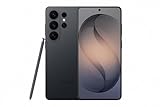
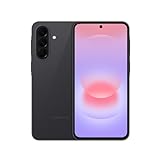


Top 3 picks at a glance
Quick comparison of the best Android phones
| Pick | Best for | Key specs (manufacturer sheets) | Price tier |
|---|---|---|---|
| Samsung Galaxy S25 Ultra | Best overall | 6.9″ 120Hz AMOLED, Snapdragon 8 Elite for Galaxy, 5000 mAh, 45W wired, 200MP main, 5x telephoto, 7 years of updates | Premium |
| Google Pixel 10 Pro | Clean software, longest support | 6.3″ OLED, Tensor G5, about 4870 mAh, 50MP main, 5x telephoto, Qi2-style magnetic charging, 7 years of updates | Premium |
| OnePlus 13 | Best value flagship, battery | 6.82″ 120Hz LTPO AMOLED, Snapdragon 8 Elite, 6000 mAh, up to 100W wired (varies by region), 50W wireless | Upper mid to premium |
| Samsung Galaxy A56 | Best mid-range | 6.7″ 120Hz AMOLED, Exynos 1580, 5000 mAh, 45W wired, 6 years of updates | Mid-range |
| Google Pixel 9a | Best compact value | 6.3″ 120Hz OLED, Tensor G4, about 5100 mAh, 7 years of updates | Mid-range |
| Poco F7 | Best performance per money outside the US | 6.83″ 120Hz AMOLED, Snapdragon 8s Gen 4, about 6500 mAh, 90W wired | Budget to mid-range |
| ASUS ROG Phone 9 Pro | Best for mobile gaming | 6.78″ AMOLED up to 185Hz, Snapdragon 8 Elite, about 5800 mAh, 65W wired, active cooler accessory | Premium |
| Samsung Galaxy Z Fold7 | Best foldable | About 8″ inner and 6.5″ cover display, slim body, about 4400 mAh, 25W wired | Ultra-premium |
Specs and variants differ by country. Charging wattage, RAM options and even the chipset can change between regional models, so confirm the exact model number before buying.
Best overall: Samsung Galaxy S25 Ultra
This is the safest choice because it has few weak points. The camera setup (200MP main, ultrawide, 3x and 5x telephotos) is among the most flexible on Android. The Snapdragon 8 Elite handles any mobile game at high settings. Samsung also sells and services its phones in more countries than any other Android brand, which matters for repairs and warranty.
Trade-off: It is large and heavy, and 45W charging is slower than OnePlus and Chinese-brand rivals. If you want something smaller, look at the standard Galaxy S-series phones instead.
Best for software and long support: Google Pixel 10 Pro
Google promises seven years of OS and security updates for recent Pixels, and the software is the least cluttered on Android. The Pro is compact for a flagship, with a strong camera and good computational photography, especially in low light and video. It suits people who keep phones for many years.
Trade-off: Tensor chips usually trail Snapdragon 8 Elite phones in sustained gaming performance and heat. Pixels are also officially sold in fewer countries, so check that Google sells and services them where you live.
Best value flagship: OnePlus 13
The OnePlus 13 pairs the same class of chip as the S25 Ultra with a 6000 mAh battery and very fast wired charging, usually undercutting Samsung on price. It is a strong pick for heavy users who care more about battery and speed than camera finesse.
Trade-off: OnePlus commits to fewer update years than Samsung and Google (roughly four OS versions and six years of security patches, per the manufacturer). Its US carrier support is also narrower than Samsung’s.
Best mid-range: Samsung Galaxy A56
The A56 gives you a bright 120Hz AMOLED screen, a 5000 mAh battery, solid cameras and six years of updates at a mid-range price. It is easy to find and repair worldwide, and it works well with Samsung’s ecosystem of watches, earbuds and tablets.
Trade-off: The Exynos 1580 is fine for everyday use but runs demanding 3D games at lower settings than a flagship.
Best compact value: Google Pixel 9a
If you want a phone that fits in one hand and stays supported until the early 2030s, the Pixel 9a is the pick. It is sold in many Western and some Asian markets, and the camera is better than its price suggests.
Trade-off: Charging is slow compared with Chinese-brand phones, and the Tensor G4 throttles during long gaming sessions.
Best performance for the money outside the US: Poco F7
Poco phones focus on raw hardware per unit of money. The F7 has a large battery of roughly 6500 mAh, 90W charging and a fast Snapdragon 8s Gen 4 chip. It is popular across Europe, India, the Middle East and Southeast Asia.
Trade-off: It is not officially sold in the US, update support is shorter than Samsung’s or Google’s, and the software ships with more preinstalled apps and ads unless you turn them off.
Best for mobile gaming: ASUS ROG Phone 9 Pro
This is the choice if frame rate and thermals matter most. The display goes up to 185Hz, there are shoulder-trigger sensors, and the AeroActive cooler accessory actively cools the back of the phone to hold performance. The Snapdragon 8 Elite makes it as fast as any Android phone.
Trade-off: The cameras are weaker than Samsung’s or Google’s, the phone is bulky, and dealer availability is patchy in some regions.
Best foldable: Samsung Galaxy Z Fold7
The Fold7 is thin enough to be a normal phone when closed and opens into an almost tablet-sized screen for multitasking, reading and video. It is the most refined Android foldable and has wide availability.
Trade-off: It is the most expensive pick here, the battery is smaller than in slab phones, and the 25W charging is slow.
How to choose: a decision matrix
| Your situation | Best choice | Why |
|---|---|---|
| Want one phone that does everything | Galaxy S25 Ultra | Cameras, screen, performance and long support in one device |
| Keep phones 6 to 7 years | Pixel 10 Pro or Pixel 9a | Seven years of updates, per Google |
| Heavy daily use, short on charging time | OnePlus 13 or Poco F7 | 6000 mAh or more with 80 to 100W charging |
| Mostly games | ROG Phone 9 Pro | High refresh, active cooling, triggers |
| Live in the US and use mmWave or a specific carrier | Samsung or Pixel | Best carrier certification and band support |
| Live in Europe, India or Southeast Asia and want value | Poco F7 or Galaxy A56 | Widest regional pricing and service |
| Travel often across regions | Samsung or Pixel with eSIM | Broad band support and dual eSIM/SIM options |
Check the bands before you import
A phone sold in another country can be a great deal, but it may lack the LTE or 5G bands your carrier uses. Look up your carrier’s main bands (for example, B12/B13/B71 for low-band coverage in the US, or n78 for 5G in much of Europe and Asia) and compare them with the phone’s published band list. US carriers also use n41 and mmWave in some cities, and many global-market phones skip mmWave. Buying the version sold in your own region avoids this.
Check update years
A phone bought in 2026 with seven years of updates (Samsung’s and Google’s flagships) stays supported to about 2033. A phone with four OS updates and six years of security patches runs to about 2032 for patches but gets major OS versions only until about 2030. If you plan to keep a phone five years or more, update length is worth more than a faster chip.
Worked example: battery runtime and charging
Battery capacity in watt-hours is mAh times nominal voltage (about 3.87V for modern lithium cells) divided by 1000.
- 5000 mAh gives about 19.4 Wh. A phone averaging 6W during demanding gaming lasts about 3.2 hours. At a lighter 1.5W for social media and messaging, it lasts roughly 12 hours.
- 6000 mAh gives about 23.2 Wh. At the same 6W gaming draw, that is about 3.9 hours, about 20 percent longer.
- 6500 mAh gives about 25.2 Wh, or about 4.2 hours of gaming at 6W.
Charging time is not simply capacity divided by wattage, because phones slow down as they fill. As a rough guide, a 19.4 Wh battery on a 45W charger needs a little over an hour for a full charge in real use, while a 90 to 100W charger can do it in 30 to 45 minutes. Real results vary with charger, cable, temperature and manufacturer limits, so treat these as estimates.
Screen and chip priorities
- Display: look for LTPO AMOLED at 120Hz, which lowers the refresh rate on static content to save power.
- Chip: Snapdragon 8 Elite phones suit demanding gaming; Snapdragon 8s Gen 4 and Tensor G4 suit normal use and casual games.
- RAM and storage: 8GB is enough for most users, while 12GB or more helps with heavy multitasking. Choose at least 256GB if you shoot a lot of 4K video, because many phones have no microSD slot.
Frequently Asked Questions
Which Android brand is best worldwide?
Samsung is the best all-round brand worldwide because of its breadth of models, service network and long update promises. Google leads on software cleanliness and update length. OnePlus, Xiaomi and Poco offer more hardware per unit of money but have less consistent service coverage.
Are Samsung phones sold worldwide the same?
No. The same model can have a different chipset, band list and charging speed by region, and some carrier versions are locked. The model number printed on the box or settings page tells you which version you have, so check it against the manufacturer’s regional spec page.
Is a Pixel better than a Galaxy?
It depends on what you value. A Pixel offers cleaner software, longer guaranteed updates and a more compact body, while a Galaxy usually has a stronger chip for gaming, more versatile cameras and wider regional availability. Both promise seven years of updates on current flagships.
Do I need a flagship for mobile gaming?
No, but it helps for demanding 3D titles. A phone with Snapdragon 8 Elite or 8s Gen 4 will hold higher frame rates and settings, while mid-range chips are fine for casual and older games. Frame rates vary with the game, settings, thermal conditions and patch, so check recent reviews for your specific games.
Can I use a phone from another country?
Usually yes, if it supports your carrier’s bands and is not locked to another operator. Check band compatibility, whether the model has Google services, and whether you can get warranty service locally. A phone built for China, for example, often lacks Google Play services.
How long should an Android phone last?
With seven years of promised updates, a Samsung or Google flagship can stay secure and usable for six to seven years, although the battery will likely need replacing after three to four. Phones with four years of OS updates are better treated as a four-to-five-year purchase.
Related guides
More from Amazon
Programs that pair well with the guide above. Offers and eligibility are set by Amazon and may change.
A free business account with business pricing and bulk-buying tools for work, shop or home office.
Create a business accountFree shipping on eligible items, Prime Video and more. Eligible new members can start with a free trial.
Start a Prime free trialAudiobooks and podcasts to listen to on the go. Eligible new members can start with a free trial.
Try Audible freeAd-free music streaming. Eligible new subscribers can start with a free trial.
Try Music Unlimited freeAs an Amazon Associate we earn from qualifying purchases.


