The best pocket cameras for a roughly 25mm view are the Sony RX100 VII for all-round use, the Ricoh GR III / GR IV class for image quality, and the Canon PowerShot G7 X Mark III for a bright lens and vlogging. “25mm” almost always means a 35mm-equivalent wide angle, so any compact that starts at 24mm or 28mm gives you the same look. This guide covers those models, how equivalent focal length works, and which one fits your situation.
As an Amazon Associate we earn from qualifying purchases at no extra cost to you.


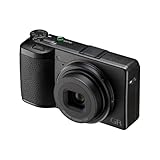
Our Top Picks
Top 3 picks at a glance
What “25mm” means on a pocket camera
Almost no pocket camera has a true 25mm lens. Manufacturers quote a 35mm-equivalent figure, which tells you the field of view as if the sensor were full-frame. Cameras with a 1-inch sensor reach a 24mm view with a lens of about 9mm. An APS-C compact like the Ricoh GR reaches 28mm with a physical 18.3mm lens. No pocket model uses exactly 25mm, so the practical search is for cameras that start at 24mm or 28mm equivalent.
The formula is simple: physical focal length multiplied by the sensor’s crop factor equals the equivalent. A 1-inch sensor has a crop factor of about 2.7, so 9.3mm × 2.7 ≈ 25mm.
Quick comparison
| Pick | Best for | Key specs (per manufacturer spec sheets) | Price range |
|---|---|---|---|
| Sony RX100 VII | Best overall, travel and street | 1-inch 20.1MP, 24–200mm equiv, f/2.8–4.5, about 300g | Premium compact |
| Ricoh GR III / GR IV | Best image quality, street | APS-C (24MP and up), fixed 28mm equiv, f/2.8, about 260g | Mid-range to premium |
| Canon PowerShot G7 X Mark III | Best for vlogging and streaming | 1-inch 20.1MP, 24–100mm equiv, f/1.8–2.8, about 300g | Mid-range |
| Panasonic Lumix LX100 II | Best for low light and manual control | Four Thirds 17MP, 24–75mm equiv, f/1.7–2.8, about 390g | Mid-range to premium |
| Sony ZV-1 II | Best for wide vlogging | 1-inch 20.1MP, 18–50mm equiv, f/1.8–4 | Mid-range |
| Sony RX100 VA (older or used) | Best budget route | 1-inch 20.1MP, 24–70mm equiv, f/1.8–2.8 | Budget to mid-range, mostly secondhand |
| DJI Osmo Pocket 3 | Best for stabilized video | 1-inch sensor, about 20mm equiv, f/2.0, gimbal, about 179g | Mid-range |
Weights and apertures are approximate. Check the current spec sheet, because some of these models are being phased out in certain regions.
Best overall: Sony RX100 VII
The RX100 VII starts at a true 24mm equivalent and zooms to 200mm, so it covers landscapes, portraits and distant subjects in one pocketable body. Its autofocus tracking is among the strongest on a compact, and it has a pop-up viewfinder.
Trade-off: The lens slows to f/4.5 at the long end, so low light at 100mm and beyond is limited. It is also one of the more expensive 1-inch compacts.
Best for image quality: Ricoh GR III / GR IV
The GR series puts an APS-C sensor in a body that fits a jeans pocket, with a fixed 28mm equivalent lens. The larger sensor gives cleaner files at high ISO and more depth-of-field separation than a 1-inch camera at the same view. The GR IV is the newer generation, and the GR III is often cheaper where it is still sold.
Trade-off: There is no zoom, no viewfinder, and video is basic. You also have to move your feet, because 28mm is a fixed view.
Best for vlogging: Canon PowerShot G7 X Mark III
This camera has a 24–100mm f/1.8–2.8 lens, a flip-up touchscreen, and support for vertical video and live streaming. A 24mm start works for arm’s-length vlogs without being as extreme as an 18mm lens.
Trade-off: There is no viewfinder, and its autofocus is less sticky than Sony’s. Long clips can also trigger heat limits, so check Canon’s recording specs.
Best for low light and manual control: Panasonic Lumix LX100 II
The larger Four Thirds sensor and f/1.7 maximum aperture at the wide end make it strong indoors. It has a lens aperture ring, a built-in viewfinder and a satisfying manual layout.
Trade-off: It is bigger and heavier than the 1-inch group, so it is a jacket-pocket camera rather than a jeans-pocket one. It also has a 75mm long end and a 17MP effective resolution.
Best for wide vlogging: Sony ZV-1 II
If you often hold the camera at arm’s length or film in tight rooms, its 18mm equivalent wide end gives a much bigger view than 24–25mm. It is aimed at creators and has good audio inputs and background-defocus features.
Trade-off: The 18mm view stretches faces at the edges, and the lens is only f/4 at 50mm. If your target is truly around 25mm, you would zoom in slightly.
Best budget route: Sony RX100 VA or similar older RX100s
Older RX100 models, often bought used, offer a 24–70mm f/1.8–2.8 lens on a 1-inch sensor. This is the cheapest way into a 24mm-class pocket camera with a good sensor. Check battery health and the pop-up viewfinder mechanism before buying.
Trade-off: Autofocus and video features trail the VII, and availability and condition vary a lot.
Best for stabilized video: DJI Osmo Pocket 3
It is not a stills-first camera, but it solves the main problem of handheld wide video: shake. The gimbal gives smoother footage than electronic stabilization, and its roughly 20mm equivalent lens is wide enough for walking shots.
Trade-off: The screen is small, ergonomics are less camera-like, and stills handling is limited compared with the other picks.
Worked example: how much does 24, 25 and 28mm actually fit?
For a full-frame equivalent, horizontal field of view = 2 × arctan(36 ÷ (2 × focal length)). The width covered at a given distance is distance × 36 ÷ equivalent focal length.
| Equivalent focal length | Horizontal angle | Width covered at 3 m | Width covered at 1 m (arm’s length) |
|---|---|---|---|
| 18mm | about 90° | 6.0 m | 2.0 m |
| 24mm | about 74° | 4.5 m | 1.5 m |
| 25mm | about 72° | 4.3 m | 1.4 m |
| 28mm | about 65° | 3.9 m | 1.3 m |
| 40mm | about 48° | 2.7 m | 0.9 m |
The gap between 24mm and 28mm is smaller than it sounds. At 3 m you gain only about 0.6 m of width. Do not rule out a good 28mm camera like the Ricoh GR because it is not 25mm. Going from 28mm to 18mm adds more than 2 m of width at the same distance, which is a different kind of shot. Video stabilization also crops the frame, so a camera that is 24mm without stabilization can behave like 28mm or longer with it enabled.
How to choose: match your situation to a pick
| Your situation | Choose | Reason |
|---|---|---|
| One camera for travel, with zoom | Sony RX100 VII | 24–200mm starts at your target wide angle |
| Street photography, small footprint | Ricoh GR III / GR IV | APS-C quality with a 28mm view and a fast shooting flow |
| Vlogging and streaming | Canon G7 X Mark III | Flip screen, f/1.8 at 24mm, streaming support |
| Dim restaurants and indoor events | Lumix LX100 II | Larger sensor and f/1.7 at the wide end |
| Tight rooms, selfie-style framing | Sony ZV-1 II | 18mm start fits more into the frame |
| Limited budget | Used RX100 III–VA | Same 24mm-class sensor family at a lower cost |
| Walking video, no stills priority | DJI Osmo Pocket 3 | Gimbal stabilization |
Decision criteria that matter more than the headline focal length
- Sensor size: a 1-inch sensor is about 116 mm² and APS-C is about 370 mm², roughly 3× the area. That is the biggest factor in low-light quality.
- Aperture at the wide end: f/1.8 gathers about 2.4× the light of f/2.8, because (2.8 ÷ 1.8)² ≈ 2.4. That is more than one stop of shutter speed or ISO headroom.
- Pocketability: aim for about 260–310g and a thickness near 40mm. The LX100 II is bigger than that.
- Viewfinder: the RX100 VII and LX100 II have one. The others rely on the rear screen, which is hard to see in bright sun.
- Video needs: check recording limits, microphone input and heat behavior in the manufacturer’s spec sheet if you shoot long clips.
Frequently Asked Questions
Is there a pocket camera with exactly a 25mm lens?
Not as a mainstream choice. Most compacts are specified at 24mm or 28mm equivalent. The difference from 25mm is small enough that framing barely changes. Some listings give the physical focal length, so a “25mm” lens may be a different field of view depending on sensor size.
Is 24mm or 28mm better for a pocket camera?
24mm suits landscapes, interiors and group shots. 28mm suits street and documentary work, with less distortion at the edges. If you want one compact that does both, a zoom that starts at 24mm, like the RX100 VII, is the more flexible choice.
Is a pocket camera still worth buying over a smartphone?
Yes, if you want an optical zoom, a larger sensor than most phone main cameras on some models, physical controls and a battery separate from your phone. Phones often win on computational processing and convenience. A dedicated compact is most useful for travel, manual shooting and distance reach.
Which of these is best for video?
The Canon G7 X Mark III and Sony ZV-1 II suit vlogging because of their flip screens and audio options. The DJI Osmo Pocket 3 gives the smoothest handheld footage. The Ricoh GR is a stills-first camera and a weaker video choice.
Do I need a viewfinder on a pocket camera?
Not for everyday shooting, but in bright sunlight the rear screen can be hard to read. The RX100 VII and LX100 II include one. If you shoot mostly outdoors or want steadier handheld stills, that feature is worth paying for.
Should I buy a used pocket camera?
Used is a good way to get a 1-inch compact at a lower price, especially older RX100-series bodies. Check that the lens extends and retracts smoothly, the pop-up viewfinder works, and the battery holds a charge. Buy from a seller with a return policy, because compacts take wear from pocket dust and drops.
Related guides
More from Amazon
Programs that pair well with the guide above. Offers and eligibility are set by Amazon and may change.
A free business account with business pricing and bulk-buying tools for work, shop or home office.
Create a business accountFree shipping on eligible items, Prime Video and more. Eligible new members can start with a free trial.
Start a Prime free trialAudiobooks and podcasts to listen to on the go. Eligible new members can start with a free trial.
Try Audible freeAd-free music streaming. Eligible new subscribers can start with a free trial.
Try Music Unlimited freeAs an Amazon Associate we earn from qualifying purchases.


