The best 20x video camera for most people is the Sony FDR-AX43A, a compact 4K camcorder with a 20x optical zoom and strong stabilization. If you need a bigger sensor, XLR audio and built-in ND filters, the Panasonic HC-X2 is the stronger choice, and the Canon XA60 is the pick for event work. For live streaming from a fixed position, a 20x PTZ camera such as the Canon CR-N300 makes more sense than a handheld camcorder.
Only optical zoom counts here. “20x” on a spec sheet means the lens magnifies 20 times from its widest to its longest setting. Digital or “Clear Image” zoom figures of 30x to 60x are cropping and should be ignored when comparing models.
As an Amazon Associate we earn from qualifying purchases at no extra cost to you.
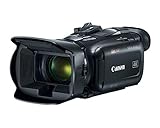


Top 3 picks at a glance
Quick comparison of the best 20x video cameras
| Pick | Best for | Key specs (per manufacturer spec sheets) | Price range |
|---|---|---|---|
| Sony FDR-AX43A | Best overall for families, travel, events | 20x optical, 4K, stabilized, compact handheld body | Mid-range |
| Panasonic HC-X2 | Best for quality and pro audio | 20x optical, 1-inch-type sensor, 4K 60p, 10-bit modes, built-in ND, XLR handle | Premium |
| Canon XA60 | Best for weddings, church, corporate events | 20x optical, 4K, XLR handle unit, compact shoulder-friendly body | Upper mid-range |
| Canon VIXIA HF G70 | Best budget-conscious 20x (availability varies) | 20x optical, 4K, small sensor, consumer-oriented controls | Budget to mid-range |
| Canon CR-N300 (20x PTZ class) | Best for streaming and fixed rooms | 20x optical, 4K PTZ, network control, remote operation | Premium |
Best overall: Sony FDR-AX43A
The AX43A suits buyers who want a camera that works out of the box. It combines a 20x optical zoom with 4K recording, Sony’s optical stabilization and fast autofocus. It is a good fit for school events, sports from the sideline, travel and family footage where you can’t redo the shot.
Trade-off: the sensor is small, so image quality drops in dim gyms and churches, and the lens narrows its aperture at full telephoto. Audio is also limited unless you add an accessory. Check which frame rates the 4K mode offers if you need slow motion.
Best for image quality: Panasonic HC-X2
The HC-X2 is the pick if “20x” needs to hold up in demanding light. Its larger 1-inch-type sensor, built-in ND filters, 4K 60p and 10-bit recording options put it in a different class from consumer camcorders. The included XLR handle makes it practical for interviews, conferences and documentary work.
Trade-off: it costs well above the consumer models. It is also bulkier, and the high-bitrate modes fill cards quickly (see the storage table below).
Best for events: Canon XA60
The XA60 is a compact professional camcorder with a 20x optical zoom, 4K recording and an XLR handle unit. It is a sensible choice for wedding videographers, churches and corporate events where you need balanced audio inputs and a familiar, button-heavy layout.
Trade-off: like the AX43A, it uses a small sensor, so it will not match the HC-X2 in low light or dynamic range.
Best budget-minded 20x: Canon VIXIA HF G70
The HF G70 gives you a 20x optical zoom and 4K in a consumer-friendly package. It suits hobbyists, YouTubers shooting outdoors and anyone who wants Canon colors without paying for pro audio hardware. Stock of this line varies, and some retailers carry the older HF G60 instead.
Trade-off: there is no pro XLR audio and fewer manual controls than the XA series. Low-light performance is limited by the small sensor.
Best for streaming and fixed rooms: 20x PTZ cameras
If the camera sits on a wall or tripod and someone adjusts it remotely, a 20x PTZ is better value than a camcorder. The Canon CR-N300 is a 20x 4K model, and PTZOptics offers 20x versions of its Move 4K line. These are suited to churches, lecture halls, esports studios and multi-camera streams. They offer IP control, presets and no need for a camera operator.
Trade-off: there is no handheld use and no built-in recording ergonomics. Audio is usually handled by a separate mixer. Check which protocols (NDI, SRT, RTMP) your streaming software expects before buying.
What 20x actually gets you: a worked calculation
The zoom ratio is only half the story. What matters is where the lens starts. Take a camera whose wide end is about 29 mm in 35 mm-equivalent terms, which is typical of compact camcorders. Twenty times 29 mm is about 580 mm at the long end. A camera that starts at 24.5 mm reaches about 490 mm. A wider start gives you better room-filling shots and a shorter reach.
| Lens | Equivalent focal length | Approx. horizontal angle | Scene width at 10 m | Scene width at 50 m |
|---|---|---|---|---|
| 29 mm (wide end) | 29 mm | about 64° | about 12.4 m | about 62 m |
| 29 mm x 20 (tele) | about 580 mm | about 3.6° | about 0.6 m | about 3.1 m |
| 24.5 mm x 20 (tele) | about 490 mm | about 4.2° | about 0.7 m | about 3.7 m |
At 50 m, a 20x lens frames a scene only about 3 m wide, enough for a single player on a field or a speaker on a stage. These figures are geometric approximations based on a 36 mm reference width, so real cameras differ slightly.
Why handheld shots at full zoom look shaky
The common rule of thumb for stills is a shutter speed of at least 1 over the focal length. At 580 mm that is about 1/580 s, far faster than the 1/50 or 1/60 s used for video. Video motion also needs that slower shutter, so every tiny hand movement is magnified roughly 20 times. In practice, use a tripod or monopod above about 10x. If you must shoot handheld, zoom out a little and move closer. Turn on active stabilization only when you aren’t on a tripod, because some systems cause drift when the camera is locked off.
Storage: how much card space 4K needs
Bitrate decides how many hours fit on a card. The conversion is: bitrate in Mbps ÷ 8 = MB per second, then ×3,600 gives MB per hour. The bitrates below are examples. Check your camera’s actual recording modes.
| Recording bitrate | Data per hour | Hours on 128 GB | Hours on 256 GB |
|---|---|---|---|
| 50 Mbps (1080p/efficient 4K) | about 22.5 GB | about 5.7 | about 11.4 |
| 100 Mbps (typical 4K) | about 45 GB | about 2.8 | about 5.7 |
| 150 Mbps (high-quality 4K) | about 67.5 GB | about 1.9 | about 3.8 |
| 200 Mbps (10-bit 4:2:2 class) | about 90 GB | about 1.4 | about 2.8 |
A three-hour wedding ceremony at 150 Mbps needs about 200 GB, or two 128 GB cards. Event shooters usually use dual card slots to record a backup copy, which means buying cards in pairs.
How to choose: a decision matrix
| Your situation | Choose | Why |
|---|---|---|
| Family events, travel, sports sidelines | Sony FDR-AX43A | Simple, stabilized, compact |
| Interviews, documentaries, dim rooms | Panasonic HC-X2 | Larger sensor, ND filters, XLR |
| Weddings and church events with a mixer feed | Canon XA60 | XLR inputs, proven workflow |
| Outdoor hobby filming on a tight budget | Canon VIXIA HF G70 (or a similar 20x consumer camcorder) | Lowest entry cost for 20x 4K |
| Fixed-room streaming, no camera operator | 20x PTZ (Canon CR-N300, PTZOptics Move 4K) | Remote control, presets, IP output |
| Esports or gaming studio, multiple angles | PTZ with HDMI/SDI/IP output | Matches switchers such as ATEM or OBS workflows |
Checks that matter more than the zoom number
- Wide-end focal length: 24-30 mm is the useful range for interiors.
- Sensor size: a 1-inch-type sensor gives visibly cleaner low-light footage than a 1/2.3-inch type.
- Audio inputs: look for XLR or a hot shoe with digital audio, or plan for an external recorder.
- ND filters: built-in ND lets you keep a 1/50 shutter outdoors without stopping down.
- Clean HDMI output: needed for streaming. Confirm it outputs without on-screen overlays and at the resolution you need.
- Recording limits: some cameras have a continuous recording cap or overheat in direct sun. Check the manufacturer’s notes.
Frequently Asked Questions
Is a 20x optical zoom enough for sports?
For youth soccer, basketball and track from the sideline, a 20x lens is usually enough. A reach of about 500-580 mm frames a single player from 50 m away. Stadium seating, large fields or birdwatching call for longer reach or a different camera type, and you should use a tripod.
Is optical zoom better than digital zoom?
Yes. Optical zoom changes the lens elements and keeps full sensor resolution. Digital zoom crops the image, which lowers detail, and “intelligent” versions use processing to hide it. When comparing 20x cameras, treat only the optical figure as the real zoom range.
Can I use a 20x camcorder as a webcam for streaming?
Often yes. Cameras with a clean HDMI output work with an HDMI capture card, and some also support USB video output. Check that the output is clean (no overlays) and that auto power-off is disabled. A power adapter or dummy battery is advisable for long sessions.
Do 20x cameras work well in low light?
It depends on sensor size and lens aperture. Small-sensor camcorders lose light at full zoom because the aperture narrows, so footage gets noisy indoors. A 1-inch-type sensor such as the one in the Panasonic HC-X2 holds up noticeably better. Use a lower zoom setting and add light where you can.
Should I buy a camcorder or a mirrorless camera?
Choose a camcorder if you want a long, continuous zoom range, built-in stabilization, long recording times and easy audio. Choose a mirrorless camera if shallow depth of field, interchangeable lenses and low-light performance matter more. Mirrorless cameras rarely offer a native 20x zoom without a bulky and expensive lens.
What memory cards do these cameras need?
Most 4K camcorders use SD cards rated at least UHS-I U3 or V30 for 100-150 Mbps modes. Higher-bitrate, 10-bit modes may require V60 or V90 cards. Check the manual for each recording mode, and buy cards from a known brand because counterfeits are common.
Related guides
More from Amazon
Programs that pair well with the guide above. Offers and eligibility are set by Amazon and may change.
A free business account with business pricing and bulk-buying tools for work, shop or home office.
Create a business accountFree shipping on eligible items, Prime Video and more. Eligible new members can start with a free trial.
Start a Prime free trialAudiobooks and podcasts to listen to on the go. Eligible new members can start with a free trial.
Try Audible freeAd-free music streaming. Eligible new subscribers can start with a free trial.
Try Music Unlimited freeAs an Amazon Associate we earn from qualifying purchases.


