
The easiest mistake to make when buying a backup hard drive is treating it like any other storage purchase. A low price, a familiar brand, and a big capacity number can look convincing—until the drive is full, painfully slow, incompatible with your computer, or sitting next to the very device it is meant to protect.
Another common problem is buying only enough space for today’s files. Photos, 4K phone video, design projects, games, and computer backups grow quickly. A drive that seems oversized at checkout can become cramped within a year or two, especially if it needs to hold multiple computers or preserve old versions of files.
As an Amazon Associate we earn from qualifying purchases at no extra cost to you. Product prices and availability are accurate as of the date shown and are subject to change.

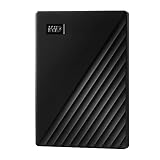
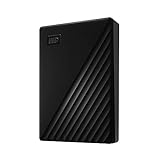

A good backup drive does not need to be the fastest or most expensive model available. It does need enough capacity, a sensible connection, dependable build quality, and a backup plan that protects files from accidental deletion, drive failure, theft, or ransomware. Here is what actually matters before you buy.
Top 3 picks at a glance
Decide These 3 Things First
- How much data are you backing up? Check the storage currently used on your computer—not just its total capacity. If your laptop has 750GB of files, a 1TB backup drive is technically possible but leaves too little room for future backups and file versions. Aim for at least 2 times your current used storage; 3 times is more comfortable.
- Do you need portability or a desktop setup? Portable hard drives are usually powered through a single USB cable, weigh roughly 4 to 10 ounces, and fit in a bag. Desktop external drives generally need a wall outlet, weigh 1.5 to 3 pounds, and offer larger capacities, often 8TB to 22TB or more.
- What kind of backup are you making? For a second copy of family photos, a portable 2TB or 4TB drive may be enough. For full-system backups, several household computers, or years of video files, consider 5TB portable storage or an 8TB-plus desktop drive. For critical records, use the 3-2-1 approach: keep three copies of important files, on two types of storage, with one copy stored elsewhere.
Capacity: Buy More Than You Need Today
Capacity is the first specification most shoppers notice, and it remains the most important. The right amount depends on the files you keep and whether the drive will store one current copy or multiple dated backup versions.
For light use—documents, tax records, a modest photo library, and a single laptop backup—1TB to 2TB is a practical starting point. A 2TB portable drive is especially useful for a computer with up to about 750GB of used storage. It leaves room for growth and may accommodate versioned backups rather than only one duplicate.
For households with large phone-photo libraries, raw camera files, or video, 4TB to 5TB is often the sweet spot in a portable drive. A 4TB model can be sensible for a laptop using 1TB to 1.5TB of storage, while a 5TB drive provides more breathing room without moving to a plug-in desktop model.
If you are backing up multiple computers, archiving video, or maintaining a large media collection, start at 8TB with a desktop external drive. These are less travel-friendly but usually offer the best cost per terabyte.
Do not confuse advertised capacity with usable space. A drive sold as 2TB will show slightly less capacity in your operating system, often around 1.81TB. A 4TB drive may show roughly 3.63TB. That is normal formatting math, not missing storage.
Drive Type and Performance: HDD vs. SSD
Most traditional backup drives are hard disk drives, or HDDs. They use spinning disks inside an enclosure and offer a lot of storage for the money. For routine backups, an HDD is usually the sensible value choice.
A portable HDD commonly transfers files at real-world speeds of roughly 80 to 140MB per second, depending on file sizes, the computer, and how full the drive is. Backing up 500GB can therefore take several hours. That is not a defect; it is simply the trade-off for low-cost high-capacity storage.
Solid-state drives, or SSDs, have no moving parts. External SSDs are smaller, quieter, and more resistant to bumps. Many can move files at 400MB to 1,000MB per second or more when connected to a compatible port. They are excellent for photographers, frequent travelers, and anyone who needs to copy large files regularly.
But SSD backup storage costs more per terabyte. A 2TB external SSD may cost as much as, or more than, a 4TB to 5TB portable HDD. If the drive will sit on a desk and run scheduled backups overnight, spend first on capacity and a second backup location rather than speed alone.
For most homes, choose an HDD for bulk backup and an SSD only when portability, shock resistance, and faster transfers justify the higher price.
Physical Size, Materials, and Construction
Portable hard drives are compact, but dimensions still matter if you plan to travel with one. Many 2TB portable HDDs measure about 4.2 to 4.8 inches long, 3 to 3.5 inches wide, and 0.45 to 0.8 inch thick. They typically weigh around 5 to 8 ounces. Higher-capacity 4TB and 5TB portable models can be thicker, sometimes close to 0.85 inch, and may weigh 8 to 10 ounces.
Most portable drives use a plastic shell, sometimes with textured panels or a metal-look finish. Plastic is not inherently a problem, but look for a case that does not flex easily, a port that feels firmly seated, and rubber feet or a non-slip surface if the drive will live on a desk.
Construction matters more with HDDs because they contain moving parts. Avoid using a spinning hard drive on an unstable surface, near the edge of a table, or loose in a bag. Let it finish writing before unplugging it. A padded protective case is worthwhile for any portable HDD that travels regularly.
If the drive will be handled by children, carried between homes, or used outdoors, an external SSD with a rated rugged enclosure may be the more durable choice. For a stationary drive, a standard portable HDD is usually adequate when treated carefully.
Connection, Compatibility, and Setup
USB compatibility is more important than chasing the newest label. Many portable hard drives use USB 3.0, USB 3.1, or USB 3.2 connections; these terms can be confusing because naming conventions overlap. What matters is that the drive supports a modern USB connection and includes the right cable for your computer.
USB 3.x connections are backward-compatible with USB 2.0, but a drive connected through USB 2.0 can be dramatically slower. If your computer has USB-C ports and the drive includes only a USB-A cable, you may need an adapter or a USB-C cable that supports data transfer.
Check the drive’s formatting before you open the packaging if you use both Mac and Windows computers. A drive formatted as NTFS works naturally with Windows but may be read-only on a Mac without additional software. exFAT works with both systems and is useful for shared storage, though your preferred backup software may recommend a different format for full-system backups.
Also consider software, but do not make it the deciding feature. Backup utilities can be convenient for scheduling, file history, and ransomware-related protections. Still, the drive should work well with your computer’s built-in backup tools, such as File History or Time Machine, rather than locking you into one app.
Price Tiers and Value
Portable backup-drive pricing changes often, but capacity usually provides the clearest guide to value. In the current market, a basic 1TB to 2TB portable HDD commonly falls around $60 to $140. A 2TB model priced near $130 may be reasonable when it includes backup software, a longer warranty, or a retailer’s service package, but compare its cost per terabyte with larger models.
A 4TB portable HDD often lands around $120 to $190, while 5TB portable HDDs commonly range from $150 to $230. For example, a 4TB portable drive at $181.50 and a 5TB option at $213 can offer better long-term value than a 2TB drive at roughly $130, especially for a growing photo or video library.
Budget desktop HDDs in the 8TB to 12TB range generally cost more upfront but can bring the per-terabyte price down substantially. External SSDs are premium purchases: expect roughly $120 to $220 for 1TB and $180 to $350 or more for 2TB, depending on speed and ruggedness.
Skip suspiciously cheap drives from unknown sellers. Counterfeit storage devices may report a large capacity but fail after a small amount of data is written. Buy from established retailers and check that the model number on the listing matches the package.
Warranty, Security, and Long-Term Ownership
Look for at least a 2-year warranty; 3 years is better. A warranty can replace a defective drive, but it usually does not replace your files. That distinction is crucial. No single hard drive, regardless of brand or warranty length, should be the only home for irreplaceable photos or documents.
Password protection and hardware or software encryption can be helpful if you travel with sensitive information. However, use security features thoughtfully. If you forget a password or recovery key, you may permanently lose access to the data. Store recovery information in a secure password manager or another protected location.
Plan to replace or reassess backup drives every 3 to 5 years, particularly drives used heavily or transported often. You do not need to discard a functioning drive on a strict schedule, but older drives should not be your only backup. Check backups periodically by opening a few files and confirming that your software is still running as expected.
Spec Checklist
| Spec | Budget | Mid | Premium |
|---|---|---|---|
| Best for | Documents and one basic laptop backup | Photos, video, and growing household storage | Frequent travel, large files, or critical workflows |
| Capacity | 1TB–2TB | 4TB–5TB portable or 8TB desktop | 2TB–4TB SSD or 12TB+ desktop HDD |
| Drive type | Portable HDD | Portable HDD or desktop HDD | External SSD or multi-drive desktop setup |
| Typical price | $60–$140 | $120–$230 | $180–$500+ |
| Connection | USB 3.0 or newer | USB 3.x with USB-C option | USB-C, USB 3.2, or Thunderbolt-compatible SSD |
| Warranty target | 2 years | 2–3 years | 3–5 years |
| Physical format | 5–8 oz portable drive | 8–10 oz high-capacity portable or 1.5–3 lb desktop | Rugged portable SSD or stationary desktop unit |
Red Flags
- Buying capacity equal to your computer’s used storage. Leave at least 50% extra room; 2 to 3 times your current data is safer.
- Keeping the backup drive permanently connected. Ransomware, power events, and accidental deletion can affect attached drives. Disconnect it after backups when practical.
- Relying on one drive. A backup drive protects against some problems, not every problem. Keep an additional off-site or cloud-based copy of irreplaceable files.
- Ignoring cable and port compatibility. Confirm whether your computer uses USB-A, USB-C, or requires an adapter.
- Assuming “password protection” is a complete backup strategy. Security features protect access; they do not create duplicate copies.
- Buying from an unfamiliar marketplace seller because the price is unusually low. Storage fraud is real, and counterfeit drives can fail when filled.
FAQ
How big should a backup hard drive be?
Choose a drive with at least twice the amount of storage you currently use. If your computer contains 500GB of files, a 1TB drive is the minimum, while 2TB gives you more room for growth and backup history. For photo and video-heavy households, 4TB or 5TB is often the better starting point.
Is an external SSD better than an external hard drive for backup?
An SSD is faster, quieter, and more resistant to drops, but it costs more per terabyte. A traditional external HDD is usually better for affordable, high-capacity backups that stay at home. Choose an SSD if you travel frequently or need to move large files often.
Should I leave my backup hard drive plugged in all the time?
It is convenient for automatic backups, but it also exposes the drive to ransomware, accidental deletion, and electrical issues. For especially important files, keep a second backup drive disconnected except during scheduled backup sessions.
How long will a backup hard drive last?
There is no guaranteed lifespan, but many external drives provide several years of service. Treat 3 to 5 years as a useful review point, monitor the drive for errors or unusual noises, and never depend on it as your only copy. In 2026, the best backup plan is still one that uses more than one location and is checked regularly.


