The best affordable sheet set for most people is a 100% cotton percale set with a thread count of roughly 200 to 300, a pocket depth that fits your mattress, and an OEKO-TEX Standard 100 label. If you want the lowest price and a softer, warmer feel, brushed microfiber is the budget alternative. Fabric, weave and fit matter far more than a big thread-count number on the package.
This guide is for readers who spend long hours in a bedroom or gaming den and want sheets that survive weekly washing without costing much. It maps each sleeping situation to a fabric class instead of naming a single “winner”, because the right cheap sheet depends on how hot you sleep and how deep your mattress is.
As an Amazon Associate we earn from qualifying purchases at no extra cost to you.


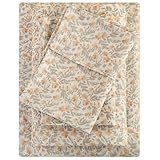
Our Top Picks
Top 3 picks at a glance
Quick comparison of the best affordable sheet set types
| Pick | Best for | Key specs | Price range |
|---|---|---|---|
| Cotton percale | Best overall, hot sleepers | 200–300 thread count, crisp matte weave, breathable | Budget to mid-range |
| Brushed microfiber (polyester) | Best budget | 90–120 GSM, very soft, wrinkle-resistant, less breathable | Lowest |
| Cotton sateen | Soft, smooth feel | 300–400 thread count, slight sheen, warmer than percale | Budget to mid-range |
| Cotton flannel | Cold rooms and winter | 150–190 GSM, brushed surface, pills with age | Budget to mid-range |
| Viscose from bamboo or lyocell blend | Cooling feel | Smooth drape, cool to touch, needs gentler washing | Mid-range |
| Deep-pocket cotton blend | Thick mattresses and toppers | 16–22 inch pockets, full elastic around the fitted sheet | Budget to mid-range |
Best overall: cotton percale sheet sets
Percale is a one-over, one-under weave. It feels crisp, like a hotel shirt, and lets air move through the fabric. For a bedroom that heats up during long gaming sessions, where a PC under load can add hundreds of watts of heat to the room, that breathability is the main reason to choose it.
Who it suits: hot sleepers, people who wash weekly, and anyone who wants the best durability for the money. Percale usually gets softer over the first several washes.
Trade-off: it wrinkles easily and feels less silky than sateen. If you want a slippery, smooth surface, percale can feel dry at first.
Best budget: brushed microfiber sets
Microfiber is fine polyester fiber, brushed to feel soft. It is the cheapest way to get a full set, and it resists wrinkles and shrinking. Its weight is measured in GSM (grams per square meter), not thread count. Typical budget sets are around 90 to 120 GSM, and heavier is generally sturdier.
Who it suits: students, guest rooms, kids’ beds and anyone who needs a set fast on a tight budget.
Trade-off: polyester traps heat and moisture, so it can feel sweaty in warm rooms. It also holds onto oils and odors more than cotton and can pill if dried on high heat.
Best for a soft, smooth feel: cotton sateen
Sateen uses a four-over, one-under weave that puts more thread surface on top. That gives it a slight sheen and a buttery feel, usually at 300 to 400 thread count. It drapes well and costs about the same as mid-tier percale.
Trade-off: it traps slightly more heat than percale and is a little more prone to snagging. Cheap sateen can pill sooner if washed hot.
Best for cold rooms: cotton flannel
Flannel is cotton brushed on one or both sides to raise a fuzzy nap. Quality is judged by GSM, and 150 or more is a reasonable floor for winter bedding. It suits drafty rooms and basements.
Trade-off: it is too warm for summer and sheds lint in the first few washes. Wash it separately for the first few cycles.
Best cooling alternative: bamboo-viscose or lyocell blends
Fabrics made from bamboo-derived viscose or lyocell feel smooth and cool to the touch. Budget versions are often blended with cotton or polyester to keep costs down.
Trade-off: they usually cost more than cotton percale and are less durable when machine-dried hot. Check the label to see what percentage is actually viscose or lyocell, since “bamboo” branding can hide a large polyester share.
Best for thick mattresses: deep-pocket sets
A fitted sheet that pops off the corners at 3 a.m. is the most common complaint with cheap sets. The cause is usually a pocket that is too shallow for the mattress plus topper.
Worked example: pocket depth you need
Measure the mattress height, add the topper or mattress pad thickness, then add 2 to 3 inches so the elastic can tuck under the bottom edge.
- Standard 10-inch mattress, no topper: 10 + 0 + 2 to 3 = 12–13 inches of pocket needed. A standard 14-inch pocket works.
- 12-inch hybrid with a 3-inch topper: 12 + 3 + 2 to 3 = 17–18 inches needed. Buy a “deep pocket” set rated for 16 to 18 inches or more.
- 14-inch mattress with a 4-inch topper: 14 + 4 + 2 to 3 = 20–21 inches needed. Look for a 21 to 22 inch pocket or an extra-deep fitted sheet.
Cotton fitted sheets can shrink slightly in the first wash, so aim for a pocket about 1 inch deeper than your result.
How to choose: decision criteria with numbers
1. Ignore inflated thread counts
Thread count is how many threads are woven into a square inch. Sets advertising 800 to 1,500 often use multi-ply thread to inflate the number. For cotton, the useful range is about 200 to 400. Above that, you pay more without a real gain in softness or durability, and tighter weaves can feel less breathable.
2. Match the fabric to your sleeping temperature
| Your situation | Choose | Avoid |
|---|---|---|
| Sleep hot, warm room, PC in the bedroom | Cotton percale, lyocell blend | Microfiber, flannel |
| Sleep cold, drafty room | Flannel, sateen | Light percale alone |
| Tightest budget, occasional use | Brushed microfiber | Unlabeled “bamboo” blends |
| Thick mattress or topper | Deep-pocket cotton blend (16–22 in.) | Standard 14-inch pockets |
| Sensitive skin | OEKO-TEX certified cotton percale | Heavily dyed or wrinkle-free-treated sets |
3. Confirm sizes before you buy
These are standard US mattress dimensions. Check the pocket depth separately.
| Size | Mattress dimensions (inches) |
|---|---|
| Twin | 38 x 75 |
| Twin XL | 38 x 80 |
| Full | 54 x 75 |
| Queen | 60 x 80 |
| King | 76 x 80 |
| California King | 72 x 84 |
Twin XL is the common size for dorm beds, so check before buying a standard twin set.
4. Count what comes in the set
A standard set has one flat sheet, one fitted sheet and pillowcases, usually two for queen and king sizes. Twin sets usually include one. Some cheap listings count pillowcases generously to inflate the piece count, so compare contents, not the number of pieces.
5. Look for certifications
OEKO-TEX Standard 100 means the textile was tested for a list of harmful substances, according to the certifier. It does not measure durability or softness, but it is a useful baseline in the budget tier. “Long-staple” or “combed” cotton suggests better fibers, which is more reliable than a thread-count claim.
Worked calculation: how long will a cheap set last?
Sheets are worn out by washing, not by time. Suppose you wash weekly, which is 52 washes a year.
- One set: 52 washes a year. If it holds up for about 150 washes, it lasts around 2.9 years.
- Two sets in rotation: each set is washed about 26 times a year, so the same 150-wash life stretches to about 5.8 years.
The 150-wash figure is an assumption for illustration. Real life varies with fabric, water temperature and dryer heat. The point holds, though: two budget sets in rotation often outlast one pricier set and also give you a clean spare on laundry day.
Care tips that make cheap sheets last
- Wash in warm water, not hot. Cold or warm cycles reduce shrinkage and pilling.
- Dry on low or medium heat and remove while slightly damp to cut wrinkles and fiber damage.
- Skip fabric softener on microfiber and bamboo blends. It coats the fibers and reduces breathability.
- Wash new sets once before use. This removes finishing chemicals and loose fibers.
- Don’t overload the machine. Sheets need room to move or they tangle and wear at the corners.
Frequently Asked Questions
What is the best fabric for affordable sheets?
Cotton percale gives the best mix of durability, breathability and price for most sleepers. Brushed microfiber is cheaper and softer at first, but it sleeps warmer and tends to pill sooner. Choose based on how hot you sleep.
Is a higher thread count always better?
No. For cotton, 200 to 400 is the useful range. Numbers above that often come from multi-ply threads, which add little comfort and can make the fabric feel heavy and less breathable. Fiber quality and weave matter more.
How often should I replace sheets?
Most people replace cotton sheets every two to five years, depending on washing frequency and quality. Replace them when the fabric feels thin, shows see-through patches, pills heavily, or the elastic on the fitted sheet stops gripping the mattress.
Are microfiber sheets bad for you?
No, they are not harmful for most people. They are polyester, so they trap heat and moisture. Hot sleepers or anyone who sweats at night may find them uncomfortable. If you have sensitive skin, choose an OEKO-TEX certified set and wash it before use.
How many sheet sets do I need?
Two sets per bed is the practical minimum, so one can be in use while the other is washed. That rotation also spreads wear across both sets, so they last longer than a single set would.
What does pocket depth mean on a fitted sheet?
Pocket depth is the measured height of the fitted sheet’s corner pockets, from the top edge to the bottom elastic. It should be at least the height of your mattress plus any topper, plus 2 to 3 inches to tuck under. A sheet with a shallow pocket will slip off the corners.
Related guides
More from Amazon
Programs that pair well with the guide above. Offers and eligibility are set by Amazon and may change.
A free business account with business pricing and bulk-buying tools for work, shop or home office.
Create a business accountFree shipping on eligible items, Prime Video and more. Eligible new members can start with a free trial.
Start a Prime free trialAudiobooks and podcasts to listen to on the go. Eligible new members can start with a free trial.
Try Audible freeAd-free music streaming. Eligible new subscribers can start with a free trial.
Try Music Unlimited freeAs an Amazon Associate we earn from qualifying purchases.


