The best affordable dumbbell set for most people is a budget adjustable set, either a spin-lock style or a dial-style such as the Bowflex SelectTech 552, because one pair replaces about ten fixed pairs. If you have the floor space and want zero fuss, a fixed rubber hex set from a brand like CAP Barbell is the cheapest way to get heavy, durable weight. This guide is for desk-bound gamers and PC builders who want a home setup that fits next to a battlestation, and it is built around decision criteria rather than a ranked list of hype.
As an Amazon Associate we earn from qualifying purchases at no extra cost to you.

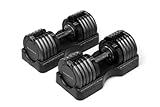
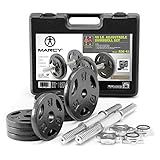
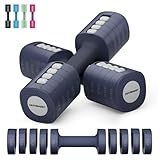
Our Top Picks
Top 3 picks at a glance
Quick comparison of the best budget dumbbell options
| Pick | Best for | Key specs | Price range |
|---|---|---|---|
| Dial-style adjustable (Bowflex SelectTech 552) | Small rooms, fast weight changes | 5–52.5 lb per hand, 15 settings, one cradle | Mid-range |
| Spin-lock adjustable set (plate-and-collar) | Lowest cost per pound of adjustable weight | Typically 40–105 lb total, steel or cement plates, collars | Budget |
| Fixed rubber hex set (CAP Barbell hex sets) | Durability, no setup time | Pairs from about 5 lb up, rubber-coated cast iron, rack sold separately | Budget to mid-range per pair, rising with weight |
| Neoprene or vinyl-coated light set | Beginners, rehab, desk-break routines | 1–15 lb pairs, rack often included | Budget |
| Block-style adjustable (PowerBlock Sport 24 or Elite EXP) | Compact storage, expandable weight | Sport 24: 3–24 lb per hand. Elite EXP: 5–50 lb, expandable per the manufacturer | Mid-range |
Best overall: dial-style adjustable dumbbells
The Bowflex SelectTech 552 is the reference design in this class. Per the manufacturer’s spec sheet, each dumbbell runs from 5 to 52.5 lb, with 2.5 lb steps up to 25 lb and 5 lb steps above that. You turn a dial and lift from the cradle, so a weight change takes a few seconds, which suits supersets and short sessions between ranked matches.
Trade-off: the handle is a fixed, longer design and the weight block sits wider than a standard dumbbell. Exercises like close-grip presses or some curls can feel awkward. Also, the 52.5 lb ceiling is limited for strong lifters doing lower-body work such as goblet squats and Romanian deadlifts.
Best budget: spin-lock adjustable set
A spin-lock set gives you two short bars, collars and a stack of plates. It is usually the cheapest route to a usable weight range. Total loadouts vary by kit, commonly 40 to 105 lb across both hands.
Trade-off: changing weight takes a minute or more per pair because you thread collars on and off. Loose collars are the main safety issue, so check them every few sets. Cement-filled plates are cheaper but chip and are bulkier than steel.
Best for durability: fixed rubber hex dumbbells
Rubber-coated hex dumbbells, including the common CAP Barbell lines, are the set-and-forget option. They do not roll, tolerate drops better than vinyl or neoprene, and the weight is always exactly what is stamped on the end. You can start with three or four pairs and add more as you progress.
Trade-off: they take the most space and a full range gets expensive. You will also want a rack or a dedicated floor corner, and rubber off-gassing can smell for a few days in a closed room.
Best for beginners and desk breaks: light neoprene set
A set of 2, 5 and 8 lb pairs in a small stand is enough for shoulder health, rows and band-free posture work. These are the right buy if your goal is counteracting hours of keyboard and mouse use, not building size.
Trade-off: most people outgrow the heaviest pair in a few months on pressing and rowing movements, so treat it as a starter set.
Best for compact storage with room to grow: block-style adjustables
PowerBlock designs use nested weight blocks and a selector pin. The Sport 24 covers 3–24 lb per hand, which is ideal for beginners and lighter training. The Elite EXP covers 5–50 lb and, per the manufacturer, can be expanded with add-on kits. The squared shape stays compact on a shelf.
Trade-off: the frame around the weight changes how some exercises feel, and the expansion kits add to the long-term cost.
How to choose: the numbers that matter
Worked example: how much space does a full set replace?
Suppose you want fixed pairs from 5 to 50 lb in 5 lb steps. That is 10 pairs. Total weight is 2 × (5 + 10 + 15 + 20 + 25 + 30 + 35 + 40 + 45 + 50) = 2 × 275 = 550 lb of iron and rubber, plus a rack that takes about two to three feet of wall. A dial or block adjustable covering the same range holds roughly 100 lb of total hardware in one footprint about the size of a PC mid-tower. That is the real value of adjustables for small apartments: you buy about one-fifth the weight.
Why increment size matters more than maximum weight
Progressive overload is about percentages. Going from 10 lb to 15 lb per hand is a 50% jump, which is huge for lateral raises. Going from 40 to 45 lb is 12.5%. Going from 10 to 12.5 lb is 25%, and from 40 to 42.5 lb it is about 6%. Sets with 2.5 lb steps in the lower range (like the 552 up to 25 lb) suit smaller muscle groups. Sets with only 5 lb jumps stall quickly on shoulder and arm work, though fractional plates or magnetic add-ons can fix that.
Matching your situation to a pick
| Your situation | Best choice | Why |
|---|---|---|
| Apartment, shared room, under 10 sq ft free | Dial or block adjustable | One footprint, quick changes, quieter set-down |
| Garage or spare room, want heavy loads | Fixed hex pairs, built up over time | Best durability for heavy weights; no mechanism to fail |
| Tightest budget, don’t mind slow changes | Spin-lock plate set | Cheapest per pound of usable weight |
| Just starting, mostly for posture and mobility | Light neoprene set or Sport 24 | Low weights, low risk, low cost |
| Already strong, can press over 50 lb per hand | Expandable block or fixed hex pairs | Standard adjustables run out of range quickly |
| Hardwood or upstairs floor | Adjustables with a cradle, plus a rubber mat | Protects flooring and reduces noise for neighbors |
Other criteria worth checking
- Handle diameter: a standard grip is about 1 to 1.25 inches. Thicker handles are tougher on grip for smaller hands.
- Weight accuracy: budget cast iron can vary by a small percentage from stamped values. This is fine for training, but compare the two dumbbells in a pair if balance matters.
- Warranty and parts: adjustables have moving parts, so check what the manufacturer covers and whether replacement dials, pins and trays are sold.
- Setup space: leave enough room around a chair or desk to avoid swinging weights near monitors, cables and tower cases.
Setting up near a gaming desk
Keep dumbbells away from the cable run behind your desk, and put a rubber mat under the cradle or rack. Skip heavy sets on thin laminate flooring, since a dropped 40 lb dumbbell near a PC case is a much bigger risk than it looks. For a quick break routine, use a light pair for rows, shoulder presses and external rotations, because those movements offset the forward-shoulder posture from long sessions.
Frequently Asked Questions
Are adjustable dumbbells worth it for beginners?
Yes, usually. A beginner’s strength rises quickly in the first months, so one adjustable pair saves you from repeatedly buying new fixed pairs. Choose one with small starting increments, such as 2.5 lb steps in the lower range.
What weight range should I buy first?
Most new lifters do well with a range that tops out around 25 to 50 lb per hand. Smaller exercises like lateral raises might use 5 to 15 lb, while presses and rows move to 25 lb or more. If you plan on leg work like goblet squats, favor a higher maximum.
Are cheap dumbbells safe?
They can be, if the mechanism and finish are sound. For spin-lock sets, check collar tightness before every set. For adjustable dials and pins, inspect the locking mechanism for wear, and replace any set where weights do not seat fully. Fixed rubber hex dumbbells have the fewest failure points.
Should I buy a rack for fixed dumbbells?
If you own more than three pairs, a rack helps. It keeps weights off the floor, reduces tripping hazards and makes the room easier to use. For a pair or two, a corner with a mat is fine.
Will dumbbells damage my floor?
Dropping or setting down heavy dumbbells can dent hardwood and crack tile. A rubber mat or interlocking foam tile under your workout area handles this. Rubber-coated hex or cradle-based adjustables are gentler than bare cast iron.
Is one pair of adjustable dumbbells enough?
For general strength, muscle and posture work, yes. It becomes limiting only when you need very heavy loads or want two people to train at once. In that case, adding a pair of fixed heavy dumbbells or an expansion kit solves it.
Related guides
More from Amazon
Programs that pair well with the guide above. Offers and eligibility are set by Amazon and may change.
A free business account with business pricing and bulk-buying tools for work, shop or home office.
Create a business accountFree shipping on eligible items, Prime Video and more. Eligible new members can start with a free trial.
Start a Prime free trialAudiobooks and podcasts to listen to on the go. Eligible new members can start with a free trial.
Try Audible freeAd-free music streaming. Eligible new subscribers can start with a free trial.
Try Music Unlimited freeAs an Amazon Associate we earn from qualifying purchases.


