
If you’ve been shopping for a backup drive lately, you’ve probably hit a wall of alphabet soup: SMR, CMR, NAS, RPM, cache. Underneath the jargon is one real decision: do you buy a cheaper drive that writes slowly under heavy use, or spend more for consistent performance? That’s the difference between Shingled Magnetic Recording (SMR) and Conventional Magnetic Recording (CMR) drives. This guide breaks down smr vs cmr hard drives for backup in plain English, so you can match the technology to how your household actually backs things up.
One quick note on terminology: SMR overlaps data tracks like roof shingles to squeeze more capacity onto the same platters. CMR keeps each track separate. Both store your files reliably — the difference shows up in write speed, especially when a drive is rewriting data over long sessions, which is exactly what backups do.
As an Amazon Associate we earn from qualifying purchases at no extra cost to you. Product prices and availability are accurate as of the date shown and are subject to change.


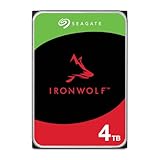

Top 3 picks at a glance
Quick Verdict
For most home backup duty, CMR is worth the extra money. A drive like the Seagate IronWolf line (built on CMR) handles repeated full-system backups, RAID rebuilds, and nightly writes without the dramatic speed drops SMR drives can exhibit. SMR makes sense if you’re archiving files once and rarely rewriting them — think a cold copy of family photos stored in a closet. If you’re backing up multiple computers weekly or running any RAID setup, skip SMR and buy CMR. Expect to pay roughly $60–$90 for a 4TB CMR drive class versus $50–$70 for comparable SMR capacity, with the gap widening at larger sizes.
Side by Side
| Factor | SMR Drives | CMR Drives |
|---|---|---|
| Write comfort | Fast at first, then slows during sustained writes as shingled zones rewrite | Consistent write speeds from start to finish, typically 150–250 MB/s on modern drives |
| Durability under backup workloads | Fine for light, occasional use; heavy rewrite cycles can stretch backup windows dramatically | Designed for frequent, sustained writes; NAS-grade CMR drives are rated for 24/7 operation |
| Price range | $50–$70 for 4TB; $90–$130 for 8TB desktop-class | $60–$90 for 4TB; $180–$330 for 8TB NAS-class CMR |
| Maintenance | Little required, but verify backups carefully — slow writes tempt people to abandon them | Minimal; occasional SMART health checks and firmware updates |
| Space needed | Standard 3.5-inch form factor, about 5.8 x 4 x 1 inch, roughly 1.3 pounds | Same 3.5-inch form factor and weight; no space penalty |
| Noise and heat | Similar to CMR in idle; longer write sessions mean fans run longer | Comparable idle noise (around 20–28 dB); 5–8 watts under load typically |
| Look | Identical to any internal drive; invisible once installed in an enclosure | Same; NAS models carry branding like IronWolf but sit hidden in a bay |
| Resale value | Low — buyers increasingly avoid SMR for anything beyond archiving | Better — NAS builders actively seek out CMR drives on the used market |
| RAID compatibility | Poor fit; rebuild times can stretch to days and risk timeouts | Excellent; drives like the Seagate IronWolf series are built for RAID arrays |
| Best for | Write-once archives, cold storage copies, occasional external backups | Full-system backups, NAS enclosures, RAID, frequent scheduled backups |
Where SMR Wins
SMR’s advantage is simple: more gigabytes per dollar. By overlapping tracks, manufacturers fit roughly 10–20 percent more data on the same platters, and those savings pass to you at checkout. A 5TB SMR external drive routinely sells for less per terabyte than any CMR alternative.
SMR also performs perfectly well for its intended use. If you copy your photo library to the drive once a quarter, unplug it, and shelve it, you’ll never notice the difference. The initial writes to empty shingled zones run at full speed. Reads are identical to CMR — your restore speeds won’t suffer at all. For a “cold” disaster-recovery copy that lives in a fireproof box and only gets touched twice a year, SMR is a genuinely rational choice.
Power draw is essentially identical between the two technologies, so there’s no efficiency argument either way — the case for SMR is purely about price on archival workloads.
Where CMR Hard Drives for Backup Wins
The moment your backup routine involves rewriting data — incremental backups, versioned backups, disk imaging, or anything scheduled nightly — CMR pulls ahead. When an SMR drive’s cache fills during sustained writes, throughput can drop to a fraction of normal speed while the drive reshuffles shingled zones. A backup that takes 40 minutes on CMR can take hours on SMR in the worst cases.
CMR is also the only sane choice for RAID. Rebuilding a degraded array means rewriting every sector on a drive; on SMR, that process can trigger the same sustained-write slowdowns and, on some controllers, timeout errors that drop the drive from the array entirely. That’s why NAS-focused drives like the Seagate IronWolf 4TB (ST4000VNZ06/006) use CMR and pair it with features like AgileArray firmware for RAID environments and bundled Rescue data recovery services. At around $189.99 for 4TB, you’re paying for predictable behavior under pressure.
Stepping up, the Seagate 8TB IronWolf (ST8000VNZ04) at roughly $329.99 gives a growing household room for full-system images of several computers plus years of versioned history, still on CMR with 24/7 duty-cycle ratings. CMR drives also hold resale value better, since the used NAS market specifically filters for conventional recording.
Cost Over 5 Years
Assume a household backing up two computers weekly, 4TB of capacity needed.
- SMR route: A 4TB SMR drive at $55 up front. But stretched backup windows mean the drive stays spinning longer each session, and frustration often leads people to replace it within 2–3 years or abandon backups entirely. Budget $55–$110 over five years, plus hours of lost time.
- CMR desktop route: A 4TB CMR drive at $70–$90. Reliable for the full five years with basic SMART monitoring. Total: $70–$90.
- CMR NAS route: Something like the 4TB IronWolf at $189.99. Higher up front, but you get 24/7 ratings, RAID readiness, and rescue-service coverage. If you later add a second drive for mirroring, an 8TB IronWolf at around $329.99 covers expansion. Total: $190–$520 depending on redundancy.
The counterintuitive result: CMR is often cheaper per year of dependable service, because SMR’s price advantage only holds for write-rarely workloads. Drives failing to back up aren’t savings — they’re risk.
Which One for Your Home
Small Apartment or First Place
Space and budget are tight, and you’re probably backing up a single laptop. A 2–4TB SMR external drive at $50–$70 is fine here — your backups are small, occasional, and mostly incremental. Just set realistic expectations: let the first full backup run overnight. When you add a second computer or a NAS later, retire the SMR drive to archive duty and move to CMR.
Family with Kids or Pets
Multiple devices, thousands of photos, and zero tolerance for lost baby pictures. Go CMR without hesitation. A NAS with a CMR drive like the IronWolf 4TB keeps everyone’s machines backed up automatically, and network storage means a knocked-over external drive doesn’t take the family archive with it. The 8TB IronWolf is the better pick if you’re archiving video, which eats roughly 10–15GB per hour of 4K footage.
Rental or Temporary Home
You want backups that travel and a setup that survives moves. A single CMR drive in a USB enclosure is the sweet spot — durable enough for repeated full backups before each move, light enough (about 1.3 pounds bare) to pack anywhere. Avoid building a multi-drive array you’d just have to disassemble. If budget forces SMR, use it as a second copy, never the only one.
Long-Term Home
This is where NAS-class CMR earns its keep. A two-bay NAS with mirrored IronWolf drives — say the 4TB pair, or 8TB units if you hoard video — gives you automatic redundancy, remote access, and room to grow for a decade. The $380–$660 drive investment is real, but amortized over ten years against irreplaceable family data, it’s among the cheapest insurance you’ll ever buy. Keep a third CMR or even an SMR drive as an offsite copy in a relative’s closet for true disaster coverage.
FAQ
Can I use an SMR drive for backups at all?
Yes, with caveats. SMR works fine for archives you write once and rarely update, and for small incremental backups. Avoid it for full disk images, RAID arrays, or large repeated backup sets, where sustained-rewrite slowdowns become painful.
How do I tell if a drive is SMR or CMR before buying?
Manufacturers don’t always label it on the box. Check the spec sheet for “recording technology,” read the model number against the maker’s official list (Seagate, WD, and Toshiba all publish one), and treat “NAS,” “Enterprise,” or “IronWolf/Exos/Red Plus-class” branding as strong CMR signals.
Is the speed difference noticeable for restoring files?
No. Reading data is essentially identical between SMR and CMR. The penalty is only on writing, particularly sustained or repeated writes. Restores from either type run at comparable speeds.
Do I need a NAS drive like IronWolf for a simple external backup?
Not strictly — any CMR desktop drive works in a USB enclosure. But NAS-class CMR drives add vibration tolerance, 24/7 duty ratings, longer warranties (typically 3–5 years versus 1–2), and sometimes bundled recovery services, which matter more as your reliance on the drive grows.
The bottom line: buy SMR only when the drive will mostly sit still. For anything that works for a living — scheduled backups, RAID, a family NAS — CMR hard drives for backup are the choice that still looks smart five years from now.


