The best CrossFire graphics cards in 2026 are a matched pair of Radeon RX 580 8GB cards for budget legacy builds, or a pair of Radeon RX Vega 56 cards if you already own a strong PSU and a roomy board. CrossFire is a dead end for new builds, though. AMD stopped developing multi-GPU support for newer architectures, so one modern single card usually beats two old ones. Buy a pair only if you are extending an existing system or building a retro rig.
As an Amazon Associate we earn from qualifying purchases at no extra cost to you.
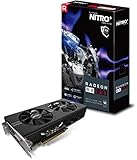
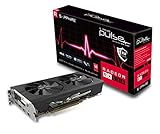
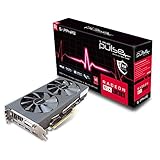
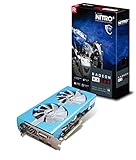
Our Top Picks

Top 3 picks at a glance
Quick comparison: CrossFire-capable pairs worth considering
| Pick | Best for | Key specs (per card, reference spec) | Used price range (per card) |
|---|---|---|---|
| Radeon RX 580 8GB x2 | Best overall legacy pair | 2304 shaders, 8GB GDDR5, 256-bit, about 185W board power, no bridge needed | Usually $40–$90 |
| Radeon RX 570 4GB/8GB x2 | Best budget pair | 2048 shaders, 4GB or 8GB GDDR5, 256-bit, about 150W | Usually $30–$70 |
| Radeon RX Vega 56 x2 | Best high-end legacy pair | 3584 shaders, 8GB HBM2, 2048-bit, about 210W | Usually $80–$160 |
| Radeon RX 480 8GB x2 | Best if you already own one | 2304 shaders, 8GB GDDR5, 256-bit, about 150W | Usually $35–$80 |
| Single RX 6600 / RX 7600 class card | Better alternative to any pair | 8GB GDDR6, about 130–165W, modern drivers and features | Usually $150–$280 used or new |
Prices are general market ranges for used cards and move with local supply. Specs follow AMD’s reference specifications, and partner cards often run a little higher.
Why CrossFire is a hard sell in 2026
CrossFire only helps when the game and driver both split frames between the two GPUs. AMD’s older driver model relied on per-game profiles, and that work stopped as the industry moved to DirectX 12 and Vulkan. In those APIs, multi-GPU support is the game developer’s job, and almost no recent titles implement it. NVIDIA took the same route with SLI, announcing that it would stop adding new SLI profiles after January 2021.
Practical consequences of that history:
- Scaling is uneven. Supported DX11 games commonly show gains somewhere between 40% and 90% over one card, depending on the engine. Many newer games show zero gain, and you are left with one card’s performance.
- Frame pacing suffers. Alternate-frame rendering can produce microstutter even when the FPS counter looks healthy.
- VRAM does not add up. Two 8GB cards still behave like one 8GB pool, because each card holds a full copy of the scene data.
- Newer Radeon generations are out. Cards from the RX 5000 series onward do not offer CrossFire support in the old driver sense, so the usable pool of cards is limited to Polaris, Vega and older.
Best overall: Radeon RX 580 8GB pair
The RX 580 8GB is the easiest CrossFire pair to build because it is cheap, widely available, and uses AMD’s XDMA engine, so the cards talk over the PCIe bus and no bridge cable is needed. Eight gigabytes per card is enough for 1080p in older and esports titles, and it avoids the memory ceiling that hurts 4GB cards.
Who it suits: people with a PCIe 3.0 board that has two x16-size slots and a 750W PSU, playing DX11-era games or older engines with known CrossFire profiles.
Main trade-off: a pair draws roughly 370W from the cards alone and, in games where CrossFire does not work, you pay for a second card that sits idle. A single RX 6600-class card is typically in the same performance neighborhood as two RX 580s at their best, with far fewer compatibility problems.
Best budget: Radeon RX 570 pair
An RX 570 pair is the cheapest way to get CrossFire running, often for the price of a single used RX 580. Buy 8GB versions where you can, since 4GB cards hit their limit in many games at 1080p high settings.
Who it suits: tinkerers and retro-PC builders who want to see multi-GPU working without spending much.
Main trade-off: the second card adds heat and noise for an uncertain gain. If you only have a 550W PSU, a single RX 580 is the smarter upgrade.
Best high-end legacy pair: Radeon RX Vega 56
Vega 56 pairs offer the most raw throughput of the supported cards, with fast HBM2 memory and the same bridgeless XDMA approach. Vega 56 is the sensible choice over Vega 64, which is rated around 295W per card and pushes PSU and cooling requirements sharply higher for a modest gain.
Who it suits: owners of a high-wattage PSU and a case with strong airflow who want to run older titles at 1440p.
Main trade-off: power, heat, and driver age. Vega is old enough that new game releases rarely get optimization attention, so you rely on legacy support.
Best if you already own one: RX 480 8GB
If you already have an RX 480 8GB, adding a second identical one can be a low-cost boost. It uses the same Polaris 10 silicon as the RX 580 at slightly lower clocks. Pair it with the same model where possible, since mixing partner designs can mean mismatched clocks and fan curves.
Worked power budget for a CrossFire pair
PSU sizing is where most CrossFire builds go wrong. Add up component peaks, then leave headroom of about 20–25% so the PSU is not running at its limit during load spikes.
| Component | 2x RX 570 | 2x RX 580 | 2x Vega 56 |
|---|---|---|---|
| GPUs (board power x2) | 300W | 370W | 420W |
| CPU under gaming load (typical quad/six-core) | 95W | 95W | 95W |
| Board, RAM, SSD, fans | 60W | 60W | 60W |
| Subtotal | 455W | 525W | 575W |
| With ~25% headroom | ~570W | ~655W | ~720W |
| Suggested PSU | 650W | 750W | 850W |
Many partner cards exceed reference board power, particularly overclocked RX 580 models that can reach 200–225W each. If your cards are factory overclocked, move up one PSU tier. Also count PCIe power connectors: two RX 580s typically need two 8-pin or 6-pin connectors, depending on the model, and two Vega 56 cards need two 8-pin connectors each.
How to choose: compatibility checklist
- Check the motherboard. You need two full-length PCIe slots that both run at least x8 electrically. Most boards run x8/x8 in dual-GPU mode, and that is enough for Polaris and Vega.
- Check slot spacing. Two-slot-thick coolers need breathing room. A gap of one slot between the cards helps, and cramped layouts cause the top card to throttle.
- Match the GPU chip. Use two cards with the same GPU, such as two RX 580s. Different brands are generally fine, but mixed GPU models and mixed VRAM sizes force the pair to run at the weaker card’s level.
- Verify the game list first. Check whether the games you actually play support multi-GPU. If your main titles are recent DX12 or Vulkan releases, the answer is usually no.
- Plan cooling. Two cards add 300W or more of heat. Make sure your case has at least two front intake fans and rear exhaust.
- Use the right driver. CrossFire needs to be enabled in the AMD driver software. Older driver packages are sometimes more reliable for legacy multi-GPU profiles than the newest releases.
Decision matrix: what should you buy?
| Your situation | Best choice | Reason |
|---|---|---|
| New build, playing current games | One RX 7600 / RX 9060 XT class card | Full driver support, newer features, lower power |
| Old PC, already own one RX 580 8GB, PSU 750W+ | Add a second RX 580 8GB | Cheapest gain for DX11-era games |
| Old PC, PSU 550W or less | Replace with a single RX 6600 class card | Avoids a PSU upgrade and the compatibility risk |
| Retro or hobby multi-GPU rig | 2x Vega 56 or 2x RX 570 | Fun to tune, cheap, and bridgeless |
| You want NVIDIA multi-GPU | Skip it | SLI profile development ended in 2021, per NVIDIA’s announcement |
Frequently Asked Questions
Is CrossFire still worth it in 2026?
For most people, no. Game support is limited to older titles, and a single modern midrange card usually matches or beats a pair of old Polaris cards without the stutter or power draw. It is worth it mainly for hobby builds or for extending a system you already own.
Do I need a CrossFire bridge?
Not for RX 400 and RX 500 series cards, or for Vega. Those use AMD’s XDMA engine and communicate through the PCIe bus. Older cards such as the Radeon HD 7000 series and some R9 200 cards used bridge connectors, so check the specific model.
Can I CrossFire two different graphics cards?
Only within limits. The cards should use the same GPU family, and if memory sizes differ, the pair runs at the smaller capacity. Matching the exact model avoids clock and cooling mismatches, so it is the safer path.
Does CrossFire double my VRAM?
No. In traditional CrossFire, each card stores its own copy of the scene data, so two 8GB cards give you an effective 8GB, not 16GB. If you need more VRAM, a single card with a larger pool is the better answer.
What PSU do I need for two RX 580s?
A quality 750W unit is the usual recommendation, based on roughly 370W for the GPUs, 95W for the CPU, 60W for the rest of the system, and about 25% headroom. Choose a model with enough PCIe power connectors for both cards, and go higher if your cards are factory overclocked.
What is the best CrossFire alternative?
A single newer card. Cards in the RX 6600, RX 7600 or RX 9060 XT class offer current driver support, modern upscaling features and much lower power per frame than any CrossFire pair. They also work in every game, not just those with multi-GPU profiles.
Related guides
More from Amazon
Programs that pair well with the guide above. Offers and eligibility are set by Amazon and may change.
A free business account with business pricing and bulk-buying tools for work, shop or home office.
Create a business accountFree shipping on eligible items, Prime Video and more. Eligible new members can start with a free trial.
Start a Prime free trialAudiobooks and podcasts to listen to on the go. Eligible new members can start with a free trial.
Try Audible freeAd-free music streaming. Eligible new subscribers can start with a free trial.
Try Music Unlimited freeAs an Amazon Associate we earn from qualifying purchases.


