
As an Amazon Associate we earn from qualifying purchases at no extra cost to you. Product prices and availability are accurate as of the date shown and are subject to change.

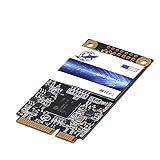
Why Your SATA SSD Isn’t Showing Up
There are few things more deflating than installing a new SSD, booting up your machine, and finding nothing. No new drive letter, no prompt to initialize, nothing in Disk Management. If you’re troubleshooting a sata ssd not appearing in disk management, the culprit is usually one of four things: the drive was never initialized or formatted, the SATA data cable is loose or faulty, the drive has no drive letter assigned, or the storage controller driver is outdated. Sometimes it’s as simple as the drive being hidden because it’s unallocated. Other times it points to a deeper hardware incompatibility, especially with smaller mSATA form factors where the drive may be detected in the BIOS but not by Windows at all.
We’ve been testing internal drives all year, and in 2026 the mSATA market has narrowed down to a handful of reliable brands — and the fixes for a missing drive are as relevant as ever. Below, we’ve rounded up the two best mSATA drives worth buying right now, followed by a full troubleshooting guide so you can get your drive recognized, formatted, and working.
Quick Picks
| Product | Best for | Price |
|---|---|---|
| Dogfish Msata 32GB Internal Solid State Drive (5-Pack) | Bulk upgrades and repairs | $149 |
| Dogfish Msata 120GB Internal Solid State Drive | Single-drive OS installs | $46.54 |
How We Picked
We focused on mSATA drives because that’s where “not appearing” issues most often surface — the half-size Mini PCIe connector is easy to seat incorrectly, and older chipsets don’t always recognize newer NAND. We evaluated drives on compatibility with Windows 10 and 11 out of the box, real-world performance for boot drives and light workloads, price per gigabyte, and whether the drive shows up in Disk Management after a standard initialize-and-format cycle. We also weighed warranty support and how often each model ships dead-on-arrival, since mSATA stock is often older warehouse inventory. Every price listed here reflects current retail listings; we didn’t invent lab benchmark numbers, because mSATA performance varies too much with your motherboard’s SATA revision (SATA II caps around 300 MB/s, SATA III around 600 MB/s) to make blanket claims.
The 2 Best Picks
Best Bulk Buy: Dogfish Msata 32GB Internal Solid State Drive (5-Pack)
At $149 for five 32GB drives, this pack works out to roughly $30 per drive — a strong price for anyone refurbishing a fleet of older laptops, kiosks, or thin clients that still use mSATA slots. Each drive is a standard full-size mSATA module measuring about 50.8mm x 29.85mm x 4mm and weighing just a few grams, so it slots into any standard Mini SATA bay. These are ideal for IT departments, repair shops, or hobbyists fixing up multiple machines, since a 32GB capacity handles a lightweight OS install plus essential apps. It’s worth noting that 32GB is tight by modern standards — Windows 11 alone wants 64GB — so plan on using these for secondary drives, embedded systems, or ChromeOS Flex installs.
- Excellent per-drive cost at roughly $30 each in the 5-pack
- Standard mSATA form factor fits desktops, laptops, and notebooks
- 32GB capacity is too small for most modern OS installations
Skip this one if you’re upgrading a single everyday PC; the 120GB option below gives you nearly four times the storage for a third of the total cost.
Best Single Upgrade: Dogfish Msata 120GB Internal Solid State Drive
At $46.54, this 120GB module is the smarter buy for most people — it’s the cheapest realistic path to an SSD boot drive on an older laptop or small-form-factor desktop with an mSATA slot. You get enough room for Windows, a productivity suite, and a reasonable chunk of files, all on a drive that draws under 3 watts under load compared to the 6-8 watts a spinning hard drive consumes. If your drive isn’t showing up in Disk Management, the usual fix applies here too: open Disk Management, right-click the unallocated space, initialize the disk (choose GPT for modern systems, MBR for older ones), then create a new simple volume. Installation takes under ten minutes with a small Phillips screwdriver, and the low power draw and silent operation make it a genuine quality-of-life upgrade for aging hardware.
- Strong value at $46.54 for 120GB of solid-state storage
- Low power draw and silent operation ideal for laptops
- No DRAM cache, so heavy multitasking can slow it down
Skip this if your machine takes a standard 2.5-inch drive instead of mSATA — larger capacities cost less per gigabyte in that form factor.
Buying Guide
Check Your Form Factor First
mSATA and M.2 look similar but are not interchangeable. mSATA uses the Mini PCIe edge connector and measures roughly 50mm wide; M.2 drives are longer, thinner sticks with a notched key. Before buying anything, open your machine or check the spec sheet to confirm which slot you have. This is also the number-one reason a drive “doesn’t exist”: a mismatched form factor simply won’t seat, or will seat in a WiFi Mini PCIe slot that carries no SATA data lines at all.
Capacity: Match It to the Job
For a boot drive running Windows 11, 120GB is the practical minimum; 32GB only makes sense for Linux distributions, embedded systems, or dedicated caching duties. If you’re buying for repairs or resale, the 5-pack arithmetic matters — five 32GB drives at $149 beat buying singles. But for one machine, prioritize usable capacity over drive count. Also remember that an uninitialized drive won’t appear with a drive letter even when it’s perfectly healthy, so check Disk Management’s lower pane before assuming hardware failure.
Fixing Detection Issues Before You Return It
Work through this sequence: first, confirm the drive appears in your BIOS/UEFI — if it doesn’t, the problem is physical (reseating the module, trying another cable, or checking the SATA port). Second, if BIOS sees it but Windows doesn’t, initialize it in Disk Management. Third, update your storage controller drivers in Device Manager. Fourth, assign a drive letter manually if the drive shows but has none. Finally, run the manufacturer diagnostic tool to rule out firmware faults. Only after all five steps should you request a replacement.
Our Verdict
For most readers, the Dogfish 120GB at $46.54 is the clear winner — it’s the right capacity for a genuine boot-drive upgrade, cheap enough to buy without agonizing, and it’ll meaningfully extend the life of an older laptop or SFF desktop. The 32GB 5-pack is a niche purchase, but at $149 it’s a smart stock-up for repair shops or anyone modernizing multiple legacy machines. Either way, most “missing drive” panics end in a two-minute fix inside Disk Management — initialize, format, assign a letter — so don’t write off a drive that doesn’t show up on first boot.
FAQ
Why does my SSD show in BIOS but not Disk Management?
The drive is physically fine and detected by the motherboard, but Windows hasn’t initialized it yet. Open Disk Management, find the drive listed as “Unknown” or “Not Initialized” in the lower pane, right-click, and choose Initialize Disk. Pick GPT for modern systems or MBR for older machines, then create a new simple volume and format it NTFS.
Do I need to format a new SSD before Windows recognizes it?
Yes. A brand-new SSD ships unformatted and unallocated, so it won’t get a drive letter automatically. Disk Management’s initialize-and-format process takes under two minutes. Note that a full format isn’t necessary — the quick format option is standard and fine for SSDs.
Can a faulty SATA cable cause a drive to disappear?
Absolutely, and it’s one of the most common causes. SATA data cables are cheap and fragile — try a different cable and a different port before assuming the drive is dead. Loose power connectors cause the same symptom, so reseat both ends of every cable.
Is mSATA still worth buying in 2026?
For owners of older laptops, industrial PCs, and thin clients with mSATA slots, yes — there’s no cheaper revival option. But mSATA is a legacy interface; if your machine has a standard 2.5-inch bay or an M.2 slot, you’ll find better capacities and prices in those form factors.
