Our Top Picks
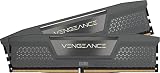
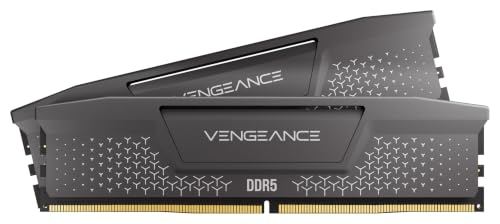
 Corsair Vengeance RGB RS DDR5 32GB32GB (2 x 16GB)5.43 x 0.27 x 1.77 Inches0.11 poundsCheck on Amazon

Top 3 picks at a glance
Currency Check
Verified as of October 2026: TrendForce’s September 30 outlook projects fourth-quarter contract prices up about 10 to 15% for conventional DRAM and 15 to 20% for NAND flash, with increases slowing for DRAM but not ending. It also expects PC memory supply to tighten further in 2027 as capacity shifts to servers. Not verified: any date by which retail prices will fall. Contract prices are what manufacturers pay and do not translate one-to-one into shelf prices. Retail trackers cited in the press show elevated levels, so check live listings.
If you need memory or storage for a build you plan to use this year, buy what you need now and size it carefully; if you can wait without losing anything, waiting is a gamble that current forecasts do not favor. Prices rose sharply over the past year, the rate of increase has slowed, and no major forecaster is calling a decline before 2027. This article explains why, what separates RAM from SSD pricing, and how to decide when to pull the trigger.
Quick Verdict
| Your situation | Our verdict |
|---|---|
| Current PC is broken or unusable and you need a build | Buy now. Waiting costs more than any plausible savings. |
| PC works but feels short on memory | Buy only the amount that fixes the problem. Moving from 16GB to 32GB DDR5 is the sensible single step. |
| Planning a build and flexible on timing | Buy the parts whose prices move least, and delay memory only if the build can run with a smaller kit for now. |
| Wanting 64GB or large Gen5 SSDs for gaming | Skip for now. Gaming rarely needs them, and they sit in the most expensive part of the market. |
| Hoping prices will crash soon | Do not plan around it. Forecasts point to continued tightness through 2027. |
| Upgrading an older DDR4 machine | Avoid paying a premium for aging DDR4. A new platform means DDR5. |
What Is Driving the Market
AI servers are taking the supply
TrendForce attributes the continuing shortage to memory makers prioritizing advanced-process capacity for high-performance server products. In its fourth-quarter outlook, server DRAM stays undersupplied, and the share of manufacturing available to PC memory declines further in 2027. PC makers are still buying aggressively because they expect tight supply, which keeps demand firm even when end-market sales of notebooks soften. For a gamer, this means the pressure is structural and not a short spike from one event.
RAM and SSD are not moving in lockstep
TrendForce describes the client SSD market as weak. PC brands are cutting capacities in mainstream models to control costs, and buyers hold inventory from the first half of the year. With limited procurement, NAND suppliers have taken a more flexible pricing stance, restraining the size of increases. Enterprise SSDs are the exception, with demand from AI inference infrastructure. The result is that consumer SSD pricing may move differently from DDR5 pricing, even though both come from the same wider shortage.
| Component | Fourth-quarter 2026 contract forecast | What it means for builders |
|---|---|---|
| Conventional DRAM | Up about 10 to 15% quarter on quarter | DDR5 stays tight; increases are slowing but continuing |
| NAND flash | Up about 15 to 20% quarter on quarter | Pressure continues, though consumer demand is soft |
| Enterprise SSD | Growth accelerating | Competes with consumer drives for NAND |
| PC DRAM supply in 2027 | Expected to decline further | No relief timing from the supply side |
Brands and shelves changed too
Micron announced it was leaving the Crucial consumer business, with consumer shipments ending in early 2026. That removed a widely stocked retail brand from the market. It is a symptom of the wider shift of wafer capacity toward server and AI memory, not the single cause. Other memory brands remain, but the range of choices on shelves is narrower than it was a year ago.
What press trackers report, and how far to trust them
Retail price trackers and outlets such as GamersNexus and ComputerBase have reported that DDR5 and consumer SSD prices are far above their levels of a year earlier, with SSDs roughly double by some measures. Trackers use different baskets and methods, and several are small aggregator sites, so use them as a direction, not as an exact figure. The pattern most agree on is a steep climb earlier in 2026 followed by a slower, uneven rise since the summer.
Why waiting is not a free option
Waiting seems costless, but it has three hidden costs. First, you keep using a system that may be limiting you, which has its own price in lost play time. Second, forecasts for the fourth quarter and into 2027 point toward tight supply, so the likeliest outcomes are flat or higher prices, not lower. Third, a single price drop on one kit does not mean a trend; discounts on memory in a shortage tend to be short and stock-limited. None of this means you must buy today. It means a decision to wait should rest on a specific reason, such as an announced product or a build that is not yet ready, not on hope.
The opposite mistake is panic buying. Pulling forward an upgrade you do not need, or buying a larger kit than your workload requires, locks in a high cost for little benefit. Match the purchase to a real problem: stutter that Task Manager links to full memory, a game that will not load, or a new build with every other part in hand.
How the shortage reaches your cart
Memory makers sign long-term agreements with large buyers, and TrendForce notes that some suppliers’ increases lag the market average because of how those agreements are priced. Smaller buyers, including the retail channel, tend to pay spot or near-spot rates. Distributors add their own costs, and stock moves with promotions and with how much inventory a retailer bought earlier. That chain explains why a headline about contract prices can appear months before a visible change on a product page, and why two similar kits can behave differently from week to week. For a builder, the lesson is to track the specific kit you want and to avoid reading a quarterly forecast as a promise about a single retail price.
How to Decide: Buy Now or Wait?
Use this rule set. It avoids guessing the market and focuses on your own cost of waiting.
- Buy now if your system cannot run what you need, your current memory causes stutter, or you are building a complete PC and the other parts are ready.
- Buy a smaller amount now if you can run on 16GB for a while. Memory can be replaced later, though prices then are unknown.
- Wait only if the build is optional and nothing is lost by delaying, and you accept that forecasts do not point to a drop.
- Do not wait for a rumor, a holiday sale promise or a vague claim that prices will normalize.
A worked example: choosing capacity under pressure
Say you are building a mid-range gaming PC. A 32GB kit is the usual recommendation. In a tight market the extra 16GB is a meaningful share of the parts budget. Check what you play: if the games are esports titles and you rarely run many background apps, 16GB can work, and the saved budget can go to a better graphics card, which generally lifts frame rates more. If you stream, mod, or play heavy open-world games, 32GB is the better value because running short on memory causes stutter that no GPU upgrade fixes. Rule of thumb: keep peak usage below roughly 80% of installed memory. Task Manager during a normal session tells you where you stand.
Storage: size for what you actually install
For a gaming drive, a PCIe 4.0 NVMe SSD is enough for most players, and a faster PCIe 5.0 drive has little gaming benefit today. If drive prices are painful, a smaller primary SSD for Windows and current games plus a cheaper secondary drive for the library keeps the speed where it matters. Check capacity against the games you install: modern large titles can take tens of gigabytes each, so count your next six months of games, not your whole backlog.
Protect the purchase
- Buy matched two-module kits, not a single stick and a plan to add later, because the maker advises against mixing kits.
- Confirm your motherboard supports the speed and profile (EXPO or XMP) you are paying for.
- Check the retailer’s return window before opening a kit, since memory problems often show up only when you boot.
- Keep records of the exact model number so you can compare like for like if prices change.
Products That Fit
The kits below are examples of 32GB DDR5-6000 memory that fits the buy-now situations above. They are not a ranking, and this section covers RAM only: no SSD is listed here. Check availability, timings and clearance on each page.
Corsair Vengeance RS 32GB – for a no-frills 32GB upgrade
As an Amazon Associate we earn from qualifying purchases at no extra cost to you.

This is a 2 x 16GB DDR5 kit, rated up to 6000MHz in the listing, with both AMD EXPO and Intel XMP 3.0 support. It fits a buyer who has decided that 32GB is the right amount and wants a plain kit without lighting. The listing notes that top speed needs BIOS adjustment, which is standard for DDR5 kits.
- 32GB (2 x 16GB), DDR5, up to 6000MHz
- AMD EXPO and Intel XMP 3.0 compatible, per the listing
- Onboard voltage regulation with iCUE software support, per the listing
- Exact timings: confirm on listing
Caveat: because pricing is volatile, compare it with other 32GB kits at the same speed before deciding.
Corsair Vengeance RGB RS 32GB – for a lit build in the same class

The same capacity and speed class with RGB lighting. It matches the buy-now situation for someone who wants the visible look as well as the capacity. The functional difference from the non-RGB kit is mostly lighting, so only choose it if lighting is a goal and not a surcharge you resent.
- 32GB (2 x 16GB), DDR5, up to 6000MHz
- CL36 referenced in the retailer text; confirm the full timings on the listing
- RGB lighting with Corsair software control
- Profile support: confirm on listing
Caveat: if you do not need lighting, a non-RGB kit with the same specs is the more economical pick.
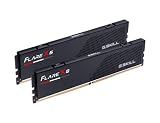
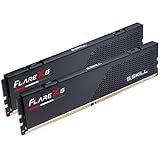
G.Skill Flare X5 32GB – for the buyer who wants fully stated timings

This kit lists everything up front: 6000 MT/s, CL36-36-36-96, 1.35V, EXPO and XMP 3.0 profiles and a JEDEC default. It suits a buyer who wants to confirm exactly what they are paying for in a market where details matter. The same notes about BIOS adjustment apply.
- 32GB (2 x 16GB), DDR5 U-DIMM, non-ECC, 288-pin
- 6000 MT/s, CL36-36-36-96, 1.35V, per the listing
- JEDEC, AMD EXPO and Intel XMP 3.0 profiles
- Matte black; do not mix with other kits, per the listing
Caveat: confirm your board’s memory support list, since compatibility varies by model.
Common Mistakes
- Waiting for a crash that forecasts do not predict. Fourth-quarter outlooks point up, not down.
- Buying 64GB for gaming. It adds cost and risk without a gaming payoff.
- Splitting a purchase across kits. Mixed kits can be unstable.
- Treating contract-price news as a shelf-price promise. The two follow different paths.
- Over-spending on the fastest SSD. Gaming benefits little from top-tier drive speeds.
- Skipping the BIOS profile. A kit left at default speed wastes what you paid for.
Questions
Will RAM prices go down in 2026?
The available forecasts do not show a decline. TrendForce expects conventional DRAM contract prices to rise again in the fourth quarter, though more slowly than earlier in the year. Retail may move differently, but there is no confirmed turning point.
Why are SSDs more expensive too?
NAND flash, the memory inside SSDs, is also in undersupply as demand for AI data centers grows. TrendForce forecasts NAND contract prices to rise again in the fourth quarter. Consumer demand is soft, so increases at retail may be more restrained than in enterprise products.
Should I buy DDR4 to save money?
Only if you are keeping an existing DDR4 platform. Paying a premium for aging memory is a poor use of budget, and new builds use DDR5.
Is 16GB or 32GB the better buy right now?
If you stream, mod or play heavy games, 32GB is worth it. For esports and lighter use, 16GB lets you put the money elsewhere. Check your real usage in Task Manager before deciding.
Will the next generation of memory lower prices?
There is no verified product or date that changes the picture for desktop buyers. Any claim that a new standard will fix pricing soon should be treated as speculation.
How do I know if a price is fair?
Compare the same capacity, speed and timings across several listings over a few days. Look at the kit rating and compatibility, not just the sticker number.
Update History
- October 14, 2026 – Initial publication.
- Check the product page for current specifications and availability before buying.
Sources and Methodology
Market facts come from analyst press releases and trade coverage, and product facts come from retailer listing fields. Tracker figures from smaller sites are treated as direction only. No dollar figures are quoted because retail pricing changes daily.
- TrendForce press release on fourth-quarter 2026 memory contract prices
- TrendForce coverage of third-quarter 2026 memory pricing
- Guru3D summary of the TrendForce forecast
- GamersNexus and ComputerBase reporting on SSD price trends, as summarized in press coverage
- Micron’s announcement on the Crucial consumer business
- Retailer listing fields for Corsair and G.Skill memory kits