
Yes—a solid-state drive (SSD) is better than a hard disk drive (HDD) for a gaming PC’s operating system, games you play regularly, and everyday responsiveness. SSDs load files much faster, make no mechanical noise, and withstand bumps better because they have no spinning platters. HDDs still make sense for cheap, high-capacity storage and for a separate backup copy.
As an Amazon Associate we earn from qualifying purchases at no extra cost to you.

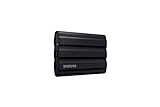


Top 3 picks at a glance
SSD vs. HDD: the practical difference
An HDD stores data on spinning magnetic platters and uses a moving head to read and write it. An SSD stores data in flash memory, so it can access files without waiting for a platter to rotate or a head to move. That difference affects more than headline transfer rates: it also changes how quickly a drive can find many small files, which is common when a PC starts Windows or loads a game.
| Typical drive class | Sequential transfer rate | Random access and feel | Best fit |
|---|---|---|---|
| 3.5-inch desktop HDD | About 100–250 MB/s | Mechanical seek delays; slow with many scattered files | Large, infrequently accessed files |
| SATA SSD | About 450–550 MB/s | Fast access to small files; no moving parts | Games, applications, and general PC use |
| PCIe 4.0 NVMe SSD | Roughly 5,000–7,500 MB/s, depending on model | Very fast access; excellent for large file transfers | Gaming PCs, creative work, and demanding workloads |
These are broad performance ranges, not guaranteed speeds for every drive. Real transfers depend on the drive, the files involved, its remaining free space, and the rest of the PC.
How much faster is an SSD than a hard drive?
For large, continuous file transfers, a SATA SSD can be roughly two to five times as fast as a typical HDD. A modern NVMe SSD can show a much larger advantage in suitable workloads. But the difference is often most noticeable in responsiveness: an SSD can locate many small files far quicker, so booting Windows, opening applications, and moving through game assets usually feel much snappier.
Here is a simple illustration using a 100 GB file transfer and idealized sustained speeds:
- At 150 MB/s, an HDD would take about 11 minutes.
- At 500 MB/s, a SATA SSD would take about 3 minutes 20 seconds.
- At 6,000 MB/s, an NVMe SSD’s theoretical minimum would be about 17 seconds.
Those estimates divide file size by transfer rate and ignore overhead. They are not promises: an SSD may slow during a long write, the source drive may be the bottleneck, and a game’s loading time may depend on CPU work as well as storage. Faster storage usually improves loading and streaming, not your graphics card’s frame rate by itself.
So, is a hard drive faster than an SSD? In ordinary PC storage tasks, no. An HDD can be fast enough for sequential media playback, but it does not beat a comparable SSD at accessing data. A SATA SSD is already a major upgrade over an HDD; NVMe is not required to get the basic benefits of SSD storage.
Where SSDs clearly win
Games and everyday responsiveness
Games installed on an SSD generally launch and load levels faster, and an SSD can help reduce delays when a game streams assets during play. Many current games recommend or require SSD storage. An HDD can still run some games, but long loads and occasional asset-streaming hiccups are more likely. Put your operating system and frequently played titles on an SSD first.
Silence, shock resistance, and compact builds
SSDs have no spinning platters, so they produce no drive motor or seek noise and are less vulnerable to mechanical damage from a bump while operating. That makes them a good fit for quiet PCs, laptops, and small-form-factor builds. An SSD can still fail from electronic, firmware, or wear-related problems; “no moving parts” does not mean “cannot fail.”
Practical performance without an expensive upgrade
A SATA SSD is often enough to transform an older desktop that still uses an HDD as its boot drive. If you are choosing a new gaming PC drive, capacity and compatibility matter too: check whether the motherboard or laptop supports a 2.5-inch SATA drive, an M.2 SATA drive, or an M.2 NVMe drive. M.2 describes the physical form factor, not by itself the drive’s connection or speed.
When an HDD still makes sense
Cheap mass storage
HDDs usually offer more capacity for the money, particularly at multi-terabyte sizes. They are sensible for a large music, video, photo, or game archive that you do not need to access quickly. If your budget is limited, a useful arrangement is an SSD for Windows and active games plus an HDD for bulky files. Keep games you play often on the SSD, then move less-used titles to the HDD.
A separate backup copy
An HDD can be a cost-effective destination for routine backups, especially when you need several terabytes. But a drive used as the only copy of important data is not a safe backup. Drive failures, accidental deletion, malware, theft, and electrical damage can affect the original and its backup. Keep at least one additional copy separate from the PC—ideally one that is disconnected or stored elsewhere—and check that files can actually be restored.
HDDs are not automatically more reliable than SSDs, and SSDs are not automatically more reliable than HDDs. Either can fail; the outcome depends on the specific drive and how it is used. For important files, maintaining multiple backups matters more than choosing one technology and assuming it cannot break.
Choose by your situation
| Your situation | Best starting choice | Why |
|---|---|---|
| Windows, everyday applications, or a gaming PC | SSD | Shorter waits for booting, loading, and small-file access |
| Quiet PC or portable computer | SSD | No spinning or seeking noise; better resistance to operating bumps |
| Several terabytes of media you rarely open | HDD, if low cost per terabyte is the priority | Often cheaper for bulk storage |
| Local backup of a large file collection | HDD can work as one backup destination | Affordable capacity, but retain another independent copy |
| Small budget and one drive only | SSD sized for the operating system and essential files | Better daily experience; add bulk storage later if needed |
Is an SSD drive better than an HDD for every job?
No. If the question is whether SSD drives are better than HDDs overall for a modern gaming PC, the answer is yes: an SSD is the better primary drive. If you need the lowest cost for a large collection of files or a roomy local backup target, an HDD may be the better value. “Better” depends on whether you are paying for speed and convenience or for capacity per dollar.
There is not a universally better storage technology than SSD for a normal gaming PC. Newer or faster SSDs can improve particular workloads, but a more expensive NVMe drive may make little difference to everyday game loading compared with a good SATA SSD. For long-term data protection, redundancy and verified backups matter more than searching for a drive type that never fails.
The honest verdict
Choose an SSD for your operating system, applications, and games you play regularly. It is faster, quieter, and more resistant to physical shock than a mechanical hard drive, and the improvement is often noticeable even with a SATA model. Choose an HDD when you need inexpensive mass storage or a separate backup destination. For many gaming PCs, the best balance is not SSD versus HDD at all: it is an SSD for active use and an HDD only where its extra capacity is worth the slower access.
Frequently asked questions
Will an SSD improve gaming frame rates?
No, an SSD usually does not improve your graphics card’s frame rate by itself. It can make games launch and load levels faster, reduce delays when assets stream during play, and make Windows and applications feel more responsive. For the clearest benefit, install the operating system and frequently played games on the SSD rather than expecting higher frame rates.
Do I need an NVMe SSD, or is a SATA SSD enough?
A SATA SSD is enough to get the basic benefits of SSD storage. It is already a major upgrade over an HDD for booting, opening applications, and accessing small files. NVMe can be much faster for suitable workloads and large file transfers, but a more expensive NVMe drive may make little difference to everyday game loading compared with a good SATA SSD.
Can an SSD or HDD be used as the only backup?
No, neither an SSD nor an HDD should be treated as the only copy of important data. Either type can fail, and accidental deletion, malware, theft, or electrical damage can affect the original and its backup. Keep at least one additional copy separate from the PC, ideally disconnected or stored elsewhere, and check that files can actually be restored.
Does an M.2 drive automatically mean it is faster?
No, M.2 describes the physical form factor, not the drive’s connection or speed by itself. A computer may support a 2.5-inch SATA drive, an M.2 SATA drive, or an M.2 NVMe drive. Before choosing a replacement or upgrade, check which type your motherboard or laptop supports, because the form factor alone does not identify performance.
Can I move less-used games from an SSD to an HDD?
Yes, you can keep frequently played games on the SSD and move less-used titles to the HDD. Games on an HDD may have longer loading times and are more likely to experience occasional asset-streaming hiccups, while the SSD is better suited to active games and the operating system. This arrangement can combine faster daily access with additional bulk storage.


