
Choosing an NVMe SSD for a PS5 looks simple until you compare read speeds, heatsink sizes, NAND types, storage capacities, and prices. Many buyers make the same mistakes: they choose a drive based only on its advertised “up to” speed, buy a bare SSD without a heatsink, or assume that the most expensive officially licensed model will load games dramatically faster than every less expensive alternative.
The good news is that the PS5 has a clear compatibility target. You need a PCIe 4.0 x4 NVMe M.2 SSD with a capacity between 250GB and 4TB, a sequential read speed of at least 5,500MB/s, and a heatsink or other cooling solution that fits inside the console’s expansion bay. Once those basics are covered, the decision comes down to capacity, durability, value, warranty, and how much convenience you want.
As an Amazon Associate we earn from qualifying purchases at no extra cost to you.


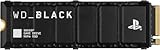

Top 3 picks at a glance
Decide These 3 Things First
- Choose your capacity. A 1TB drive is the practical starting point for most players. A 2TB model makes more sense if you regularly keep 20 or more large games installed.
- Decide whether you want a ready-to-install drive. A model with a correctly sized heatsink removes an important compatibility and installation concern. A bare drive may cost less but requires a separate cooler.
- Set a realistic budget. In 2026, PS5-compatible 1TB drives commonly fall around $120 to $250, while 2TB versions can range from approximately $220 to $500 depending on brand, NAND, licensing, and sales.
Size: Choose Storage Capacity, Not Just the Lowest Price
PS5 games can consume anywhere from 20GB to more than 100GB, and major releases with downloadable content can grow substantially larger. After formatting and system overhead, a 1TB SSD does not provide a full 1,000GB of usable game space. Expect roughly 900GB of practical capacity, although the exact figure varies.
A 1TB SSD is the best value for a moderate library. It can hold roughly 10 to 20 large games, depending on file sizes. It is also the capacity tier where sales are most common. Examples include the 1TB WD_BLACK SN850P and 1TB models such as the SIX PCIe 4.0 drive or Fikwot FX991.
Move to 2TB if you dislike deleting games, share the console with family members, or have a fast internet connection but still want to avoid repeated downloads. A 2TB drive offers roughly twice the usable space of a 1TB model, but it does not make games load twice as fast. The 2TB WD_BLACK SN850P, listed at $469.95 in the example pricing, is a capacity purchase rather than a performance necessity.
Do not pay extra for a 4TB drive unless you have a very large digital library. The PS5 supports up to 4TB in its M.2 expansion slot, but the cost per gigabyte can be less attractive than buying a 1TB or 2TB model during a sale.
Material: Understand NAND Before Paying for a Premium Label
NAND flash is the storage material that holds your game data. A drive using TLC NAND generally offers a strong balance of endurance, sustained performance, and price. QLC NAND can make a drive more affordable and is usually adequate for installing and playing games, but it typically has lower write endurance and can slow more noticeably during very large, continuous writes.
For a PS5, read performance matters more than heavy write performance because game loading primarily involves reading installed data. That means a reasonably priced QLC drive can work well for a player who downloads games, plays them, and occasionally deletes them. The Fikwot FX991 example uses 3D QLC NAND and advertises read speeds up to 7,000MB/s; its $152.99 example price reflects the value-oriented positioning.
TLC is the better choice for frequent game transfers, extensive downloads, or long-term storage. Look for a manufacturer that clearly identifies the NAND type rather than relying on vague claims such as “high-performance flash.” Also check whether the quoted capacity is 1TB or 2TB, since endurance ratings usually increase with capacity.
Construction: The Heatsink Is a Compatibility Requirement
A PS5-compatible SSD should be an M.2 2280 drive: 22mm wide and 80mm long. The console accepts several M.2 lengths, but 2280 is the most common and easiest to source. The complete drive-and-heatsink assembly must fit within the console’s expansion bay. Sony’s guidance limits the overall width to 22mm, the total length to 110mm, and the total height to 11.25mm, including the SSD, heatsink, and any thermal pad.
Do not install a tall desktop heatsink simply because it offers more metal. A cooler that exceeds the height limit can prevent the bay cover from closing or interfere with the console. A single-sided, low-profile heatsink is generally the safest format. Confirm that the product listing includes the heatsink in its stated measurements.
A heatsink helps move heat away from the controller and NAND during downloads and extended use. It does not need to be enormous. What matters is a secure fit, adequate thermal contact, and dimensions designed for the PS5 bay. Officially licensed models, such as the 1TB and 2TB WD_BLACK SN850P drives, offer the convenience of a purpose-marketed, pre-fitted solution, but licensing alone does not guarantee a meaningful loading advantage.
Comfort and Performance: Prioritize Reliable Speeds Over Big Numbers
For compatibility, target a sequential read rating of at least 5,500MB/s. Many suitable PCIe 4.0 x4 drives advertise between 7,000MB/s and 7,400MB/s, including the WD_BLACK SN850P at up to 7,300MB/s, the SIX drive at up to 7,350MB/s, and the Fikwot FX991 at up to 7,000MB/s.
Those figures are manufacturer maximums measured under specific conditions. They are not a promise that every PS5 game will load proportionally faster. Once a drive clears the console’s compatibility threshold, differences in advertised sequential speed may be subtle in everyday play. Firmware, game design, compression, and the PS5’s own storage system also influence results.
Pay attention to the interface: it should say PCIe Gen 4 x4 or PCIe 4.0 x4 and NVMe. Avoid SATA M.2 drives, PCIe Gen 3 models, and products that mention only “M.2” without identifying the protocol. M.2 describes the shape, not the performance standard.
Price Tiers: Match Spending to Your Library
Budget, approximately $120 to $180 for 1TB: These drives can meet PS5 requirements while using value-oriented NAND or a less recognizable brand. The example Fikwot FX991 at $152.99 and SIX 1TB drive at $169.99 fit this category. Verify the warranty, heatsink dimensions, and return policy carefully.
Midrange, approximately $180 to $300 for 1TB or $230 to $350 for 2TB: This tier often provides a better-known controller, stronger support, TLC NAND, and a more established endurance rating. It is the sweet spot for buyers who want dependable hardware without paying mainly for branding.
Premium, approximately $300 to $500 for 2TB: Premium drives may include official licensing, a polished heatsink, longer support, and a recognizable gaming brand. The 1TB WD_BLACK SN850P example is listed at $234.99, while the 2TB version is listed at $469.95. Buy this tier for convenience and capacity, not because the PS5 will automatically deliver twice the loading performance.
Warranty: Check the Terms, Not Just the Number of Years
A five-year limited warranty is common among established SSD brands, although some budget models offer three years. Warranty coverage may end when the drive reaches a specified total-bytes-written limit, so check both terms. A 1TB drive may have a lower endurance rating than a 2TB version of the same family.
Also look for a clear manufacturer name, a serial-number process, and a U.S. support channel if you are buying in the United States. Marketplace listings can combine genuine products with confusing seller-specific warranty language. Keep the receipt and packaging until you have installed and tested the drive.
Delivery and Assembly: Buy the Version That Removes Risk
The simplest option is a pre-installed heatsink that is explicitly described as PS5-compatible. Installation involves shutting down and unplugging the console, removing the expansion-bay cover, loosening the spacer and screw, inserting the M.2 drive at an angle, securing it, and replacing the cover. The process is straightforward, but forcing the module or using the wrong screw can damage the slot.
If buying a bare SSD, budget approximately $10 to $25 for a low-profile M.2 heatsink and confirm that its combined height stays under 11.25mm. Avoid shipping listings with unclear model numbers, missing dimensions, or delivery times that make returns difficult. Inspect the drive and heatsink before installation, and do not remove labels unless the manufacturer specifically instructs you to do so.
Spec Checklist
| Spec | Budget | Mid | Premium |
|---|---|---|---|
| Capacity | 1TB | 1TB or 2TB | 2TB, occasionally 4TB |
| Interface | PCIe 4.0 x4 NVMe | PCIe 4.0 x4 NVMe | PCIe 4.0 x4 NVMe |
| Sequential read | 5,500MB/s minimum | 6,500 to 7,300MB/s | 7,000 to 7,400MB/s |
| NAND | QLC or entry-level TLC | Prefer TLC | TLC, with a strong endurance rating |
| Heatsink | Included and under 11.25mm total height | Low-profile, pre-fitted preferred | Purpose-designed or officially licensed |
| Typical 1TB price | $120 to $180 | $180 to $250 | $220 to $300 |
| Typical warranty | Three to five years | Five years | Five years, with established support |
Red Flags
- A listing says only “M.2” but does not specify NVMe and PCIe 4.0 x4.
- The advertised read speed is below 5,500MB/s.
- The drive has no heatsink, or the heatsink dimensions are not provided.
- The total heatsink height exceeds 11.25mm.
- The listing uses “up to” speed claims but provides no controller, NAND, endurance, or warranty information.
- The price is dramatically lower than comparable 1TB or 2TB models and the seller has limited feedback.
- The product is an M.2 SATA SSD, which uses the right shape but the wrong interface for the PS5 expansion slot.
FAQ
Is 7,000MB/s fast enough for a PS5?
Yes. A PCIe 4.0 x4 NVMe drive rated around 7,000MB/s exceeds the PS5’s recommended minimum of 5,500MB/s. Higher advertised numbers can be reassuring, but they do not guarantee dramatically shorter loading times.
Do I need an SSD with a heatsink?
Yes, you need a suitable cooling solution. The easiest approach is buying an SSD with a pre-fitted, low-profile heatsink. If you add one separately, keep the complete assembly within the PS5’s 22mm width, 110mm length, and 11.25mm height limits.
Should I buy 1TB or 2TB?
Choose 1TB if you play a rotating selection of games and want the lowest cost. Choose 2TB if you frequently keep large games installed or share the console. A 2TB drive provides more room, not twice the speed.
Are budget brands safe for PS5 use?
They can be, provided the drive meets the interface, speed, capacity, and heatsink requirements. Before buying, confirm the warranty, NAND type, dimensions, seller reputation, and return policy. For the least installation risk, a reputable 1TB PCIe 4.0 drive with an included heatsink is the most balanced choice.


