
When designing a functional home office, media room, or family creative studio, we often obsess over the perfect ergonomic chair, the warmth of the desk wood, and how to hide unsightly cords. Yet, one of the most critical elements of a modern home is entirely invisible: your digital storage. Between thousands of high-resolution family photos, smart home camera backups, and personal media libraries, a standard external drive simply does not cut it anymore.
If you are looking to build a reliable digital archive, you have likely run into the debate of hardware raid vs software raid for small home nas. This decision goes far beyond technical jargon. It dictates how loud your living room setup will be, how much space the physical units will occupy on your bookshelf, how much heat they will generate, and how easy it will be to recover your precious memories if a drive fails. Let’s break down these two storage architectures to help you find the perfect match for your household’s aesthetic, budget, and technical comfort level.
As an Amazon Associate we earn from qualifying purchases at no extra cost to you. Product prices and availability are accurate as of the date shown and are subject to change.


Top 3 picks at a glance
Quick Verdict
For the vast majority of modern households, software RAID is the superior choice for a small home NAS. It offers unmatched flexibility, easier data recovery if your physical enclosure breaks, and seamless integration with modern smart home ecosystems. However, if you want a true “plug-and-play” appliance that does not drain your main computer’s processing power and operates quietly with zero software configuration, hardware RAID remains an incredibly reliable, self-contained solution for simple backup needs.
Side by Side
To help you visualize how these two systems fit into your home environment, we have compared their key physical and functional traits below:
| Feature | Hardware RAID | Software RAID |
|---|---|---|
| Ease of Setup (Comfort) | Excellent; physical switches or plug-and-play utility. | Moderate; requires software installation and configuration. |
| Durability & Recovery | Vulnerable to proprietary controller failure. | Highly resilient; drives can be read on almost any computer. |
| Price Range (Diskless Enclosures) | $110 to $350+ depending on the number of bays. | $100 to $500+ depending on CPU and RAM specs. |
| Maintenance | Low; firmware updates are rare and simple. | Moderate; requires periodic software and security updates. |
| Space Needed (Footprint) | Very compact; typically 5″ x 8″ x 6″ or smaller. | Varies; can be small desktop units or larger mini-towers. |
| Aesthetic & Look | Clean, minimalist, appliance-like metal or plastic boxes. | Ranges from sleek pre-built NAS units to DIY PC cases. |
| Resale Value | Moderate; holds value well as a simple utility device. | High for pre-built brand names; low for DIY custom builds. |
| Power Consumption | Low (typically 15W to 25W under load). | Moderate to High (typically 20W to 45W+ depending on CPU). |
| Best For | Direct connection to one PC; simple local backups. | Whole-home network sharing; media streaming; smart homes. |
Where Hardware Raid Wins
Hardware RAID relies on a dedicated physical processor (a RAID controller chip) built directly into the storage enclosure. This chip handles all the complex mathematical calculations required to distribute your data across multiple drives for safety. Because of this dedicated hardware, this setup shines in several home-friendly scenarios.
First, hardware RAID is incredibly gentle on your home computers. Because the enclosure does all the heavy lifting, your laptop or desktop processor does not lose a single cycle of processing power to manage your storage. This is ideal if you are editing family videos or running home design software on an older machine.
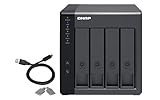
Second, it is the ultimate “set-it-and-forget-it” appliance. Devices like the QNAP TR-004 4 Bay USB Type-C Direct Attached Storage (DAS) with hardware RAID (Diskless) (priced around $219) or the ultra-compact TERRAMASTER D2-320 USB RAID Enclosure 2-Bay (Diskless) (priced around $116.99) allow you to configure your drive redundancy using physical dip switches on the back of the unit or simple desktop utilities. Once configured, you plug it in via USB or Ethernet, and it behaves exactly like a single, massive, ultra-reliable hard drive.
Finally, hardware RAID systems tend to be incredibly quiet and energy-efficient. Because they do not run full operating systems, they require very little RAM and processing power, meaning they run cooler and draw less electricity—often under 20 watts. This makes them easy to tuck away on a living room shelf without worrying about a loud fan interrupting your evening conversations.
Where Software Raid for Small Home Nas Wins
Software RAID replaces the dedicated physical chip with a software program that runs on your NAS operating system, using your system’s main CPU to manage the data. While this sounds like it might slow things down, modern processor speeds mean you will never notice the difference in a home environment. Where software RAID truly wins is in its sheer flexibility and safety.
The biggest risk with hardware RAID is “controller failure.” If the physical chip inside your enclosure dies, you usually have to buy the exact same model of enclosure to read your data again. With software RAID, your data is not locked to a specific piece of silicon. If your NAS device breaks, you can pull the hard drives out, plug them into almost any standard computer running the same software, and access your files instantly. This level of security is priceless for irreplaceable family archives.
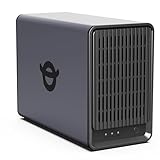
Furthermore, software RAID allows for much smarter drive management. You can often mix and match different hard drive sizes, expand your storage pool by adding one drive at a time, and receive real-time cloud notifications on your phone if a drive begins to show signs of wear. Pre-configured network systems like the BUFFALO LinkStation 220 4TB 2-Bay NAS Network Attached Storage with HDD Hard Drives Included (priced at $285.99) or DIY-friendly options like the Yxk Zero1 2-Bay Desktop NAS for Home & Personal Storage(Diskless) (priced at $129.99) utilize software-driven environments to make network sharing seamless across iPhones, Androids, smart TVs, and laptops simultaneously. This software-driven flexibility ensures your home network storage is fully prepared for the smart-home integrations of 2026 and beyond.
Cost Over 5 Years
When investing in home infrastructure, looking at the long-term cost of ownership is essential. Let’s look at how the costs shake out over a five-year lifecycle, assuming a standard 4-bay configuration with 16TB of usable space.
Hardware RAID (e.g., Dedicated Hardware Enclosure + Drives):
The upfront cost for a hardware RAID enclosure is often slightly higher or comparable to a basic NAS, averaging around $200 to $250 diskless. Four 8TB NAS-grade drives (configured in RAID 5 for 24TB raw, 16TB usable space) will cost about $600. Because these units are incredibly energy efficient—averaging about 18 Watts of power draw—they will cost you roughly $18 to $22 per year in electricity, depending on local rates. Over 5 years, total power costs sit around $100. Maintenance costs are virtually zero because there are no software licenses or major system upgrades required.
Total estimated 5-year cost: $900 – $950.
Software RAID (e.g., Smart NAS Enclosure + Drives):
A feature-rich, software-driven NAS enclosure typically costs between $150 and $300 diskless. Using the same $600 drive setup, your upfront cost is very similar. However, software NAS units run full operating systems with more powerful processors, consuming slightly more power—averaging 30 to 35 Watts. This raises your electricity bill to roughly $35 to $40 per year, totaling about $180 to $200 over 5 years. While the software itself is usually free (like TrueNAS or unRAID), you may occasionally choose to pay for premium cloud backup integrations or mobile app access.
Total estimated 5-year cost: $950 – $1,100.
Which One for Your Home
The right choice depends entirely on your living situation, your family’s needs, and how you intend to interact with your technology daily.
Small Apartment
In a small apartment, space is tight, and physical noise is a major factor. You likely do not have a dedicated closet or basement to hide a buzzing server. A compact, hardware RAID enclosure or a highly efficient 2-bay software NAS with a silent fan profile is ideal here. Look for devices with a physical footprint under 6 inches wide and noise levels rated below 25 decibels so it can sit quietly on your media console or desk without disturbing your sleep.
Family with Kids and Pets
If you have children or pets, your storage device needs to be physically resilient and out of harm’s way. Software RAID is highly recommended here because of its superior recovery options. If a curious toddler knocks the NAS off a shelf and breaks the chassis, your data is still perfectly safe on the drives, which can be easily read by another computer. Additionally, software RAID allows you to set up individual, password-protected folders for different family members, keeping work documents safe from accidental deletion by kids.
Rental Home
Renters need portability and easy setup. You do not want to configure complex network routers or run Ethernet cables through walls. A direct-attached hardware RAID unit is fantastic for renters because it connects directly to your main computer via a single USB-C cable. It requires no network configuration, moves easily from apartment to apartment, and works instantly even if you are waiting weeks for the local internet provider to hook up your new rental’s connection.
Long-Term Home
If you own your home and are looking to build a permanent digital foundation, software RAID is the clear winner. You can install a software-driven NAS inside a structured media closet, hook it up to your home’s ethernet ports, and stream 4K movies to every TV in the house simultaneously. Its ability to scale over time means you can easily upgrade to larger drives as your storage needs grow over the next decade without ever needing to rebuild your entire system from scratch.
FAQ
Is hardware RAID faster than software RAID for a home network?
In a commercial office with hundreds of users, hardware RAID is faster. However, for a small home network, the speed bottle-neck is almost always your Wi-Fi or home Ethernet cable, not the RAID type. Both systems will easily saturate a standard gigabit home network connection.
Can I use normal desktop hard drives in a home RAID system?
While normal desktop drives will physically fit, it is highly recommended to use dedicated “NAS” hard drives. These are specifically engineered to handle the constant vibrations of sitting next to other spinning drives and are designed to run 24/7 without overheating.
What happens if a hard drive dies in a RAID setup?
In both hardware and software RAID setups (specifically RAID 1, 5, or 6), your system will continue to run normally even if a drive fails. You simply slide the broken drive out, insert a new one, and the system will automatically rebuild your data back to safety without losing any files.
Can I turn a hardware RAID enclosure into a software RAID?
Yes. Many hardware RAID enclosures have a “JBOD” (Just a Bunch of Disks) mode. By flipping a physical switch, you disable the internal hardware controller, allowing your computer’s operating system to see the individual drives and manage them using software RAID programs instead.


