
Choosing between DDR5 CL30 and CL36 is less about buying “the fastest RAM” and more about matching memory timing, capacity, platform compatibility, and budget to the computer in your home. Both can be excellent choices for a family desktop, gaming setup, work-from-home station, or compact apartment office. The meaningful question is whether the lower latency of CL30 is worth paying extra for when a CL36 kit offers similar capacity and transfer speed.
For two DDR5-6000 kits, the difference is easy to explain: CL30 has an approximate first-word latency of 10 nanoseconds, while CL36 is about 12 nanoseconds. That 2 ns gap can help in latency-sensitive tasks, especially gaming and some CPU-heavy work. But it does not automatically make every CL30 kit a better household purchase. Capacity, stability, and the price difference still matter more for many everyday users.
As an Amazon Associate we earn from qualifying purchases at no extra cost to you.
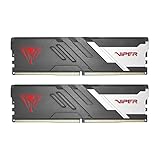

Quick Verdict
If you are buying DDR5-6000 memory for a new gaming computer or a long-term desktop and the price difference is modest, choose CL30. It provides lower latency at the same data rate and is generally the more performance-oriented option.
Choose CL36 when it is notably less expensive, when it is the better-validated kit for your motherboard, or when the savings let you move up in capacity. A stable 32GB or 64GB CL36 configuration is a smarter home-computer upgrade than an undersized CL30 kit.
At the same DDR5-6000 speed, CL30 is roughly 17% lower in CAS latency than CL36 on paper: 10 ns versus 12 ns. Real-world gains vary by program, so do not expect a 17% gain in games, browsing, or office work. Think of CL30 as a refinement rather than a transformation.
Side by Side
| Buying factor | DDR5-6000 CL30 | DDR5-6000 CL36 |
|---|---|---|
| Latency performance | About 10 ns CAS latency; the better choice when speed is the priority. | About 12 ns CAS latency; still quick for mainstream home PCs. |
| Everyday “comfort” | May offer a slightly more responsive feel in demanding games and multitasking. | Feels effectively the same for web, streaming, schoolwork, and typical office tasks. |
| Durability | Comparable: solid-state modules with no moving parts; depends on cooling and settings. | Comparable: longevity is driven more by stable operation than by CL rating. |
| Price range | Often carries a premium. A listed Patriot Viper Venom 32GB DDR5-6000 CL30 kit is $479.99. | Often costs less at equivalent speed, though pricing changes. A listed CORSAIR Vengeance 32GB DDR5 kit is $559.99. |
| Maintenance | None beyond occasional dust cleaning and checking BIOS memory-profile stability. | None beyond occasional dust cleaning and checking BIOS memory-profile stability. |
| Space needed | Uses standard 288-pin DDR5 desktop slots; two modules occupy two motherboard slots. | Uses standard 288-pin DDR5 desktop slots; two modules occupy two motherboard slots. |
| Look | Often sold with heat spreaders and sometimes RGB lighting; module height can affect air-cooler clearance. | Available in plain black, white, RGB, and heat-spreader designs depending on brand. |
| Resale appeal | Usually more appealing to performance-focused used-PC buyers at the same capacity and speed. | Solid resale potential, especially from established brands and in 32GB or 64GB matched kits. |
| Best for | Gaming, tuned AMD systems, CPU-limited workloads, and buyers keeping a PC for years. | Value-focused builds, general family desktops, rentals, and capacity-first upgrades. |
Where Ddr5 Cl30 Wins
DDR5 CL30 wins when the rest of the specification is equal. Compare 32GB versus 32GB, DDR5-6000 versus DDR5-6000, and a matched two-stick kit versus another matched two-stick kit: CL30 has the timing advantage. CAS latency measures how many clock cycles the memory waits before delivering requested data. At 6000 MT/s, a CL30 kit needs approximately 10 ns, while CL36 needs approximately 12 ns.
That matters most in workloads that frequently depend on memory access rather than long, uninterrupted calculations. Many games, especially those limited by the CPU rather than the graphics card, can benefit from lower-latency memory. So can simulation-heavy games, large spreadsheets, code compilation, and busy multitasking setups where several applications remain open at once.
CL30 can also be a sensible match for a higher-end home build. If you have invested in a strong processor and graphics card, choosing a well-supported DDR5-6000 CL30 kit helps avoid leaving easy performance on the table. For AMD systems in particular, DDR5-6000 is frequently considered a practical target, though motherboard support and the processor’s memory controller should always be checked before purchase.
There is a long-term angle as well. A 2 x 16GB CL30 kit gives a home PC 32GB of memory, which is ample for most current gaming, work, school, and media use. If your board has four slots, leave room to plan carefully: two matched modules are usually simpler to configure than mixing separate kits later, even when the labels appear identical.
Where Cl36 Latency Performance Wins
CL36 wins when it creates a more balanced purchase. The practical advantage is often price, availability, or compatibility—not raw latency. If a CL36 kit costs enough less that you can move from 16GB to 32GB, or from 32GB to 64GB, take the additional capacity. Running out of memory forces the system to use slower storage as temporary memory, which has a far greater effect on everyday responsiveness than a 2 ns CAS-latency difference.
For a family computer used for streaming, video calls, online banking, homework, photo storage, and light gaming, CL36 at DDR5-6000 is already a high-performance specification. These tasks rarely make a lower timing number feel dramatically different. The money may be better reserved for a larger SSD, a quieter CPU cooler, a better monitor, or a surge protector.
CL36 can also be the easier route when building around a specific motherboard’s qualified memory list. DDR5 memory profiles—commonly Intel XMP or AMD EXPO—are overclocking profiles, even when they are marketed as normal kit speeds. A kit that is validated for your exact motherboard and CPU is preferable to a faster-timed kit that needs manual adjustment or causes intermittent crashes.
For buyers furnishing a rental or shared home office, CL36 is especially sensible. You want dependable, low-fuss hardware that works without repeated BIOS tuning. Once installed and configured properly, either timing class needs virtually no attention.
Cost Over 5 Years
RAM has no meaningful ongoing power cost in a typical home budget. A pair of DDR5 modules generally consumes only a few watts during ordinary use, with usage changing by workload, voltage, lighting, and memory activity. Even assuming an extra 5 watts continuously for a higher-powered configuration, that equals about 43.8 kWh per year, or 219 kWh over five years. At $0.16 per kWh, that is roughly $35 over five years. In reality, the difference between comparable CL30 and CL36 kits is likely much smaller than that estimate.
The purchase price is therefore the real cost. Using the listed examples as a reference, the Patriot Viper Venom DDR5 32GB (2 x 16GB) 6000MHz CL30 desktop kit is priced at $479.99, while the listed CORSAIR Vengeance DDR5 32GB (2 x 16GB) kit is $559.99. Those figures should not be treated as a universal CL30-versus-CL36 price rule; retail prices move frequently, and the Corsair listing’s exact speed and timings should be verified before comparing it directly.
Over five years, spending an extra $30 to $60 for CL30 can be reasonable if the system is used heavily for gaming or demanding work. Spending hundreds more for timing alone usually is not. Prioritize a matched kit, 32GB minimum for a versatile new desktop, and a retailer return policy in case your motherboard does not run the advertised profile reliably.
Which One for Your Home
Small apartment
Choose the quieter, cooler, simpler build rather than chasing the lowest latency. DDR5-6000 CL36 in a 32GB (2 x 16GB) kit is a strong fit for a compact desk setup, especially if savings go toward a smaller case, efficient cooler, or larger SSD. Check RAM height if using a large air cooler; tall RGB heat spreaders can interfere with front-fan placement.
Family with kids or pets
Choose 32GB before choosing CL30. A shared computer may have games, browser tabs, school applications, downloads, and photo backups running in the same day. CL36 is entirely capable, and the better investment may be protected storage, backup capacity, and a case with dust filters. Pets add dust, not special RAM requirements, so clean intake filters every few months.
Rental
Choose the kit with the clearest compatibility and best value. A DDR5-6000 CL36 kit is often the practical rental-home choice because it delivers fast modern performance without demanding a premium. Avoid changing voltage or manually tuning timings unless you are comfortable troubleshooting after a move, power interruption, or BIOS reset.
Long-term home
Choose DDR5-6000 CL30 if the price premium is reasonable and the PC will serve as a gaming, creative, or primary work machine through 2026 and beyond. For a long-lived household computer, 32GB is a sensible baseline and 64GB is worth considering for demanding creative work, virtual machines, or exceptionally heavy multitasking. Buy the full capacity you expect to need as one matched kit whenever possible.
FAQ
Is DDR5 CL30 noticeably faster than CL36?
At the same memory speed, CL30 has lower latency. At DDR5-6000, CL30 is approximately 10 ns and CL36 is approximately 12 ns. The difference can help in some games and CPU-sensitive tasks, but everyday browsing and office work usually will not feel dramatically different.
Is DDR5-6000 CL36 good enough for gaming?
Yes. DDR5-6000 CL36 is a strong gaming specification, particularly when paired with enough capacity and a stable XMP or EXPO profile. Graphics card performance, processor choice, game settings, and resolution often matter more than moving from CL36 to CL30.
Should I buy 32GB CL30 or 64GB CL36?
For users who regularly edit video, work with large design files, run virtual machines, or keep many demanding applications open, 64GB CL36 is usually the better choice. For primarily gaming-focused use where 32GB is sufficient, DDR5-6000 CL30 is the more performance-focused option.
Can I mix CL30 and CL36 DDR5 sticks?
It is not recommended. Mixed modules may run at the slower kit’s settings, may disable the advertised memory profile, or may become unstable. For the simplest setup, buy a matched two-module kit with the capacity, speed, and timing you want.


