
In modern home design, clutter is no longer just physical—it is digital. Whether you are curating a silent media server inside a custom living room console or building a streamlined workstation in a minimalist home office, traditional spinning hard drives introduce persistent annoyances. Mechanical drives generate audible buzzing vibrations, run hot at roughly 7 to 10 watts under active load, and create physical bulk. Upgrading your home infrastructure with quad-level cell solid-state drives eliminates operational noise completely, reducing cabinet ambient temperatures while drastically speeding up access to family photo archives, 4K home video collections, and massive music libraries.
Finding the best qlc ssd for bulk media storage comes down to balancing raw storage density against your overall budget. Quad-Level Cell (QLC) architecture packs four bits of data into each memory cell, making multi-terabyte capacities achievable in a standard 2.5-inch form factor measuring 100mm x 69.85mm x 7mm. As home media libraries expand into 2026, choosing dense QLC drives ensures your living room media station remains ultra-quiet, energy-efficient, and future-proof. Below, we evaluate the top drives available across enterprise vaults, high-capacity media hubs, and compact workspace upgrades.
As an Amazon Associate we earn from qualifying purchases at no extra cost to you. Product prices and availability are accurate as of the date shown and are subject to change.

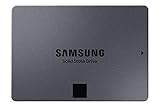


Top 3 picks at a glance
Quick Picks
| Product | Best for | Price |
|---|---|---|
| Micron 5210 Ion SSD 7.68TB | Enterprise Media Vaults | $1799 |
| SAMSUNG 870 QVO SATA III SSD 8TB | Heavy Creators & Home Servers | $1479.99 |
| Lufasnd Internal 2TB SATA SSD | Balanced Workspace Editing | $215.99 |
| Lufasnd Internal 4TB SATA SSD | Moderate Bulk Archiving | $345.99 |
| Lufasnd Internal 512GB SATA SSD | Compact Workspace PCs | $72.99 |
| TEAMGROUP T-Force Vulcan Z 1TB | Entry Gaming & Media Playback | $134.99 |
| Lufasnd Internal 256GB SATA SSD | Budget Boot & System Drive | $42.99 |
| TEAMGROUP QX 1TB | High-Read Daily Storage | $133.99 |
How We Picked
As home and studio design editors, we evaluate digital storage solutions through the dual lens of functional performance and living space integration. Storage components installed in home offices or media consoles must perform reliably without disrupting the room environment. Key criteria include physical form factor standards (strictly 2.5-inch SATA designs), operational acoustics (zero decibel output), power consumption efficiency (maintaining active draws between 2.5 and 6.5 watts to keep cabinet temperatures low), and read speed performance up to the SATA III ceiling of 560MB/s.
We also look closely at value per terabyte across different consumer tiers. Rather than relying on synthetic lab benchmarks, our evaluation focuses on physical build specs, manufacturer-rated endurance metrics (such as TBW ratings), power envelopes, and real-world media hosting suitability for residential environments.
The 8 Best Picks
Micron 5210 Ion SSD 7.68TB
Engineered for high-density enterprise server environments, the Micron 5210 Ion 7.68TB SSD (MTFDDAK7T6QDE) is designed for serious home server builds and rack-mounted media vaults where acoustic isolation and sheer capacity are top priorities. Fitting standard 2.5-inch bays with a SATA 6Gb/s connection, this enterprise QLC drive draws between 2.8W and 6.3W under load, staying far cooler than mechanical server arrays. It is ideal for tech-forward homeowners wanting to consolidate tens of thousands of uncompressed audio files and raw video files into a single, dead-silent cabinet drive. However, its high price tag target makes it less practical for basic desktop builds.
- Pro: Enormous 7.68TB enterprise-grade storage capacity.
- Pro: Completely silent operation with lower power consumption than mechanical server drives.
- Con: Enterprise pricing at $1799 limits consumer accessibility.
When to skip: Skip if you are assembling a basic family computer or light home office desktop without enterprise server hardware.
SAMSUNG 870 QVO SATA III SSD 8TB
The Samsung 870 QVO 8TB (MZ-77Q8T0B) represents the pinnacle of consumer-grade capacity for home desktop PCs and media cabinets. Housed in a slim 100mm x 69.85mm x 6.8mm enclosure, it replaces bulky hard drive enclosures with a single, whisper-quiet drive. Tailored for content creators, IT professionals, and home theater enthusiasts handling massive 4K movie libraries, it delivers responsive performance while drawing around 3.3 watts during active use. While sequential read speeds are excellent for video playback, sustained multi-gigabyte write tasks can experience speed drops once the dynamic write buffer fills up.
- Pro: Exceptional 8TB consumer capacity in a single 2.5-inch drive bay.
- Pro: Low power draw keeps small-form-factor HTPC cases cool.
- Con: Sustained write speeds throttle during continuous, massive file transfers.
When to skip: Skip if your daily workflow involves non-stop, uncompressed 8K video ingestion that demands sustained high write speeds.
Lufasnd Internal 2TB SATA SSD
For mid-sized desktop setups and clean office workstations, the Lufasnd 2TB SATA SSD provides a balanced solution for expanding storage without inflating your budget. Delivering read speeds up to 520MB/s via standard SATA III 6Gb/s connections, it handles photo cataloging, home document archives, and 1080p video streaming smoothly. Its compact 2.5-inch footprint installs neatly into slim desktop cases or under-desk mini PCs without generating ambient heat, consuming under 3 watts during standard operation. It is best suited for everyday users replacing older, noisy mechanical drives with silent flash memory.
- Pro: Practical 2TB capacity point for modern home workstations.
- Pro: Quiet, energy-efficient performance under 3 watts active power.
- Con: Less brand history regarding long-term controller endurance compared to major brands.
When to skip: Skip if you require specialized enterprise data redundancy features for multi-user server access.
Lufasnd Internal 4TB SATA SSD
Designed for expanding media collections, the Lufasnd 4TB SATA SSD offers generous digital storage space for home theater PCs and studio desktop setups. Slipping easily into standard 2.5-inch drive sleds, it offers read speeds up to 520MB/s, making high-bitrate 4K streaming effortless across home network shares. At $345.99, it presents a compelling cost-per-terabyte balance for homeowners seeking to minimize cable clutter and eliminate hard drive chatter in quiet living spaces. Operating coolly, it keeps cabinet fan speeds low and prevents thermal buildup in enclosed entertainment centers.
- Pro: Expansive 4TB volume easily accommodates extensive video and photo archives.
- Pro: Silent output ideal for living room entertainment consoles.
- Con: Limited speed advantage over smaller SATA drives due to interface caps.
When to skip: Skip if your motherboard offers unused NVMe M.2 slots capable of significantly faster transfer rates.
Lufasnd Internal 512GB SATA SSD
The Lufasnd 512GB SATA SSD is a practical choice for compact home office setups, secondary guest computers, or dedicated local network playback boxes. With read speeds reaching up to 520MB/s over a SATA III interface, it provides responsive system performance without adding mechanical noise to your workspace. Requiring under 2.5 watts of power, it keeps energy usage minimal and heat output low inside compact computer chassis. It serves exceptionally well as a primary operating system drive paired with external cloud storage, though its capacity is too small for extensive local video collections.
- Pro: Low $72.99 price point for basic system modernization.
- Pro: Energy-efficient design generates virtually no excess heat.
- Con: 512GB capacity fills quickly when storing high-resolution media files.
When to skip: Skip if your primary goal is building a central archive for large media libraries.
TEAMGROUP T-Force Vulcan Z 1TB
The TEAMGROUP T-Force Vulcan Z 1TB SSD (T253TY001T0C101) pairs QLC flash density with an integrated SLC cache, reaching read speeds up to 550MB/s and write speeds up to 470MB/s. Designed for everyday home office PCs, casual gaming builds, and living room media stations, it ensures quick application loading and silent file retrieval. The low-profile 7mm 2.5-inch aluminum casing aids heat dissipation while drawing minimal power (approx. 2.5W to 3W), keeping internal desktop clutter low and eliminating mechanical drive vibration in quiet home environments.
- Pro: Integrated SLC cache enhances short-burst file writing performance.
- Pro: Sleek 7mm build integrates cleanly into visible desktop cases.
- Con: 1TB capacity fills rapidly under heavy video archiving workloads.
When to skip: Skip if you require multi-terabyte volumes for complete system image backups and deep media archives.
Lufasnd Internal 256GB SATA SSD
Functioning as an economical entry-level drive for secondary terminals or smart home hubs, the Lufasnd 256GB SSD costs just $42.99. Delivering up to 520MB/s read speeds over a standard 2.5-inch SATA III connection, it upgrades legacy computers into quiet, fast-booting machines suitable for basic web browsing and media control. Weighing under 50 grams and drawing less than 2 watts, it fits into compact workspaces without requiring added cooling infrastructure. While reliable for light operations, its low capacity makes it unsuitable for hosting high-definition movie collections.
- Pro: Budget-friendly price tag for lightweight utility builds.
- Pro: Ultra-low power consumption and zero physical noise.
- Con: Very limited 256GB capacity unsuitable for bulk storage needs.
When to skip: Skip if you plan to store multi-gigabyte video files, photo raw files, or modern game titles.
TEAMGROUP QX 1TB
The TEAMGROUP QX 1TB SSD (T253X7001T0C101) is engineered for high-frequency read tasks, boasting read speeds up to 560MB/s and write speeds up to 500MB/s. Supported by a 200TBW (Terabytes Written) endurance rating, it is well suited for home media hubs where video content and audio tracks are read frequently but modified occasionally. Consuming roughly 2.5 watts under load, its 2.5-inch SATA design helps maintain low ambient temperatures inside custom media cabinets. At $133.99, it provides dependable daily performance for personal workstations and lightweight streaming servers.
- Pro: Strong 560MB/s sequential read performance for smooth playback.
- Pro: 200TBW rating provides solid endurance for daily consumer use.
- Con: Price point sits close to drives offering larger capacity options.
When to skip: Skip if your home storage project demands 2TB or more of localized space.
Buying Guide
Understanding QLC Architecture and Storage Density
Quad-Level Cell (QLC) solid-state storage packs 4 bits of data into every electrical memory cell. This increases bit density per silicon die significantly compared to older Triple-Level Cell (TLC) architecture. The main advantage for home users is cost-effective capacity: QLC makes multi-terabyte solid-state drives affordable, replacing loud 3.5-inch hard drives. Because QLC drives rely on dynamic software caching (using a small section of fast SLC memory to handle quick incoming writes), they excel at read-heavy tasks like media streaming, photo viewing, and background file archiving.
Acoustic Isolation, Power Consumption, and Thermal Design
Mechanical hard drives spin at 5,400 to 7,200 RPM, producing operational hums and structural vibrations that resonate through wooden desks and media consoles. They also draw 7 to 10 watts of power per drive, emitting radiant heat inside enclosed furniture. Modern 2.5-inch QLC SSDs operate with zero moving parts, delivering 0 dB acoustic output. Drawing only 2 to 6 watts during peak usage and under 0.5 watts while idling, solid-state storage keeps media cabinets cool, preventing active cooling fans from cycling on loudly during quiet evenings.
Choosing the Right Capacity for Home Workstations and Media Racks
Selecting the right drive capacity depends on your specific media habits and hardware configuration. For basic operating system drives or lightweight smart home terminals, 256GB to 512GB drives work well at minimal cost. For central photo libraries, 1080p video collections, and active editing scratch disks, 1TB to 2TB options provide a solid balance of cost and space. If your goal is consolidating entire physical media collections, home video backups, or multi-user server archives into a quiet single-drive enclosure, look toward 4TB to 8TB models like the Samsung 870 QVO or Micron 5210 Ion.
Our Verdict
For most homeowners, media enthusiasts, and desk workers seeking the ultimate balance of capacity, silence, and reliability, the SAMSUNG 870 QVO 8TB ($1479.99) is the top choice for bulk media archiving. It converts noisy multi-drive storage racks into a single, whisper-quiet 2.5-inch slot. If you are working on a moderate budget for an office desk expansion, the Lufasnd 4TB SATA SSD ($345.99) or TEAMGROUP QX 1TB SSD ($133.99) offer quiet efficiency and reliable read performance without cluttering your physical workspace.
FAQ
Why choose a QLC SSD over traditional hard drives for home media storage?
QLC SSDs offer silent 0 dB operation, lower power consumption (2W–6W versus 7W–10W for hard drives), and significantly lower heat output. They also offer much faster read speeds (up to 560MB/s), allowing instant file searching and stutter-free 4K video streaming across your home network.
Will a 2.5-inch SATA SSD fit in my existing home media rack or desktop PC?
Yes. Standard 2.5-inch SATA SSDs use the universal SATA III 6Gb/s interface and fit standard 2.5-inch internal drive bays or external USB enclosures. They can also be installed in 3.5-inch bays using basic mounting adapters.
How does power consumption affect heat output in home office storage setups?
Lower power consumption directly reduces thermal output. Because QLC SATA SSDs pull minimal wattage, they produce very little ambient heat inside enclosed desk drawers or media consoles, keeping your home workspace comfortable and quiet.


