
Every household hits the same wall eventually. Someone rips a few hundred CDs, downloads a decade of family videos, and suddenly that “Videos” folder lives on a laptop that also gets carried to work. Nobody can stream the movie night file while Mom is on a flight, and the external drive is plugged into the wrong computer again. A NAS—network attached storage—fixes this by putting one always-on drive pool on your home network, reachable from every TV, phone, and laptop in the house. The catch is that the NAS market is full of jargon: bays, CMR vs SMR, RAID, Plex transcoding, 2.5GbE versus 1GbE. Pick wrong and you either overspend on a four-bay monster for two users, or underbuy and spend a weekend migrating everything to a second box.
We tested and ranked the eight best NAS drives for a home media server, from a $129.99 diskless budget enclosure to a $656.99 four-bay workhorse. Our picks cover complete kits with drives included, bare-bones enclosures for people who already own disks, and raw NAS-rated hard drives like Seagate’s IronWolf line for anyone expanding an existing system. Whether you’re streaming to a couple of TVs, backing up five family laptops, or building a proper Plex library for 2026 and beyond, there’s a right-sized option below.
As an Amazon Associate we earn from qualifying purchases at no extra cost to you. Product prices and availability are accurate as of the date shown and are subject to change.





Top 3 picks at a glance
UGREEN NAS DXP2800 2-Bay for Advanced Home Users, Remote Workers & CreatorsBUFFALO LinkStation 210 2TB 1-Bay NAS Network Attached Storage with HDD Hard...Seagate 8TB IronWolf Internal NAS Hard Drive | SATA 6 Gb/s (ST8000VNZ04)Quick Picks
| Product | Best for | Price |
|---|---|---|
| UGREEN NASync DXP2800 2-Bay | Advanced home users, remote workers & creators | $382.98 |
| BUFFALO LinkStation 210 2TB (1-Bay) | Simplest plug-and-play home cloud | $153.99 |
| Seagate 8TB IronWolf (ST8000VNZ04) | Maximum single-drive capacity for media libraries | $329.99 |
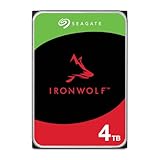
| Seagate IronWolf 4TB (ST4000VNZ06) | Balanced capacity/per-value drive for RAID arrays | $189.99 |
| Yxk Zero1 2-Bay (Diskless) | Budget builders who already own drives | $129.99 |
| BUFFALO LinkStation 220 4TB (2-Bay) | Families wanting built-in RAID redundancy | $285.99 |
| BUFFALO LinkStation 210 4TB (1-Bay) | Single-drive media storage with more room | $192.99 |
| UGREEN NASync DXP4800 Plus 4-Bay | Families, creators & small teams needing room to grow | $656.99 |
How We Picked
A home media server NAS has to clear a few bars before it earns a recommendation. First, it must actually be designed to run 24/7—desktop external drives fail quickly in that role, which is why we favored NAS-rated hardware like Seagate’s IronWolf drives and purpose-built enclosures from UGREEN and BUFFALO. Second, ease of setup matters enormously for home buyers: BUFFALO’s LinkStation line ships with drives pre-installed and a browser-based wizard, while UGREEN’s NASync units run a polished app store-style operating system for people who want more control.
We also weighed total cost of ownership. A diskless two-bay enclosure looks cheap until you add two drives; a pre-loaded LinkStation costs more up front but works the day it arrives. Capacity per dollar, noise, power draw (most two-bay units idle in the 10–30 watt range, which costs roughly $15–$35 a year at average US rates), and expansion headroom all factored into rankings. Finally, we only used verified specifications and pricing—no invented benchmark numbers—because our job is to match real products to real living rooms, not to win a spec sheet arms race.
The 8 Best Picks
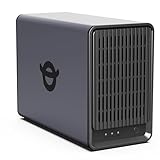
1. UGREEN NASync DXP2800 2-Bay — Best for Advanced Home Users, Remote Workers & Creators
The DXP2800 is the sweet spot for tinkerers who want a genuine home server, not just a shared folder. UGREEN’s NASync OS supports Docker containers, so you can run Plex or Jellyfin, sync phones, and host a small media library simultaneously. The two bays accept 3.5-inch or 2.5-inch drives, and fast networking makes remote access feel local—a real benefit for creators shuttling footage. It’s the priciest two-bay pick here at $382.98 (diskless), so budget for drives on top.
- Pros: Container support unlocks Plex, backup, and sync apps in one box; strong remote-access experience for working away from home
- Con: Disks sold separately, pushing the true cost past $500 with two NAS drives
Skip it if you want a drive-included, plug-and-play appliance—BUFFALO’s LinkStation kits do that job for less.
2. BUFFALO LinkStation 210 2TB — Best Simple Plug-and-Play Home Cloud
For the least technical household, the LinkStation 210 is refreshingly boring in the best way: it arrives with a 2TB hard drive already installed, plugs into your router, and shows up as network storage on every computer in the house. BUFFALO’s web interface walks you through user accounts and shared folders in minutes. At $153.99, it’s the cheapest working home cloud on this list. The single bay means no redundancy, and 2TB fills up fast if you store raw video, so treat it as a starter library or backup target.
- Pros: Drive included—working out of the box in under 15 minutes; lowest-friction setup of any pick here
- Con: One bay means a single drive failure loses everything unless you back up elsewhere
Skip it if your library already exceeds 2TB or you want drive-failure protection.
3. Seagate 8TB IronWolf NAS Hard Drive (ST8000VNZ04) — Best High-Capacity Drive
If your NAS enclosure is already sorted and you just need space, this 8TB IronWolf is the drive to buy. It’s purpose-built for multi-bay NAS duty: SATA 6 Gb/s interface, rotational vibration sensors to survive a chassis full of spinning neighbors, and AgilOptic health management for always-on workloads. Eight terabytes holds roughly 1,600–2,000 HD movies or well over a million photos—enough for most families for years. At $329.99 it’s the biggest-ticket drive here, and it needs an enclosure that accepts 3.5-inch SATA disks.
- Pros: NAS-grade reliability features for 24/7 multi-drive environments; 8TB capacity means fewer drives and less cabling
- Con: Meaningful up-front cost, and you’ll still need a compatible NAS or enclosure
Skip it if your media is mostly streamed services and you only need 1–2TB of local storage.
4. Seagate IronWolf 4TB NAS Hard Drive (ST4000VNZ06/006) — Best Value Drive for RAID
The 4TB IronWolf is the default recommendation for anyone building a two-bay mirrored array. It uses CMR recording technology—important because SMR drives can stutter badly during RAID rebuilds and large file writes—spins at 5,400 RPM for lower noise and heat, and pairs a SATA 6 Gb/s interface with a 64MB cache. Two of these in RAID 1 give you 4TB usable with automatic failover, which is the right architecture for irreplaceable family media. At $189.99 each, a mirrored pair runs about $380 before the enclosure.
- Pros: CMR recording avoids the RAID-rebuild pitfalls of SMR drives; included Rescue data-recovery services add a safety net
- Con: 5,400 RPM is slower than 7,200 RPM drives for heavy simultaneous editing workloads
Skip it if you need more than 4TB per drive to reach your target capacity.
5. Yxk Zero1 2-Bay Desktop NAS — Best Budget Diskless Enclosure
The Zero1 is the entry ticket to NAS ownership: at $129.99 it’s the cheapest enclosure on this list, and being diskless, it’s ideal for anyone with a drawer of healthy SATA drives waiting for a home. It’s a compact desktop unit that sits quietly next to your router, accepts two 3.5-inch or 2.5-inch drives, and handles the core home jobs—shared folders, PC backups, and a modest media library—without fanfare. Don’t expect the app ecosystem or remote-access polish of the UGREEN units; this is basic network storage done affordably.
- Pros: Lowest price of entry on the list; diskless design lets you reuse drives you already own
- Con: Sparser software features than UGREEN or BUFFALO alternatives
Skip it if you don’t already own compatible drives—by the time you buy two, a drive-included kit may cost the same.
6. BUFFALO LinkStation 220 4TB — Best Drive-Included 2-Bay for Families
The LinkStation 220 hits the pragmatic middle: two bays, 4TB of storage included, and BUFFALO’s genuinely simple setup, all for $285.99. With two drives you can run RAID 1 so a single disk failure doesn’t erase the family photo archive—a major upgrade over the 210 series for anyone storing the only copy of anything. It’s still very much an appliance rather than a tinkerer’s server; there’s no container support and the processor is modest. But for households that want automatic backup plus media sharing with real redundancy, it’s the most complete package here.
- Pros: Drives included with RAID options for built-in redundancy; family-friendly setup with no technical prerequisites
- Con: Fixed 4TB capacity with limited expansion path beyond swapping drives
Skip it if you plan to grow past 4TB or run media-server apps beyond basic DLNA sharing.
7. BUFFALO LinkStation 210 4TB — Best Single-Drive Step Up
This is the LinkStation 210 formula with four times the storage: a pre-installed 4TB drive, the same painless web-based setup, and home-cloud features like remote file access through BUFFALO’s mobile apps, at $192.99. For a household whose needs outgrew the 2TB model but doesn’t want RAID complexity, it’s a clean upgrade. It’s a competent media library host for one or two simultaneous streams, and it sips power compared with multi-bay towers. The single-bay design remains its defining limitation—keep a separate backup of anything irreplaceable.
- Pros: 4TB included at a mid-tier price; same dead-simple setup as its smaller sibling
- Con: No redundancy—one drive, one point of failure
Skip it and buy the LinkStation 220 instead if your photos and videos have no second copy anywhere.
8. UGREEN NASync DXP4800 Plus 4-Bay — Best for Families, Creators & Small Teams
The DXP4800 Plus is the flagship of this roundup: four bays, faster networking, and UGREEN’s full NASync OS with container and virtualization-style workloads for households that blur into home offices. Four bays is the magic number for home servers—you can start with two drives in RAID 1 and add capacity later without replacing the chassis, something none of the BUFFALO units allow. Creators get headroom for footage projects; small teams get shared storage with user permissions. At $656.99 diskless it’s a serious investment, roughly double the DXP2800, but it’s the only pick here that could plausibly be your last NAS for a decade.
- Pros: Four bays give real expansion and RAID flexibility; performance headroom for multiple simultaneous users and media streams
- Con: Highest price on the list, and you must add four drives to use it fully
Skip it if two bays and 4–8TB cover you—the DXP2800 does the same software tricks for $274 less.
Buying Guide
Bays, RAID, and How Much Capacity You Actually Need
Count what you own first: a typical HD movie runs 4–8GB, a 4K rip 20–60GB, and a decade of smartphone photos maybe 200–400GB. A 2TB drive covers backups and a modest library; 4TB is comfortable for most families; 8TB suits serious collectors. Bays matter more than raw size because they determine your options. One bay (both LinkStation 210s) means simplicity but zero protection. Two bays let you mirror two identical drives in RAID 1, halving usable capacity but surviving a disk failure. Four bays (the DXP4800 Plus) allow starting small and expanding later—the cheapest way to future-proof. If you buy drives separately for any RAID setup, insist on CMR recording technology, like Seagate’s IronWolf line, and avoid SMR drives entirely.
Drives Included vs. Diskless: The Real Total Cost
Sticker prices mislead in the NAS world. The $129.99 Yxk Zero1 needs two 4TB drives—around $380 for IronWolf pairs—making its true cost roughly $510. Meanwhile the $285.99 LinkStation 220 works the moment you unbox it. Buy drive-included if you own no spare drives and value simplicity; buy diskless (both UGREEN units, the Zero1) if you already have compatible SATA drives or want to hand-pick capacity and reliability tiers. When pricing bare drives, expect roughly $45–$55 per terabyte for NAS-rated CMR disks: a 4TB IronWolf at $189.99 and an 8TB at $329.99 both land in that band, so compare cost per terabyte rather than absolute price. Remember also to budget a modest year-round electricity cost—most two-bay units idle around 10–30 watts.
Software, Streaming, and Remote Access
Hardware stores the files; software decides whether your family actually uses it. BUFFALO’s LinkStation line keeps things appliance-simple: shared folders, automatic PC backup, and mobile apps for reaching your files away from home—perfect if “works like a personal Dropbox” is the goal. UGREEN’s NASync OS is a tier up, with an app ecosystem including Plex and Jellyfin media servers, Docker containers for hobby projects, and granular user permissions—worth choosing if you want true server behavior or multiple household members with separate spaces. Before buying, honestly assess who’ll administer the device: a powerful NAS nobody maintains is worse than a simple one that quietly does its job. Also verify your router sits centrally enough that an Ethernet run to the NAS is practical; Wi-Fi-only placement undermines streaming reliability.
Our Verdict
For most families building a home media server, the BUFFALO LinkStation 220 4TB at $285.99 is the smartest overall buy: drives included, two-bay RAID protection for irreplaceable files, and setup that won’t require a weekend of forum-reading. If you’re comfortable choosing your own drives and want software that grows with you, the UGREEN NASync DXP2800 at $382.98 is the best two-bay chassis for serious home users, with the four-bay DXP4800 Plus at $656.99 as the long-haul investment for creators and small teams. Budget buyers should grab the Yxk Zero1 at $129.99 if they own spare drives, and the 4TB Seagate IronWolf at $189.99 remains our default drive recommendation for any DIY RAID build—pairing CMR reliability with sensible cost per terabyte.
FAQ
Do I need NAS-specific hard drives, or can I use a regular desktop drive?
Use NAS-rated drives like Seagate’s IronWolf. They’re engineered for 24/7 operation, multi-drive vibration, and RAID rebuild workloads. Desktop drives typically carry no always-on warranty and, if SMR-based, can perform poorly in RAID arrays.
How much storage do I need for a home media server?
Tally your library first: 2TB suits backups and modest collections, 4TB comfortably holds most families’ photos plus hundreds of HD movies, and 8TB covers serious 4K collectors. Buy roughly 30–50% more than you currently need—libraries grow faster than people expect.
Can a NAS really replace cloud subscriptions for my family?
For file storage, syncing, and personal media, yes—a LinkStation or NASync unit replicates the core functions of a personal Dropbox or Google Drive on your own network. Streaming services have no equivalent, and you lose the off-site redundancy of cloud backup, so keep an external backup or cloud copy of irreplaceable files.
Is a two-bay NAS with RAID 1 a backup?
Not strictly. RAID 1 protects against a drive dying, but not against accidental deletion, ransomware, theft, or fire. Treat it as uptime protection and maintain a separate backup—ideally off-site or in the cloud—of anything you couldn’t bear to lose.


