
Designing a clean, efficient desktop setup for a home office or creative studio requires balancing spatial aesthetics with raw compute performance. When building or upgrading an AMD Ryzen desktop workstation inside a compact mid-tower or small-form-factor case, every millimeter of clearance and every nanosecond of memory latency matters. A noisy, cluttered interior with bulky components can ruin the minimalist appeal of a custom desk environment, while sluggish memory bottlenecks your processor’s rendering and multi-tasking capabilities.
Selecting the best low latency ddr4 ram kit for ryzen cpus ensures your system operates at peak efficiency without introducing layout conflicts with large CPU coolers or tight desktop chassis. AMD’s Zen architecture thrives on high clock speeds combined with tight memory timings, making 3600MHz memory modules operating at 1.35V the standard target for optimal data throughput. Below, we evaluate two high-performance memory configurations from Corsair’s renowned Vengeance LPX line, analyzing their specs, physical dimensions, and operational characteristics to help you pick the right match for your setup.
As an Amazon Associate we earn from qualifying purchases at no extra cost to you.

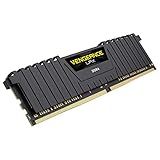
Quick Picks
| Product | Best for | Price |
|---|---|---|
| CORSAIR VENGEANCE LPX DDR4 RAM 16GB (2x8GB) 3600MHz CL18-22-22-42 1.35V (CMK16GX4M2D3600C18) | Best Overall Dual-Channel Performance | $135 |
| Corsair Vengeance LPX 16GB (1x16GB) DDR4 3600 C18 Optimized for AMD Ryzen (CMK16GX4M1Z3600C18) | Best Single-Stick Expansion Option | $128 |
How We Picked
Evaluating desktop memory for home office builds and gaming workstations requires looking beyond raw gigabyte capacity. To select the top options, we focused on physical design compatibility, timing architecture, thermal headroom, and platform optimization specifically for AMD Ryzen processors. Even as system designs advance into 2026, maintaining a stable AM4 platform remains one of the most cost-effective ways to power a modern home workstation.
Our criteria prioritized three core elements: low-profile clearance, optimal clock frequency, and stable operating voltages. Large dual-tower air coolers often hang over motherboard DIMM slots. A heat spreader height of 33.5mm (1.31 inches) ensures full physical compatibility under wide heatsinks without forcing fan heights to be awkwardly adjusted upward. For memory frequency, 3600MHz is ideal because it allows AMD’s Infinity Fabric (FCLK) to run at a 1:1 ratio at 1800MHz without manual tweaking, maximizing inter-core communications and reducing system latency.
We also analyzed electrical parameters and thermal management. Operating at a standard DDR4 performance voltage of 1.35V, the pure aluminum heat spreader dissipates thermal buildup during extended video rendering, batch photo editing, or sustained gaming sessions. Finally, we evaluated the functional difference between dual-channel memory kits (2x8GB) for immediate multi-channel bandwidth versus single-stick modules (1x16GB) designed for future capacity upgrades on compact motherboards with limited DIMM slots.
The 2 Best Picks
CORSAIR VENGEANCE LPX DDR4 RAM 16GB (2x8GB) 3600MHz CL18-22-22-42 1.35V Intel AMD Desktop Computer Memory – Black (CMK16GX4M2D3600C18)
Engineered specifically for high-performance desktop builds where space and cooling clearance are paramount, this dual-channel 16GB kit (2x8GB) delivers an ideal frequency balance for AMD Ryzen processors. Running at 3600MHz with primary timings of CL18-22-22-42 at 1.35V, it allows Ryzen’s Infinity Fabric to maintain an optimal 1:1 ratio. The low-profile pure aluminum heat spreader measures just 33.5mm tall, making it perfect for clean home office builds that rely on oversized CPU air coolers or tight Mini-ITX cases. The two-stick configuration immediately unlocks dual-channel memory bandwidth, boosting frame rates and application responsiveness across demanding multitasking workloads.
- Pros: Out-of-the-box dual-channel bandwidth maximizes Ryzen processor performance instantly.
- Pros: Ultra-low 33.5mm height provides exceptional clearance beneath heavy CPU air coolers.
- Con: Populates two DIMM slots, leaving fewer expansion paths on 2-slot Mini-ITX motherboards.
When to skip: Skip this dual-stick kit if you are using a Mini-ITX motherboard with only two memory slots and plan to expand your desktop to 32GB in the immediate future without replacing your existing sticks.
Corsair Vengeance LPX 16GB (1x16GB) DDR4 3600 (PC4-28800) C18 Optimized for AMD Ryzen – Black (CMK16GX4M1Z3600C18)
Designed for users prioritizing a clear upgrade pathway, this single 16GB module running at DDR4 3600 (PC4-28800) with C18 latency offers targeted tuning for AMD Ryzen systems. Packaged as a single module with an anodized aluminum heat spreader, it keeps heat away from key ICs while maintaining a compact vertical footprint. Operating at 1.35V, this stick allows home office builders to leave an adjacent DIMM slot completely open on small-form-factor motherboards. While a single stick operates in single-channel mode out of the box, it provides a seamless path to install an identical second module later for a total of 32GB without discarding hardware.
- Pros: Leaves an extra DIMM slot open on compact motherboards for straightforward future 32GB upgrades.
- Pros: Factory-tuned profile specifically optimized for AMD Ryzen platform stability.
- Con: Single-channel operation out of the box yields lower initial memory bandwidth than a 2x8GB configuration.
When to skip: Skip this single-stick option if you want maximum out-of-the-box memory throughput today and do not plan on adding another matching 16GB stick later.
Buying Guide
Understanding Memory Timings and Ryzen’s Infinity Fabric
When selecting memory for AMD Ryzen platforms, raw clock speed (measured in MHz) is only half the equation. System responsiveness relies heavily on CAS Latency (CL) and sub-timings (such as 18-22-22-42). CAS latency represents the delay, measured in clock cycles, between a command being sent and data being returned. However, because higher frequencies mean faster clock cycles, a 3600MHz CL18 kit often delivers real-world latency equivalent to or better than a 3200MHz CL16 kit while offering significantly higher total data bandwidth.
More importantly, Ryzen processors utilize an interconnect architecture called the Infinity Fabric (FCLK). The Infinity Fabric links processor cores, memory controllers, and system I/O. To keep latency at its lowest point, the FCLK clock frequency should run in a direct 1:1 synchronized ratio with your memory’s actual clock frequency (UCLK). Because DDR (Double Data Rate) memory transfers data twice per cycle, a 3600MHz RAM kit operates at a true clock frequency of 1800MHz. Most Ryzen memory controllers can comfortably hold an 1800MHz FCLK, making 3600MHz the optimal point where high bandwidth and low access times converge without stability issues.
Dual-Channel Bandwidth vs. Single-Stick Expansion
Memory configuration plays a vital role in determining system bandwidth. A dual-channel setup (such as a 2x8GB kit) doubles the total communication bus width from 64 bits to 128 bits between the memory controller and the RAM. This doubled bus width delivers immediate performance gains in bandwidth-intensive tasks, including video rendering, archive compression, high-framerate gaming, and complex spreadsheet calculations.
Conversely, choosing a single 16GB module (1x16GB) forces the system to run in single-channel mode, halving theoretical throughput until a second matching stick is installed. However, single modules serve a distinct ergonomic and practical purpose for workstation builders. If your desktop motherboard features only two DIMM slots (common in Mini-ITX desk builds), installing a 1x16GB stick leaves a slot free for future expansion to 32GB. If you require maximum immediate performance without further upgrades, choose a 2x8GB dual-channel set. If you are building on a budget with a clear multi-stage upgrade plan, starting with a single 16GB stick can be a sensible strategy.
Heat Spreader Dimensions and CPU Air Cooler Clearance
The physical footprint of system RAM is a critical factor in clean home workstation design. Premium CPU air coolers—especially large double-tower designs equipped with 120mm or 140mm fans—frequently extend directly over the motherboard’s DIMM slots. Tall RAM modules with elaborate RGB light bars or high-rising cooling fins often collide with these CPU coolers, forcing builders to raise fan mounting heights, which can create fitment issues with desktop side panels.
The Corsair Vengeance LPX series addresses this spatial problem through a low-profile aluminum heat spreader that keeps the overall module height to just 33.5mm. This compact profile guarantees clearance beneath virtually every major air cooler on the market while fitting comfortably inside micro-ATX and Mini-ITX cases. Furthermore, pure aluminum construction efficiently transfers heat away from the individual memory ICs into your chassis airflow, maintaining stable voltage and timing performance at 1.35V without requiring additional active cooling fans.
Our Verdict
For the vast majority of users building or upgrading an AMD Ryzen desktop system, the CORSAIR VENGEANCE LPX DDR4 RAM 16GB (2x8GB) 3600MHz CL18-22-22-42 1.35V ($135) stands out as the best overall choice. Its dual-channel design immediately unlocks maximum memory bandwidth, taking full advantage of Ryzen’s Infinity Fabric architecture at 3600MHz while maintaining low-profile physical clearance.
However, if you are building in a space-constrained Mini-ITX enclosure with only two DIMM slots and plan to scale up to 32GB in the near future, the Corsair Vengeance LPX 16GB (1x16GB) DDR4 3600 C18 Optimized for AMD Ryzen ($128) offers a smart, Ryzen-tuned stepping stone that keeps your system flexible for future desk upgrades.
FAQ
Is 3600MHz DDR4 the sweet spot for Ryzen processors?
Yes. A frequency of 3600MHz allows AMD Ryzen memory controllers to run the Infinity Fabric (FCLK) at an optimal 1800MHz in a 1:1 ratio. This ratio minimizes system latency and maximizes data throughput without requiring high memory voltages or manual overclocking adjustments.
Will these low-profile RAM sticks fit under large dual-tower CPU air coolers?
Yes. With a physical height of just 33.5mm (1.31 inches), Corsair Vengeance LPX modules are explicitly designed for low-profile clearance. They fit comfortably beneath large air coolers, preventing physical overlap issues in tight desktop builds.
Do I need to enable XMP or DOCP in BIOS to get 3600MHz speeds?
Yes. Upon initial installation, DDR4 memory defaults to standard JEDEC baseline speeds (typically 2133MHz or 2666MHz at 1.2V). To achieve the rated 3600MHz frequency and CL18 timings at 1.35V, you must enter your motherboard’s BIOS settings and enable the XMP (Intel) or DOCP/EXPO (AMD) profile.
Is a 1x16GB RAM module worse than a 2x8GB kit for gaming and productivity?
A single 1x16GB stick runs in single-channel mode, providing half the theoretical memory bandwidth of a 2x8GB dual-channel kit. While everyday desktop tasks feel similar, CPU-heavy gaming and high-end creative software will see lower performance until a second matching 16GB stick is added to enable dual-channel operation.


