
The best flat soled shoes for heavy deadlifting are zero-drop, non-compressible models with a thin hard rubber or TPU outsole, a wide toe box, and minimal cushioning — specifically the Sabo Deadlift, Converse Chuck Taylor All Star, Inov-8 Bare-XF 210 V3, TYR CXT-1 Trainer, and Nike Metcon 9 — because they reduce bar travel, maximize ground force transfer, and keep your center of gravity directly over mid-foot.
As an Amazon Associate we earn from qualifying purchases at no extra cost to you.
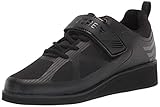
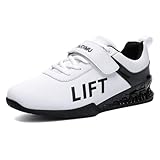

Top 3 picks at a glance
What Makes a Flat Sole Optimal for Heavy Deadlifts
Unlike squat shoes with an elevated heel or running shoes with EVA foam, a true deadlift shoe keeps you as close to the floor as possible with no energy loss. Three mechanical factors matter most when pulling over 80% of your 1RM:
- Sole compressibility: Any foam that compresses under load acts like a deficit you didn’t plan for and absorbs force that should go into the floor. Hard vulcanized rubber, TPU, or wood-composite midsoles do not deform.
- Heel-to-toe drop: For conventional and sumo deadlifts, 0-4mm drop keeps shin angle and hip hinge consistent. A 6mm+ drop pitches you forward and increases horizontal bar drift.
- Footprint and grip: A wide, flat outsole with a sticky rubber compound prevents lateral roll during sumo pulls and stops your feet from sliding on dusty rubber, wood, or platform surfaces.
Head-to-Head Comparison: 5 Proven Flat-Soled Options for 2026
All five models below are widely available in 2026 and are standard choices in powerlifting gyms. They are not ranking from best to worst — the right choice depends on your foot shape, stance, and primary floor type.
| Model | Heel-to-Toe Drop | Stack Height (Heel) | Sole Material & Stiffness | Toe Box Width | Weight (Men’s 9) | Best For |
|---|---|---|---|---|---|---|
| Sabo Deadlift | 0mm | ~6mm | Ultra-thin hard rubber + plastic shank, non-compressible | Medium-narrow, anatomical | ~290g | Maximal pulls, sumo, competition use |
| Converse Chuck Taylor All Star | 0mm | ~10mm | Vulcanized rubber, very stiff, minimal cushion | Medium | ~320g | Budget flat sole, narrow to medium feet |
| Inov-8 Bare-XF 210 V3 | 0mm | ~7mm | Sticky rubber, 0mm drop, flexible but non-compressible | Wide | ~210g | Barefoot feel, wide feet, mixed lifting |
| TYR CXT-1 Trainer | 0mm (with 0mm base insole) | ~9mm | Surge NRG foam wrap + hard TPU heel, very stable | Medium-wide | ~350g | Hybrid training + heavy deadlifts |
| Nike Metcon 9 | 4mm | ~12mm | Firm Hyperlift TPU heel, dual-density foam, flat base | Medium | ~345g | Cross-training, lifters who also squat/press |
1. Sabo Deadlift — The Purpose-Built Standard
Sabo Deadlift shoes are the closest thing to deadlifting in socks with added grip. The sole is deliberately thin and completely incompressible, with a metatarsal strap and high ankle wrap that locks the midfoot for sumo. Drop is true zero, so your setup height does not change. Lateral stability is excellent due to the flat last and side support, but the toe box runs narrow — lifters with wide forefeet often need to size up half a size. Durability is high on the sole, low on the upper mesh if dragged against knurling. Grip is outstanding on rubber flooring and competition platforms, but can feel slippery on polished wood until the outsole scuffs in.
2. Converse Chuck Taylor All Star — The Classic Flat
Chucks remain popular because the vulcanized sole does not compress and the canvas upper is laterally rigid enough for sub-maximal and maximal pulls at a low price, usually $50–$75 range. They are true zero-drop and place you low to the floor. Weak points are toe-box space and arch support — flat-footed lifters may feel pressure on the inside edge during sumo, and the narrow fit compresses wide feet. Grip is good on rubber but average on dusty commercial gym floors. Durability is moderate; the sole lasts for years, the canvas tears if you repeatedly scrape the bar.
3. Inov-8 Bare-XF 210 V3 — Wide Toe Box and Ground Feel
The Bare-XF 210 V3 is a minimalist 0mm shoe with a PowerFlow-free, fully flexible but thin and hard outsole. It offers the widest toe box in this group, allowing natural toe splay for balance, which helps conventional pullers who cue “spread the floor.” It has the lowest stack height after the Sabo, so bar travel is minimized. Lateral stability is lower than Sabo or TYR because there is no midfoot strap or TPU cage — not ideal if your feet actively cave during heavy sumo. Grip is among the best on all surfaces thanks to Inov-8’s sticky rubber compound. Usually in the $100–$130 range.
4. TYR CXT-1 Trainer — Stable Hybrid Option
The TYR CXT-1 was designed as a cross-training shoe but works exceptionally well for deadlifts because the included stability insole creates a 0mm effective drop with a flat, wide base. The wrap-around TPU stabilizer prevents lateral roll better than any minimalist shoe, and the toe box is more accommodating than Nike or Converse. The sole is thicker than Sabo or Inov-8, adding about 3mm of bar travel, but it remains non-compressible under heavy load due to the TPU heel clip. This is the best compromise if you deadlift, squat, and do accessory work in one shoe. Usually $130–$150 range.
5. Nike Metcon 9 — Best Crossover if You Only Want One Pair
The Metcon 9 is not a pure deadlift shoe — its 4mm drop and slightly higher stack add a small deficit versus a 0mm shoe — but its Hyperlift insert and firm midsole make it far more stable than any running shoe. Lateral stability and rope-grip durability are excellent, and the medium toe box fits most foot shapes without sizing tricks. If you primarily deadlift heavy and do little else, the Sabo or Bare-XF is more efficient. If you train full-body sessions where you deadlift, lunge, and sled push, the Metcon 9 avoids changing shoes. Usually $120–$140 range.
Why Sole Compression Costs You Weight: A Worked Calculation
A soft running shoe with 20mm of EVA foam can compress 4-6mm under a 180-220 kg loaded deadlift. That compression has two costs: extra range of motion and lost work.
Extra deficit: If your sole compresses 5mm, you must pull the bar 5mm farther. On a 220 kg deadlift, the extra mechanical work is:
Work = mass x gravity x distance = 220 kg x 9.81 m/s² x 0.005 m = ~10.8 joules per rep. Over a 5×5 workout, that is ~270 joules of wasted work — equivalent to an extra full rep at that weight.
Force loss: Compressible foam also absorbs peak force at break-off-the-floor. Lab tests on EVA show 12-18% energy return loss versus >95% for vulcanized rubber or TPU. That lost force reduces bar speed off the floor, which is where most heavy deadlifts stall. This is why even a visually “flat” shoe like Vans Old Skool is better than a cushioned trainer, but still inferior to a hard Sabo sole for maximal loads — Vans waffle rubber compresses 2-3mm, Sabo compresses effectively 0mm.
Decision Matrix: Match the Shoe to Your Situation
Use this to choose without overthinking spec sheets:
| If You… | Choose | Why |
|---|---|---|
| Pull sumo, compete, or pull over 2x bodyweight | Sabo Deadlift | Lowest stack, zero compression, best lateral lock |
| Have wide feet / want toe splay for balance | Inov-8 Bare-XF 210 V3 | Widest toe box, true barefoot mechanics |
| Want one shoe for deadlifts + squats + conditioning | TYR CXT-1 or Nike Metcon 9 | Stable enough for pulls, cushioned enough for dynamic work |
| Need cheapest effective flat sole | Converse Chuck Taylor | Zero-drop, hard sole, proven for decades |
| Train on polished wood / slick commercial gym floor | Inov-8 Bare-XF 210 V3 or Sabo (scuffed) | Stickiest rubber compounds |
| Train on thick rubber stall mats / platform | Any of the five | All grip well on high-friction rubber |
How to Evaluate Fit for Deadlifting
Ignore running-shoe fit rules. For deadlifts you want:
- Toe length: 3-5mm from end — your foot should not slide forward when you wedge. Too much room causes your foot to shift when you pull slack out.
- Midfoot lock: You should be able to tighten laces or strap so the midfoot cannot roll side-to-side. If you can twist the shoe like a towel, it will not support sumo.
- No heel slip: In zero-drop shoes, heel slip changes your shin angle. Sabo and TYR solve this with an ankle strap; on Chucks and Bare-XF, use a heel lock lacing.
- Socks matter: Always fit with the socks you lift in. A thick training sock in a narrow Sabo can make a correct size feel too tight across the metatarsals.
Floor Performance and Durability Notes
Gym flooring changes grip more than marketing suggests. Vulcanized rubber (Chucks, Vans) hardens and glazes with age, losing grip on dusty concrete. Sticky rubber (Inov-8, TYR) stays tacky longer but wears faster if you drag your feet. TPU (Metcon, TYR heel) does not wear but can squeak on wood.
For durability, separate the sole from the upper. Soles on all five models typically last 18-36 months of heavy lifting. Uppers fail first — canvas (Chucks) and knit (Metcon, TYR) abrade where the bar brushes the instep. The Sabo synthetic leather upper resists abrasion best, while the Bare-XF mesh is the most breathable but least abrasion-resistant. If you consistently hit the shoe with the bar, cover the area with tape or choose Sabo/TYR.
Final Recommendation by Lifter Profile
For the heaviest conventional or sumo deadlift singles with no compromise, Sabo Deadlift is the most mechanically efficient due to its 6mm stack and zero compression. For lifters with wide feet who value ground feedback and natural splay, Inov-8 Bare-XF 210 V3 pulls almost as efficiently with superior comfort. For athletes who train multiple modalities in one session, the TYR CXT-1 Trainer provides 90% of the deadlift stability with far more versatility than a pure deadlift slipper, while the Nike Metcon 9 is the safer pick if you need a 4mm drop for squatting. The Converse Chuck Taylor remains the competent entry point if budget is the primary constraint and you have narrow to medium feet.


