The best fast hard drives in 2026 are 7200 RPM, CMR 3.5-inch models with large caches, such as the Seagate Exos X-series, Seagate IronWolf Pro, WD Red Pro and Toshiba X300. They sustain roughly 250–285 MB/s on the outer tracks, about double a 5400 RPM portable drive. A hard drive still manages only around 100 random IOPS, so if “fast” means quick game loading, a SATA or NVMe SSD is the better buy, and a big hard drive works best as the bulk-storage partner.
As an Amazon Associate we earn from qualifying purchases at no extra cost to you.
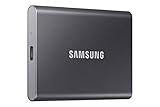

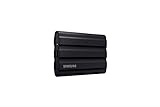

Our Top Picks
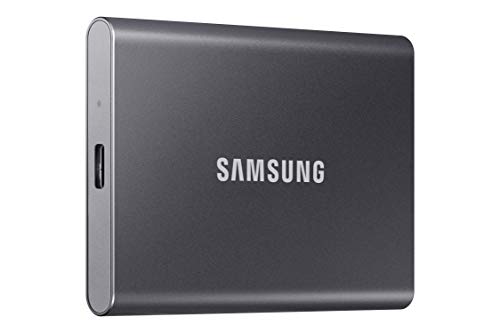
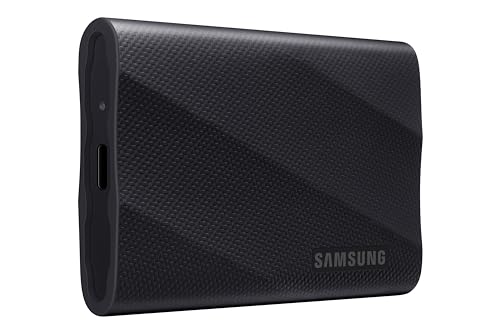
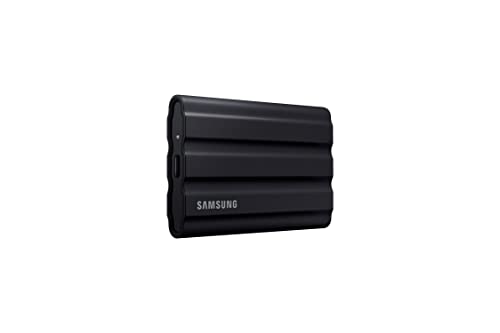

Top 3 picks at a glance
Quick comparison of the fast hard drive picks
Speeds below are approximate “up to” sequential figures from manufacturer spec sheets. They vary by capacity, because higher-capacity drives pack more data per track and read faster.
| Pick | Best for | Key specs | Price range |
|---|---|---|---|
| Seagate Exos X-series (X20/X24 class) | Best overall for raw speed per terabyte | 3.5″ SATA, 7200 RPM, CMR, 256–512 MB cache, up to about 285 MB/s | Mid-range to premium |
| Seagate IronWolf Pro | Best for NAS plus a fast desktop drive | 3.5″ SATA, 7200 RPM, CMR, 256–512 MB cache, up to about 285 MB/s, rotational vibration sensors | Mid-range to premium |
| WD Red Pro | Best for quiet-ish multi-bay systems | 3.5″ SATA, 7200 RPM, CMR, 256–512 MB cache, up to about 270–280 MB/s | Mid-range to premium |
| Toshiba X300 | Best budget-minded desktop 7200 RPM drive | 3.5″ SATA, 7200 RPM, CMR, large cache, up to about 245 MB/s on high capacities | Budget to mid-range |
| Seagate BarraCuda Pro | Best for a single-drive desktop upgrade | 3.5″ SATA, 7200 RPM, CMR, 256 MB cache, up to about 250 MB/s | Mid-range |
| Seagate FireCuda 2.5″ SSHD | Best for upgrading an older laptop on a tight budget | 2.5″ SATA, 5400 RPM plus NAND cache, roughly 140 MB/s sequential | Budget |
Best overall: Seagate Exos X-series
Exos drives are enterprise-class 3.5-inch models at the top of the capacity range. They have the fastest outer-track sequential speeds you can buy in a hard drive, and the highest-capacity models are the quickest per spec sheet. They suit anyone building a large game library, media archive or capture-and-edit scratch disk who wants maximum HDD throughput. The trade-off is noise: they are audibly louder on seeks than desktop drives, and they come with a warranty and feature set aimed at data centers, not quiet living-room PCs. Check the specific model, since some Exos variants use SAS, which a consumer motherboard cannot use. Buy a SATA version.
Best for NAS and always-on use: Seagate IronWolf Pro and WD Red Pro
Both are 7200 RPM CMR drives tuned for multi-bay enclosures. They have vibration compensation, workload ratings well above a desktop drive, and speeds close to the Exos line. IronWolf Pro adds the manufacturer’s optional data recovery service on many models. WD Red Pro is generally a little quieter in practice. The trade-off is price per terabyte, higher than a desktop drive, and higher idle and active power draw than 5400 RPM NAS drives. If your NAS sits behind a gigabit connection, you will never see the speed difference, because gigabit Ethernet caps near 110–118 MB/s.
Best value desktop drive: Toshiba X300 and Seagate BarraCuda Pro
These 7200 RPM CMR desktop drives give most of the sequential speed of the enterprise models at a more approachable price. They suit a single-drive upgrade for a game library, with the OS on an SSD. The trade-off is a shorter workload rating and no multi-drive vibration tolerance, so they are best used one or two to a case. Avoid cheaper desktop lines that use SMR recording (see below).
Best for older laptops: Seagate FireCuda 2.5″ SSHD
A hybrid drive caches frequently read data in a small NAND area, so boot times and repeat-launch times improve over a plain 5400 RPM drive. It is a stopgap for a laptop with only a 2.5-inch SATA bay. A real SSD is better if you can afford one, and sustained copies still run at hard-drive speed.
What “fast” means for a hard drive: the numbers
Three specs decide how a hard drive feels, and a spec sheet rarely shows all of them.
- Sequential speed: This is how fast large files copy. It is highest on the outer edge of the platter and falls by roughly 40–50% toward the inner tracks as the drive fills.
- Random access: A 7200 RPM drive averages around 4.2 ms of rotational latency plus seek time, so about 80–120 random operations per second. At 4 KB each, that is only 0.3–0.5 MB/s, which is why a game that streams many small files stutters on a hard drive.
- Recording method: CMR (conventional) drives keep steady write speed. SMR (shingled) drives can drop to a few tens of MB/s during long writes once their cache fills, so they are poor for big game installs or rebuilds.
Worked example: installing a 150 GB game
Take a large modern game of about 150 GB (150,000 MB) copied from another local disk:
- 7200 RPM HDD at 250 MB/s (outer tracks): 150,000 ÷ 250 = 600 s, about 10 minutes.
- Same HDD at 130 MB/s (nearly full, inner tracks): 150,000 ÷ 130 ≈ 1,150 s, about 19 minutes.
- 5400 RPM portable HDD at 110 MB/s: about 23 minutes.
- SATA SSD at about 500 MB/s: 300 s, 5 minutes.
- PCIe 4.0 NVMe at a sustained 3,000 MB/s (real-world, not the headline rating): 50 s.
The takeaway: a fast hard drive is roughly twice as quick as a portable one, but the drive type matters far more than the model. Real transfers are also limited by the source disk, the network and the USB port.
Decision matrix: match your situation to a drive
| Your situation | Choose | Why |
|---|---|---|
| Desktop PC, OS on SSD, big game library | 7200 RPM CMR 3.5″ (X300, BarraCuda Pro) | Cheap capacity; games still load slower than SSD, so keep your most-played titles on SSD |
| Video editing archive or capture drive | Exos X-series | Highest sustained sequential speed; 4K high-bitrate footage at 100–200 Mbps needs only about 12–25 MB/s per stream |
| 2–8 bay NAS on gigabit LAN | IronWolf Pro or WD Red Pro | Vibration tolerance matters more than speed beyond about 118 MB/s |
| NAS on 2.5 GbE or 10 GbE | 7200 RPM drives in a striped or parity array | Several drives combined can exceed 300 MB/s, while a single drive cannot |
| Laptop with one 2.5″ bay | SSD first, SSHD only if budget is the limit | 5400 RPM laptop drives top out near 100–140 MB/s |
| External backup drive | 3.5″ 7200 RPM in an enclosure with its own power supply | USB 3.2 Gen 1 (5 Gbps) allows about 400 MB/s in practice, so the drive remains the bottleneck |
| You want loading speed above all | An SSD, not a hard drive | Random access is hundreds of times quicker |
How to choose: a short checklist
- Confirm CMR. Check the manufacturer’s spec sheet for the exact model number. Avoid SMR for any use that involves large writes.
- Pick capacity with speed in mind. Within a family, higher capacities usually read faster. A 4 TB drive is rarely as fast as a 20 TB model of the same line, because areal density differs.
- Check noise and heat. 7200 RPM 3.5″ drives draw roughly 6–10 W active and run warmer than 5400 RPM drives. Leave airflow across them, especially in compact cases.
- Match the interface. Use SATA 6 Gb/s on the motherboard, which has plenty of headroom for a hard drive (about 600 MB/s usable). Do not pay extra for faster interfaces on a hard drive.
- Check workload and warranty. Enterprise lines carry higher annual workload ratings and often longer warranties, which matters for heavy or always-on use.
- Keep the drive from filling. Staying under about 80% full keeps the drive using faster outer tracks and slows fragmentation.
Tips to squeeze out more speed
- Put the OS and your most-played games on an SSD and use the hard drive for the rest.
- Run two hard drives in RAID 0 or a striped pool only for scratch data, since one failure loses everything.
- Keep the write cache enabled in Windows Device Manager (disk Policies tab) and use a UPS or reliable power on desktops.
- Defragment hard drives occasionally if they hold game files; do not defragment SSDs.
Frequently Asked Questions
What is the fastest hard drive you can buy?
The fastest consumer-accessible hard drives are high-capacity 7200 RPM enterprise models such as the Seagate Exos X-series, with manufacturer-rated sequential speeds up to about 285 MB/s. Hard drives cannot match even a basic SATA SSD. Their random performance is far lower than any SSD.
Is a 7200 RPM drive noticeably faster than 5400 RPM?
Yes, for most tasks. A 7200 RPM drive has lower rotational latency, which helps random access, and high-capacity 7200 RPM models read roughly 200–285 MB/s versus about 100–140 MB/s for typical 5400 RPM portable drives. Differences are largest in large file copies and in games loading many files.
Can a hard drive run games well?
Most games run fine from a hard drive once loaded, but load times are longer and open-world games can show texture pop-in or stutter when streaming assets. Some recent titles list an SSD as a requirement in their official system requirements, so check the game’s page before installing it to an HDD.
Is SMR or CMR better for speed?
CMR is better for sustained writes. SMR drives can look similar on paper but slow dramatically when writing large amounts of data at once, as when installing a big game or rebuilding a RAID array. Check the exact model number against the manufacturer’s recording-method listing before buying.
Do I need a hard drive at all in 2026?
Not if your needs fit within an SSD budget. Hard drives still win on cost per terabyte for large archives, backups, media libraries and NAS storage. For a main game drive or boot drive, buy an SSD and add a hard drive only for bulk data.
Will a faster USB port make an external hard drive quicker?
Rarely. A single hard drive tops out near 250–285 MB/s, which is well under what USB 3.2 Gen 1 (5 Gbps) can carry in real use. A faster port helps SSDs, but a hard drive remains limited by its platters.
Related guides
More from Amazon
Programs that pair well with the guide above. Offers and eligibility are set by Amazon and may change.
A free business account with business pricing and bulk-buying tools for work, shop or home office.
Create a business accountFree shipping on eligible items, Prime Video and more. Eligible new members can start with a free trial.
Start a Prime free trialAudiobooks and podcasts to listen to on the go. Eligible new members can start with a free trial.
Try Audible freeAd-free music streaming. Eligible new subscribers can start with a free trial.
Try Music Unlimited freeAs an Amazon Associate we earn from qualifying purchases.


