
The best espresso machine with steamer for most home users seeking cafe-style drinks is a dual-boiler or heat-exchange machine like the Breville Dual Boiler BES920XL or Rancilio Silvia Pro X for maximum steaming power and brew consistency, while a single-boiler with ThermoJet like the Breville Bambino Plus or an entry single-boiler like the Gaggia Classic Pro is better if you prioritize fast heat-up and small footprint over simultaneous brew-and-steam capability.
As an Amazon Associate we earn from qualifying purchases at no extra cost to you.

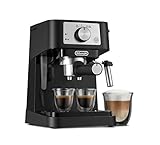
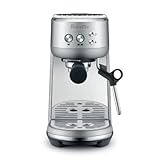

Our Top Picks
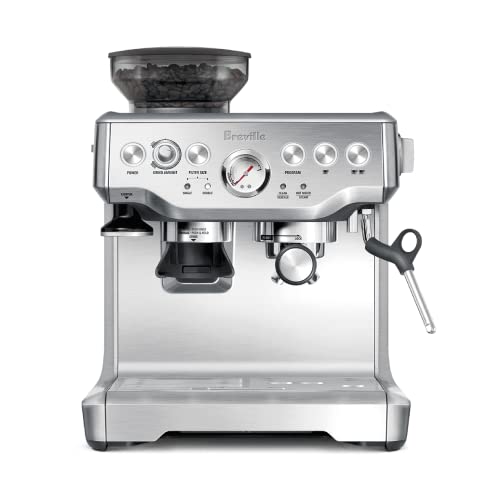 Breville BES870XL Barista Express Espresso MachineLarge13.8 x 12.5 x 15.9 inches22.09 poundsCheck on Amazon

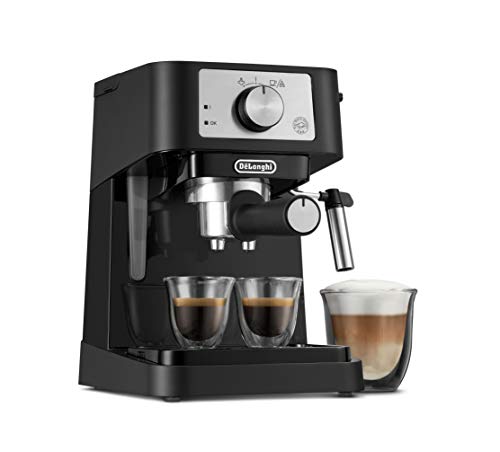
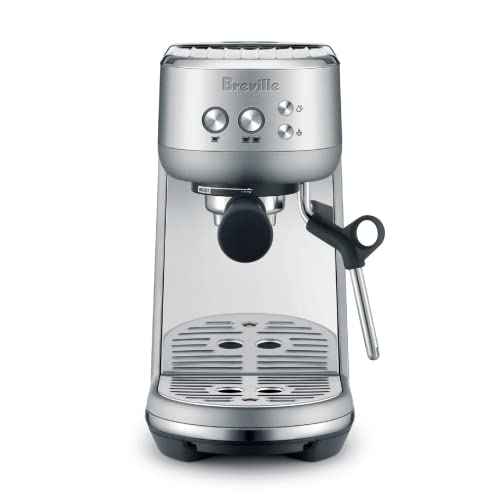
Top 3 picks at a glance
Best Espresso Machines with Steamer Compared
Choosing the best espresso machine with steamer comes down to how you make milk drinks. If you make one latte in the morning, heat-up time and ease of cleaning matter more than raw steam pressure. If you make back-to-back cappuccinos or flat whites, boiler design and steam recovery determine whether your milk texturing is consistent or inconsistent.
| Model | Boiler System | Heat-Up Time (Brew Ready) | Steam Wand | Water Tank | Footprint (W x D) | Typical Price Range |
|---|---|---|---|---|---|---|
| Breville Bambino Plus | ThermoJet thermoblock | 3-4 seconds | Auto + manual 4-hole | 64 oz / 1.9 L | 7.7 x 12.6 in | usually $300–$500 |
| Gaggia Classic Pro | Single boiler (aluminum, 3.5 oz) | 5 minutes brew, 30 sec to steam | Commercial 2-hole pro wand | 72 oz / 2.1 L | 9.5 x 14.2 in | usually $400–$550 |
| Breville Barista Express Impress | Thermocoil with PID | 25-30 seconds | Manual 4-hole with temp control | 64 oz / 1.9 L | 13.9 x 14.8 in | usually $600–$800 |
| De’Longhi La Specialista Arte Evo | Thermoblock + dedicated steam thermoblock | 30-40 seconds | Manual My LatteArt wand | 57 oz / 1.7 L | 14.2 x 14.5 in | usually $450–$650 |
| Rancilio Silvia Pro X | Dual boiler (0.3 L brew + 1.0 L steam) | 10-12 minutes | Commercial multi-hole, no burn | 67 oz / 2.0 L | 9.8 x 16.5 in | usually $1,700–$1,900 |
| Breville Dual Boiler BES920XL | Dual boiler (0.84 L brew + 0.95 L steam) with PID | 8-10 minutes | Commercial 4-hole ball joint | 84 oz / 2.5 L | 15.1 x 14.7 in | usually $1,500–$1,700 |
Decision Criteria: How to Pick for Your Workflow
1. Steaming Power and Milk-Texturing Control
Steaming power is not just about pressure in bars. It is steam volume and dryness. Single thermoblock machines like the Bambino Plus produce wet, lower-volume steam at around 130-150C and automatically purge, which is forgiving for beginners but limits microfoam control. Single-boiler machines like the Gaggia Classic Pro need to switch from brew to steam mode, so you cannot brew and steam at the same time and the steam pressure drops after 45-60 seconds.
Dual-boiler machines like the Silvia Pro X and Dual Boiler BES920XL maintain a dedicated steam boiler at 1.2-1.5 bar with dry steam. That allows you to stretch and texture 6 oz of milk in 25-35 seconds with consistent vortex, which is essential for latte art. If you want to pour rosettas and tulips, you need a manual, multi-hole wand with full articulation, not an auto-frothing panarello.
Look for: 2 to 4-hole tip, ball-joint movement, and the ability to keep your hand on the pitcher to gauge temperature. Automatic wands are convenient but they inject air on a preset program and rarely produce the silky microfoam needed below 0.5mm bubble size.
2. Heat-Up Time vs. Brew Consistency
There is a direct tradeoff. ThermoJet and thermoblock systems heat water on demand in 3 to 40 seconds, so you can pull a shot almost immediately. The cost is temperature stability. Without a large saturated mass, brew temperature can swing +/- 2-3C during the shot, which affects extraction.
Dual boilers and heat-exchangers use PID-controlled boilers and brass or stainless steel group heads that hold temperature within +/- 1C, but they require 8 to 15 minutes to fully saturate. For the best espresso machine with steamer that also delivers repeatable shots, PID is non-negotiable. Both the Silvia Pro X and Dual Boiler BES920XL offer adjustable PID brew temperature (85-95C range) and pre-infusion control, which significantly improves consistency with light and medium roasts.
If you make 1-2 drinks on weekday mornings before work, a ThermoJet model saves time. If you dial in specialty beans or pull 4+ shots in a row on weekends, consistency outweighs speed.
3. Water Capacity and Countertop Footprint
Tank size affects workflow more than you think. A 57-64 oz tank is enough for 6-8 double shots plus steaming before refilling. An 84 oz tank on the Dual Boiler covers a full day for two people without a refill. If you plumb in, the Dual Boiler and Silvia Pro X have reservoir and direct-connect options.
Footprint is critical in a home kitchen. The Bambino Plus at 7.7 inches wide fits under low cabinets and leaves counter space. Mid-size machines like the Barista Express Impress and La Specialista Arte Evo are wider (13-14 inches) because they integrate grinders and tamping systems. Dual boilers are the deepest and tallest (15+ inches wide, 14-16 inches deep) and weigh 30-45 lbs, so they are not ideal for small apartments or carts you need to move.
4. Cleaning Requirements
Steaming adds milk residue that will clog wands and valves. Machines fall into two cleaning classes:
- Low maintenance (thermoblock/ThermoJet): Auto-purge after steaming, removable drip tray, descaling alert. Wipe wand immediately, purge 2-3 seconds. Descale every 2-3 months depending on water hardness. No backflushing needed on models without 3-way solenoid (e.g., Bambino Plus).
- Higher maintenance (single and dual boiler with 3-way solenoid): Requires weekly backflushing with water and monthly with Cafiza for the group head, plus purging and wiping the steam wand after every use. Stainless steel boilers resist scale better than aluminum. Dual boilers need separate descaling cycles for brew and steam boilers.
If you use hard tap water, budget for filtered water or a BWT/brita reservoir filter to cut descaling frequency in half.
Worked Calculation: How Much Power Do You Need for Milk Steaming?
Spec sheets list wattage (1300W to 1800W) but not what that means for milk. Here is the actual energy to texture milk, so you can judge recovery time.
To heat 180 ml (about 6 oz, a standard flat white) from fridge temp 4C to 65C (149F) target:
Mass = ~186 g (milk density 1.03 g/ml). Specific heat of milk = ~3.93 J/g*C. Temperature rise = 61C.
Energy needed = 186 x 3.93 x 61 = ~44,600 Joules (~44.6 kJ).
A 1600W thermoblock operating at ~70% effective heat transfer delivers about 1120W to the steam. Time to deliver 44.6 kJ = 44,600 / 1120 = ~40 seconds, plus heat lost to the pitcher and wand, so real-world ~45-55 seconds and the boiler temperature drops.
A dual boiler with a 1000W dedicated steam boiler holding 1.0L of water at 1.4 bar stores that energy as pressurized steam and can deliver ~1400-1500W effectively to the milk. Time = 44,600 / 1400 = ~32 seconds with no recovery pause, and you can brew simultaneously because the brew boiler is independent.
Takeaway: If you regularly steam 8-12 oz for two lattes back-to-back (about 89 kJ needed), a single thermoblock will need 90+ seconds total and a 60-90 second reheat between pitchers. A dual boiler does it in ~60 seconds total with no waiting. On a standard 120V 15A kitchen circuit (1800W max), you cannot run a 1700W machine on the same outlet as a kettle or toaster without tripping the breaker, so plan a dedicated outlet for dual-boiler machines.
Which Machine Maps to Your Situation?
| Your Situation | Best Fit Class | Specific Model to Consider | Why |
|---|---|---|---|
| Beginner, 1 milk drink/day, small kitchen, want auto help | Fast-heat thermoblock with auto wand | Breville Bambino Plus | 3-second heat-up, auto microfoam presets, smallest footprint, easy purge and wipe |
| Want to learn latte art on a budget, okay with routine | Single boiler, commercial wand | Gaggia Classic Pro | True manual control, strong community for mods (PID, OPV spring), but no simultaneous brew/steam |
| All-in-one with grinder, want assisted tamping | Thermocoil with integrated grinder | Breville Barista Express Impress or De’Longhi La Specialista Arte Evo | Built-in grinder + assisted tamping reduces variables, decent manual steam wand for learning |
| 2+ milk drinks back-to-back, light roasts, temperature accuracy matters | Dual boiler with PID | Rancilio Silvia Pro X or Breville Dual Boiler BES920XL | Simultaneous brew and steam, PID stability +/-1C, pre-infusion, consistent microfoam every pitcher |
| Entertaining or small office (4-6 drinks sequential) | Large dual boiler, big tank | Breville Dual Boiler BES920XL | 84 oz tank, fastest recovery, programmable pre-infusion and shot timer for repeatability |
Concrete Settings for Cafe-Style Drinks
Use these as starting points, then adjust by taste. Always purge the steam wand for 2 seconds before and after texturing.
- Flat White (5-6 oz milk): Dose 18g, yield 36g in 26-30 sec at 93C. Stretch milk for 3-4 seconds (inject air with tip just breaking surface until pitcher feels lukewarm), then texture with tip submerged 1 cm until 60-65C. You want glossy paint-like milk, not stiff foam.
- Cappuccino (6 oz milk, more foam): Same shot. Stretch 5-7 seconds to increase volume ~30%. Texture to 65C. Tap and swirl to integrate. Cappuccino foam should be ~1 cm thick; if it sits like meringue, you over-aerated.
- Latte (8-10 oz milk, silky): Dose 18g, yield 36-40g. Stretch only 2-3 seconds, then fully texture. The larger volume needs more vortex time (35-45 sec total) so keep the wand off-center to create a rolling whirlpool.
Reasoning: Stretching adds air while milk is cold (<40C) because proteins are more flexible. Texturing after 40C only heats and breaks large bubbles into microfoam. Stopping at 65C preserves sweetness; above 70C milk proteins denature and taste flat and scalded.
Maintenance Tips to Keep Steam Power Strong
- Wipe and purge after every pitcher. Dried milk bakes onto the tip and reduces steam holes from 4 to effectively 1-2, causing weak, screaming steam.
- Backflush machines with a 3-way solenoid weekly with water; monthly with espresso detergent. Skip detergent on machines without a solenoid.
- Descale only when the alert appears and with the manufacturer’s recommended descaler. Over-descaling can damage thermoblock coatings.
- Replace shower screen gaskets every 12 months and steam wand tips every 18-24 months if you notice uneven spray.
FAQ
Do I need a dual boiler to make good microfoam?
No, but it makes consistency easier. A skilled user can make excellent microfoam on a Bambino Plus or Gaggia Classic Pro. The advantage of a dual boiler is you can brew and steam at the same time without temperature surfing and without a pressure drop on the second pitcher.
Is a built-in grinder better for a steamer machine?
Integrated grinders like on the Barista Express Impress save space and ensure the grind is fresh, but they are stepped and less precise than a dedicated grinder. If milk drinks are your priority, an integrated setup is convenient. If espresso quality is your priority, a separate grinder gives better dial-in control.
How important is water filtration for steaming?
Very important. Hard water creates scale inside steam boilers and thermoblocks, which insulates heating elements and reduces steam power by 15-25% over 6 months. Use filtered water with 70-100 ppm total dissolved solids and avoid distilled water, which can cause sensors to misread.


