
The best dumpling makers for fast, consistent homemade dumplings are press-style makers with 3 to 4 inch diameter capacity and manual lever presses for batch cooking, because they seal wrappers evenly without squeezing filling out and work with both store-bought and homemade dough.
As an Amazon Associate we earn from qualifying purchases at no extra cost to you.

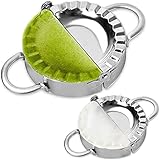


Our Top Picks
 Russian Ravioli Maker Dumplings Mold Pelmeni Metal Moldstandart10.71 x 9.33 x 0.67 inches0.9 poundsCheck on Amazon
 Stainless Steel Dumpling Ravioli Maker Press3.75 inch3.75 x 3.75 x 1 inches0.3 poundsCheck on Amazon
 Electric Dumpling Maker Machine7.36"Lx 5.4W x 6.4"H7.36 x 5.4 x 6.4 inches0.62 poundsCheck on Amazon

Top 3 picks at a glance
How to Choose the Right Dumpling Maker
Dumpling makers look simple, but small differences in wrapper size, filling depth, and sealing edge determine whether you get uniform, freezer-ready dumplings or wrappers that split and leak. Use these six criteria to narrow your choice before buying:
- Filling capacity: Shallow presses hold 1-1.5 tsp of filling and are best for delicate gyoza or soup dumplings. Deep-cup presses hold 2-3 tsp and suit hearty pork, kimchi, or vegetable fillings without overstuffing.
- Wrapper size compatibility: Most makers are sized for 3-inch, 3.5-inch, or 4-inch round wrappers. If you use store-bought wrappers, measure them first. A 3.5-inch press will not seal a 3-inch wrapper properly and a 4-inch press will leave excess dough on a 3.5-inch wrapper.
- Sealing consistency: Look for a raised crimping edge with interlocking teeth and a hinge that closes level. Thin, flat edges tend to create weak seals that open during boiling. Double-ridge crimpers produce the classic pleated look and hold up better to pan-frying.
- Materials: Food-grade ABS plastic is lightweight, affordable, and dishwasher-safe but can flex under pressure. 304 stainless steel presses and aluminum alloy molds are more rigid and durable for frequent use. Wooden molds look traditional but require hand washing and occasional oiling.
- Ease of cleaning: One-piece plastic presses with smooth interiors rinse clean in seconds. Multi-cavity trays and metal presses with tight crimping grooves need a small brush to remove dough residue. Avoid makers with deep crevices if you plan to make large batches.
- Skill level and batch size: Single dumpling presses are most forgiving for beginners. 6-cavity and 8-cavity trays or automatic wrapper-plus-filling machines speed up production but require consistent dough thickness and filling portioning to avoid jams.
The Main Types of Dumpling Makers Compared
| Type | Wrapper Size | Filling per Dumpling | Dumplings per Press | Best For | Cleaning Effort | Typical Price Range |
|---|---|---|---|---|---|---|
| Single Plastic Press (3.5-inch) | 3 – 3.5 inch round | 1.5 – 2 tsp | 1 | Beginners, gyoza, small kitchens | Low – rinse or top-rack dishwasher | usually $6–$15 for 3-pack |
| Single Stainless Steel Press (3.75-inch) | 3.5 – 4 inch round | 2 – 2.5 tsp | 1 | Thicker homemade dough, pierogi | Low – hand wash, brush grooves | usually $10–$25 |
| 6-Cavity Tray Press | 3 inch round | 1 – 1.5 tsp | 6 | Batch cooking, freezer prep | Medium – brush between cavities | usually $15–$30 |
| 8-Cavity Aluminum Mold | 3 – 3.5 inch round | 1.5 tsp | 8 | Large families, uniform shape | Medium – hand wash | usually $20–$40 |
| Manual Lever / Tortilla-Style Wrapper Press | Up to 6-7 inch (then cut or press wrappers) | N/A – makes wrappers only | 1 wrapper per press | Homemade dough, consistent thickness | Low – wipe clean | usually $30–$60 |
| Automatic Electric Dumpling Machine | 2.5 – 3 inch (adjustable) | 1 – 2 tsp (auto-feed) | Continuous feed | Very large batches, 30+ dumplings | High – disassemble and wash parts | usually $80–$200 |
1. Single Press Makers: Best for Beginners and Control
Single presses are two hinged ovals with a crimped edge. You lay the wrapper on the open press, add filling to the center, lightly moisten the edge, and close. They give you the most control over filling amount and seal pressure, which makes them ideal if you are learning how much filling a wrapper can hold before it tears.
Plastic sets that include 3-inch, 3.5-inch, and 4-inch sizes are the most versatile. They cover both thin store-bought gyoza skins and thicker homemade wrappers for potstickers and pierogi. Stainless steel single presses are heavier and do not flex, so they create a firmer crimp on thicker dough that plastic sometimes fails to seal. If you use homemade dough rolled to 1.5mm – 2mm thickness, stainless steel will produce a more reliable seal with less need to re-press.
2. Multi-Cavity Tray Presses: Best for Batch Cooking
Tray presses let you form 6 to 8 dumplings at once by laying a sheet of dough or individual wrappers over the mold, adding filling to each cavity, covering with a second sheet or folding, and pressing with a top plate or rolling pin. They are significantly faster once you have portioned your filling.
The tradeoff is precision. Cavities are shallower than single presses, so overfilling by even half a teaspoon will cause dough to tear or filling to squeeze out and prevent sealing. Use a small cookie scoop (1 tsp or 1.5 tsp) to keep portions consistent. Multi-cavity molds made from aluminum alloy maintain cavity shape over time better than thin plastic trays, which can warp slightly after repeated dishwasher cycles.
3. Wrapper Presses and Electric Machines: Best for Homemade Dough at Scale
If you make dough from scratch, a manual lever wrapper press solves the most time-consuming part: rolling uniform wrappers. A cast aluminum or cast iron tortilla-style press with a 6 to 7 inch plate can press small dough balls into 3.5-inch wrappers of even 1.2mm – 1.5mm thickness when used with parchment liners. This is faster and more consistent than hand-rolling for beginners.
Automatic electric dumpling machines automate both wrapper feeding and filling injection. They use two rollers to press dough sheets and a filling hopper to deposit filling. They are only efficient if you are making 50 or more dumplings in a session and have counter space for setup and cleaning. For most home cooks, a good single press plus a manual wrapper press is faster overall when cleaning time is included.
Decision Matrix: Which Dumpling Maker Fits Your Situation
Match your cooking habits to the right spec class instead of buying by appearance:
| Your Situation | Recommended Type | Why |
|---|---|---|
| You are new to dumplings and use store-bought wrappers | 3-pack plastic single press (3, 3.5, 4 inch) | Covers common wrapper sizes, low cost, forgiving seal, easy to learn portion control |
| You make thick homemade wrappers or pierogi dough | Stainless steel single press, 3.75-inch | Rigid frame seals thicker, more elastic dough without flexing or leaving gaps |
| You freeze 30-50 dumplings at a time for meal prep | 6 or 8-cavity aluminum tray | Forms a full freezer tray in 5-6 presses instead of 30-50 individual folds |
| You want perfectly round, thin wrappers from scratch | Manual lever wrapper press + single press | Press creates uniform thickness; single press then seals consistently |
| You cook for 4+ people weekly and value speed over cleanup | Electric automatic machine | Continuous feed is fastest for 60+ dumplings if you accept 10-15 minutes of disassembly cleaning |
Worked Calculation: How Much Time and Output to Expect
Understanding throughput helps you decide if a batch tool is worth the extra cleaning. These are conservative, real-world averages for a home cook after 2-3 practice sessions:
- Hand-folding without a maker: 35-45 seconds per dumpling = 80-100 per hour
- Single press: 20-30 seconds per dumpling = 120-180 per hour
- 6-cavity tray with pre-portioned filling: 60-90 seconds per 6 dumplings (including filling placement) = 240-360 per hour
- Electric machine with ready dough and filling: 10-15 seconds per dumpling once running = 240-360 per hour plus 15 minutes setup/cleanup
Example for a typical family freezer batch of 48 dumplings:
With a single press at 25 seconds each, 48 x 25 seconds = 1,200 seconds (20 minutes) of active forming, plus about 5 minutes to moisten edges and arrange on trays. Total: roughly 25 minutes.
With a 6-cavity tray at 75 seconds per tray, you need 8 trays. 8 x 75 seconds = 600 seconds (10 minutes) of active forming, plus 6-8 minutes to scoop filling into cavities evenly. Total: roughly 16-18 minutes, but you also need 5 minutes to brush flour and dough residue from the grooves after. For batches under 24 dumplings, the time saved by a tray does not outweigh the extra cleaning. For batches over 40, the tray is consistently faster.
Filling math also matters: 48 dumplings at 2 tsp filling each = 96 tsp = 2 cups (473 ml) of filling. If your recipe makes 4 cups, plan for about 96 dumplings and choose a maker that can handle that volume without hand fatigue. Lightweight plastic is fine for 24-30 dumplings; stainless steel or aluminum trays are more comfortable for 48+.
Materials and Cleaning: What Lasts
Material choice affects durability more than sealing performance in the first months, but it shows over a year of weekly use.
Food-grade polypropylene (PP) and ABS plastic presses are the easiest to maintain. Most are dishwasher-safe on the top rack and do not retain odors if rinsed promptly. Check that the hinge pin is stainless steel, not plastic, because all-plastic hinges loosen after 6-12 months and no longer close evenly.
304 stainless steel and aluminum alloy makers do not stain, do not warp, and create sharper crimps. They require hand washing and thorough drying to prevent water spots in the crimping teeth. A soft toothbrush removes dough from the grooves without scratching.
Silicone or non-stick coated presses promise easy release but the coating can peel if you use them to press very sticky homemade dough without flour. Uncoated metal or plain plastic with a light dusting of flour or cornstarch releases more reliably long term.
Tips for a Perfect Seal Every Time
Even the best maker will leak if technique is off. These settings work across all types:
- Keep wrappers covered with a damp towel while you work. Dry edges do not seal. If wrappers have been open for more than 10 minutes, run a wet fingertip around the outer 1/4 inch before pressing.
- Use a 1 tsp scoop for 3-inch wrappers and a 1.5 to 2 tsp scoop for 3.5 to 4-inch wrappers. Fill should sit in a mound in the center and stay at least 1/4 inch from the edge.
- Dust the maker lightly with flour before each dumpling when using homemade dough. This prevents sticking and tearing when you open the press.
- Close the press firmly in one motion, then press the handle for 2-3 seconds. Opening and re-closing weakens the seal.
- For boiling, prioritize a double-ridge crimper. For pan-frying, any tight crimp works as long as no filling touches the sealing edge, because oil will break a filling-contaminated seal faster than boiling water.
FAQ
Can I use square wonton wrappers in a round dumpling maker?
You can, but you will waste corners and the seal will be uneven. Trim squares into 3.5-inch rounds with a cookie cutter, or fold squares by hand and reserve the round press for round gyoza and dumpling wrappers.
Why are my dumplings bursting when I boil them?
Three common causes: overfilling beyond the capacity listed above, air trapped inside the dumpling expanding in hot water, or filling touching the sealing edge. Reduce filling by 1/2 tsp, press gently to expel air before fully sealing, and keep the edge clean and slightly moist.
Do I need a dumpling maker if I can fold by hand?
No, hand-folding produces excellent results and is traditional. A maker is worth it if you want uniform size for even cooking and freezing, if you have limited dexterity, or if you regularly make more than two dozen at once and want to cut forming time by 30 to 50 percent.


