
A budget gaming PC does not need a flagship-priced drive to feel responsive. In a compact desktop, dorm-room setup, or living-room console-style build, the right NVMe SSD can make a meaningful difference to game installs, update management, and everyday Windows use without taking up a SATA bay or adding cable clutter. The main challenge is balancing capacity against interface generation: modern games consume space quickly, while a faster-rated drive is not always the best value for a cost-conscious build.
For shoppers looking for the best dramless nvme ssd for budget gaming, the sensible approach is to prioritize compatible M.2 2280 storage, enough room for a game library, and a price that fits the rest of the parts list. This 2026 roundup ranks the listed drives by practical buyer fit rather than claiming unverified benchmark results. Confirm DRAM configuration, motherboard compatibility, and warranty details with the seller before checkout, especially when choosing between similarly named models.
As an Amazon Associate we earn from qualifying purchases at no extra cost to you.




Top 3 picks at a glance
Quick Picks
| Product | Best for | Price |
|---|---|---|
| Kingston NV3 1TB M.2 2280 NVMe SSD | Best overall PCIe 4.0 value | $156 |
| Silicon Power 1TB NVMe M.2 PCIe Gen3x4 2280 SSD | Best straightforward 1TB Gen3 option | $159.97 |
| Silicon Power 2TB NVMe M.2 PCIe Gen3x4 2280 SSD | Best for larger Gen3 game libraries | $265.97 |
| Sandisk Optimus 5100 500GB NVMe SSD | Best for compact secondary storage | $109.99 |
| Sandisk 1TB Optimus GX 7100 NVMe SSD | Best rated-speed pick | $199 |
| Sandisk Optimus 5100 1TB NVMe SSD | Best for buyers wanting a 1TB Optimus 5100 | $189 |
| Western Digital 2TB WD Green SN350 NVMe Internal SSD | Best WD option for Gen3 capacity | $246 |
| Western Digital 512GB Gaming Gen4 M.2 2280 PCIe NVMe Internal SSD | Best smaller gaming-focused Gen4 choice | $139 |
How We Picked
We focused on the details that matter most in a budget gaming storage purchase: capacity, PCIe generation, stated sequential speed where supplied, physical format, and listed price. Every drive here uses the M.2 2280 format, making it a natural starting point for many compatible desktops and laptops. M.2 2280 identifies a 22 mm-wide, 80 mm-long module, but buyers should still check their device manual for NVMe support and available mounting hardware.
Ranking also considers the reality of a game library. A 500GB drive can be useful for a focused installation or secondary storage role, while 1TB is generally the more comfortable baseline for a budget gaming machine. A 2TB model is most compelling when frequent uninstalling and reinstalling would be more frustrating than the higher upfront cost. We did not invent endurance ratings, thermal figures, controller details, weights, or lab-test results where they were not provided.
The 8 Best Picks
1. Kingston NV3 1TB M.2 2280 NVMe SSD | PCIe 4.0 Gen 4×4 | Up to 6000 MB/s | SNV3S/1000G
The Kingston NV3 is the strongest all-around starting point for a budget gaming desktop with an available PCIe 4.0 M.2 slot. Its 1TB capacity gives buyers a more flexible game-library foundation than smaller drives, and its stated maximum speed of up to 6000 MB/s makes it an appealing match for a current-generation platform. At $156, it is also priced below the listed 1TB Sandisk PCIe 4.0 options. It suits shoppers who want a recognizable, uncomplicated 1TB upgrade without paying for the highest stated speed tier.
- Pro: PCIe 4.0 Gen 4×4 interface.
- Pro: 1TB capacity with stated speeds up to 6000 MB/s.
- Con: It costs more than the 500GB and 512GB choices.
Skip it if your motherboard supports only Gen3 and the savings from a Gen3 drive are more important than future platform flexibility.
2. Silicon Power 1TB – NVMe M.2 PCIe Gen3x4 2280 SSD (SP001TBP34A60M28)
This Silicon Power 1TB model is for gamers upgrading an older PCIe Gen3 desktop or laptop that accepts an M.2 2280 NVMe drive. The key appeal is straightforward compatibility positioning: it is a 1TB Gen3x4 model rather than a higher-priced Gen4 drive that an older platform may not fully use. At $159.97, it sits very close to the Kingston NV3’s price, so its best case is specifically a Gen3-focused build rather than a universal value win. It can also make sense for a secondary game drive in a machine with more than one M.2 slot.
- Pro: 1TB capacity is practical for game storage.
- Pro: PCIe Gen3x4 format targets older compatible systems.
- Con: It is priced above the listed 1TB Kingston Gen4 option.
Skip it if you have a PCIe 4.0 system and want the best stated interface specification for roughly the same outlay.
3. Silicon Power 2TB NVMe M.2 PCIe Gen3x4 2280 SSD Solid State Drive (SP002TBP34A60M28)
The 2TB Silicon Power model is built around capacity first. For a budget gamer who keeps a broad rotation of large titles installed, 2TB reduces the constant housekeeping that comes with a smaller boot drive. Its Gen3x4 interface makes it particularly relevant to an older desktop or laptop where a Gen4 upgrade would not be the central priority. The $265.97 price is a meaningful jump from the 1TB version, so this is a convenience purchase for buyers who value storage headroom. It is not the cheapest route into NVMe gaming storage, but it offers the largest capacity in the Silicon Power pair.
- Pro: 2TB capacity supports a larger installed library.
- Pro: M.2 2280 PCIe Gen3x4 design suits compatible older systems.
- Con: Its $265.97 price requires a larger budget.
Skip it if you regularly finish and remove games, or if 1TB would leave enough free space for your actual play habits.
4. Sandisk Optimus 5100 500GB NVMe SSD, PCIe 4.0, M.2 2280
The Sandisk Optimus 5100 500GB is the entry-capacity choice for a narrowly defined storage job. At $109.99, it is the lowest-priced drive in this lineup and uses PCIe 4.0 in the common M.2 2280 format. That makes it potentially useful as a secondary drive for a few frequently played games, a dedicated operating-system drive, or a storage refresh for a smaller-capacity system. The trade-off is simple: 500GB fills more quickly than 1TB once several modern games, updates, and saved media enter the picture. Buy it for a focused setup, not a sprawling library.
- Pro: Lowest listed price at $109.99.
- Pro: PCIe 4.0 M.2 2280 format.
- Con: 500GB capacity is limited for a large game collection.
Skip it if this will be your only drive and you prefer to keep numerous large games installed simultaneously.
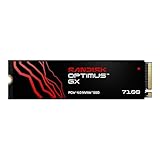
5. Sandisk 1TB Optimus GX 7100 NVMe SSD, PCIe Gen 4, M.2 2280, Up to 7250 MB/s Read, SDSP71100TAN
The Sandisk Optimus GX 7100 is the speed-specification leader in this group, with a stated read speed of up to 7250 MB/s. It is aimed at buyers with a compatible PCIe Gen 4 system who want a 1TB drive with a high advertised read rating while retaining the standard M.2 2280 footprint. At $199, it costs more than the Kingston NV3 and the Sandisk Optimus 5100 1TB. That premium is easiest to justify when the GX 7100’s stated maximum read speed is a priority and the rest of the build already supports Gen4 well.
- Pro: Stated read speed of up to 7250 MB/s.
- Pro: 1TB capacity and PCIe Gen 4 interface.
- Con: Higher listed price than other 1TB options here.
Skip it if your goal is strictly the lowest cost per drive rather than the highest stated read-speed figure.
6. Sandisk Optimus 5100 1TB NVMe SSD, PCIe 4.0, M.2 2280
The 1TB Sandisk Optimus 5100 is a clean middle-ground option for buyers who want PCIe 4.0 and a more comfortable capacity than the 500GB version. Its 1TB size is better suited to a primary gaming drive, leaving more room for operating-system files and a rotating selection of games. At $189, however, it is $33 more than the Kingston NV3 1TB, so the purchase decision should rest on specific seller support, availability, or preference rather than an obvious price advantage. It remains a sensible fit for a compatible M.2 2280 build that needs a single-drive upgrade.
- Pro: 1TB is more versatile than the 500GB Optimus 5100.
- Pro: PCIe 4.0 M.2 2280 specification.
- Con: Its $189 price is not the lowest for a 1TB Gen4 option.
Skip it if price is your main filter and the Kingston NV3 is available at its listed $156.
7. Western Digital 2TB WD Green SN350 NVMe Internal SSD Solid State Drive – Gen3 PCIe, QLC, M.2 2280, Up to 3,200 MB/s – WDS200T3G0C
The WD Green SN350 gives capacity-minded shoppers a 2TB option from Western Digital, with a stated maximum speed of up to 3,200 MB/s. It uses Gen3 PCIe, QLC storage, and the familiar M.2 2280 layout, making it a clear candidate for compatible Gen3 machines or large secondary game libraries. At $246, it is less expensive than the listed 2TB Silicon Power model, which strengthens its value case within the 2TB category. This is a practical storage-first pick, particularly when keeping many games installed matters more than pursuing Gen4 interface specifications.
- Pro: 2TB capacity at a lower listed price than the 2TB Silicon Power drive.
- Pro: Stated speeds up to 3,200 MB/s.
- Con: Gen3 PCIe is less forward-looking than Gen4 options.
Skip it if you have a Gen4 system and would rather prioritize a faster-rated PCIe 4.0 drive over maximum capacity.
8. Western Digital 512GB Gaming Gen4 M.2 2280 PCIe NVMe Internal Solid State Drive
This Western Digital 512GB Gaming Gen4 SSD is for the buyer building around a small but gaming-focused storage upgrade. It is compatible with Stream Deck, laptop, and desktop use according to its listing, and its PCIe Gen4 M.2 2280 specification makes it appropriate for many current compatible systems. At $139, it costs more than the 500GB Sandisk Optimus 5100 despite offering only slightly more stated capacity. Its strongest role is a compact secondary drive or a purposeful upgrade in a system where 512GB is enough for a selective game lineup.
- Pro: Gaming-oriented PCIe Gen4 M.2 2280 option.
- Pro: Listed for Stream Deck, laptop, and desktop compatibility.
- Con: 512GB can be restrictive as a sole gaming drive.
Skip it if you can stretch to 1TB; the added capacity is usually more useful than a small difference in starting price.
Buying Guide
Start With Capacity, Not Marketing
For a primary gaming drive, 1TB is the practical sweet spot in this list. It gives a system room for the operating system, applications, and multiple games without forcing immediate storage management. The 500GB and 512GB options are best when they supplement another drive. Choose 2TB when you want to preserve a larger installed library and your budget can support the $246 to $265.97 range.
Match the Drive to Your PCIe Generation
PCIe Gen4 drives can be installed only where the system supports the appropriate M.2 NVMe connection, and a Gen3 platform may not deliver Gen4-class interface capability. The Kingston NV3, both Sandisk Optimus models, Sandisk GX 7100, and WD Gaming drive are listed as PCIe 4.0 or Gen4. The Silicon Power models and WD Green SN350 are Gen3 choices. Check the motherboard or laptop manual before buying.
Verify the Details That Listings Do Not Show
Do not assume a drive’s DRAM arrangement, endurance, included heatsink, power draw, weight, warranty length, or sustained-write behavior from the product name alone. Those details can affect long-term suitability, especially in a warm laptop or tightly packed mini PC. Confirm whether your device needs a single-sided module, whether a heatsink will fit, and whether the drive includes the screw or mounting hardware required by your system.
Our Verdict
The Kingston NV3 1TB is the best overall pick because it combines 1TB of capacity, PCIe 4.0 Gen 4×4 support, and a stated maximum of up to 6000 MB/s for $156. For the lowest entry price, choose the 500GB Sandisk Optimus 5100 at $109.99, provided it will not be your only game drive. For buyers who need maximum capacity from this group, the 2TB WD Green SN350 is the more affordable 2TB option at $246. The Sandisk Optimus GX 7100 is the one to consider when its stated up-to-7250-MB/s read rating is worth the $199 price.
FAQ
Is 500GB enough for budget gaming?
It can be enough for a focused setup with a small active game rotation, but it is limiting as a single drive. A 1TB SSD offers more flexibility for game installs, updates, and everyday files.
Should I buy PCIe Gen3 or Gen4?
Buy the generation that fits your system and budget. A Gen3 drive is a sensible choice for a compatible older platform. A Gen4 drive is better suited to a compatible newer system when its price premium is reasonable.
Which drive has the highest stated read speed?
The Sandisk 1TB Optimus GX 7100 has the highest stated read speed in this list: up to 7250 MB/s. The Kingston NV3 is listed at up to 6000 MB/s, while the WD Green SN350 is listed at up to 3,200 MB/s.
Are all of these drives confirmed DRAM-less?
Not from the supplied product details alone. Confirm the current manufacturer specification or retailer documentation for DRAM configuration before purchase, since this roundup does not assume technical details that were not provided.


