
Our Top Picks
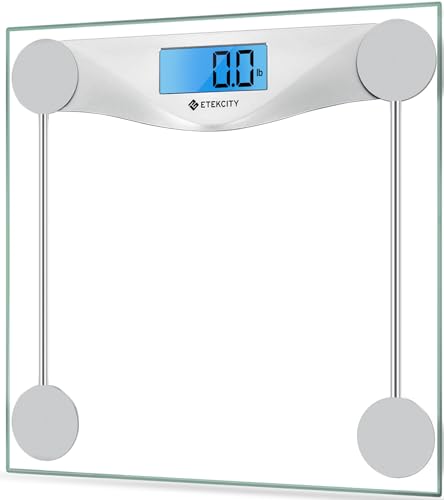 Etekcity Digital Body Weight Bathroom Scale11.9 x 11.9 inches11.9 x 11.9 x 0.95 Inches3.7 PoundsCheck on Amazon
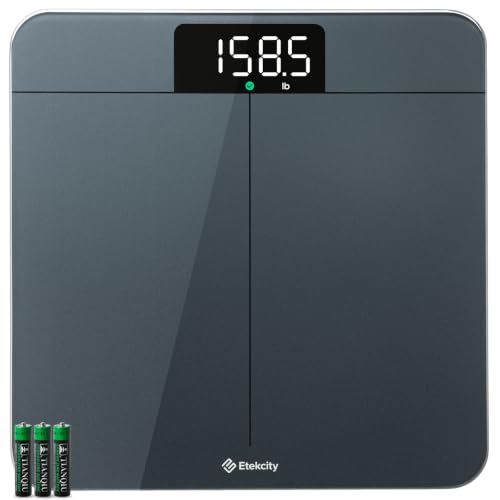 Etekcity Digital Bathroom Scale for Body Weight11.8 x 11.8 x 1 in11.8 x 0.96 x 11.8 inches3.53 PoundsCheck on Amazon
 Digital Bathroom Scale for Body Weight: High-Precision 4-Sensor10.63"/270mm11.02 x 11.02 x 1.57 inchesCheck on Amazon
 Ovutek Bathroom Scales Digital Weight 450lb11.8 x 11.8 in11.8 x 11.8 x 1 inches4 poundsCheck on Amazon
Top 3 picks at a glance
Best Digital Bathroom Scales for Accurate Home Weighing
The best digital bathroom scales for most homes are the Withings Body Smart for the strongest all-round app experience, the Garmin Index S2 for Garmin users, the Eufy Smart Scale P2 Pro for a large platform and high capacity, and a basic Omron or Tanita scale when repeatable body weight matters more than connected features.
A good bathroom scale is not necessarily the one displaying the most body-composition metrics. For reliable home weighing, prioritize consistent readings on the same floor, a stable platform, a readable display, and a weight limit comfortably above the heaviest user. Bluetooth, Wi-Fi, and body-fat estimates are useful extras, but they cannot compensate for poor placement or inconsistent weighing habits.
As an Amazon Associate we earn from qualifying purchases at no extra cost to you.


Quick comparison of the best digital bathroom scales
| Model | Weight capacity | Platform or footprint | Connectivity | Display and power | Best for |
|---|---|---|---|---|---|
| Withings Body Smart | Up to 200 kg / 440 lb | Approximately 32.7 × 32.7 cm | Wi-Fi and Bluetooth | Color display; rechargeable or replaceable battery configuration varies by model | Households wanting automatic app syncing and multiple-user support |
| Garmin Index S2 | Up to 181.4 kg / 400 lb | Approximately 32 × 31 cm | Wi-Fi and Bluetooth | Color display; four AAA batteries | Garmin Connect users tracking weight with other Garmin data |
| Eufy Smart Scale P2 Pro | Up to 200 kg / 440 lb | Approximately 28 × 28 cm | Wi-Fi and Bluetooth | LED display; four AAA batteries | Users who want a high capacity and broad app feature set |
| Omron HN-289 | Up to 150 kg / 330 lb | Approximately 28 × 28 cm | None | Large digital display; four AAA batteries | Simple, no-account weighing with minimal distractions |
| Tanita HD-662 | Up to 150 kg / 330 lb | Approximately 28 × 28 cm | None | Digital display; four AAA batteries | Basic weight tracking from an established scale specialist |
Dimensions, battery arrangements, and regional specifications can differ, so check the product documentation for the exact version sold in your country. The capacity figures are more useful than a scale’s maximum displayed precision: a scale showing weight in 0.1-lb increments is not necessarily accurate to 0.1 lb.
Head-to-head: which scale fits your situation?
Best connected scale: Withings Body Smart
The Withings Body Smart is a strong choice for households that want weight measurements to appear automatically in a health app. Wi-Fi synchronization means the scale can upload data without requiring a phone to be nearby at every weigh-in. It also supports multiple profiles and provides a more informative on-device experience than a basic scale.
Its main advantage is convenience rather than laboratory-grade accuracy. Body-composition readings such as body fat and muscle percentage are estimates affected by hydration, skin contact, recent exercise, and foot position. Use them to observe long-term direction, not as a medical measurement. The Body Smart is best when automatic trend recording is more important than having the simplest possible device.
Best for Garmin households: Garmin Index S2
The Garmin Index S2 makes the most sense if you already use Garmin Connect, a Garmin watch, or Garmin’s training ecosystem. It can place weight data alongside activity and health information, reducing the need to enter measurements manually.
Its 400-lb capacity is enough for many users, although the smaller maximum compared with 440-lb competitors matters for larger households. Choose it for ecosystem compatibility and a clear color display. If you do not use Garmin products, its additional value is harder to justify.
Best high-capacity smart option: Eufy Smart Scale P2 Pro
The Eufy Smart Scale P2 Pro combines a 440-lb capacity with Bluetooth and Wi-Fi connectivity. That makes it a practical option for families with different body sizes or for anyone who wants a larger safety margin above their current weight.
Its compact footprint can be a benefit in a small bathroom, but users with large feet may prefer a wider platform. As with other bioimpedance scales, the extra metrics should be treated as trend indicators. The weight reading is the feature to prioritize when comparing it with other scales.
Best simple scale: Omron HN-289
The Omron HN-289 is a better fit when you want to step on, read your weight, and leave without creating an account or maintaining an app. Fewer features also mean fewer sources of confusion: there is no cloud synchronization to troubleshoot and no body-fat number inviting overinterpretation.
Its 150-kg capacity is the principal limitation. Check the maximum user weight before buying, and allow a generous margin if multiple people will use it. A simple scale can be the most dependable choice for a person who records weight manually once or twice a week.
Accuracy versus repeatability: the distinction that matters
Accuracy means closeness to your true weight. Repeatability means producing nearly the same result when conditions have not changed. Home users can usually control repeatability much more effectively than absolute accuracy.
For example, suppose a scale reads 80.0 kg, 80.1 kg, and 80.0 kg during three immediate weigh-ins. Its repeatability is good because the spread is only 0.1 kg. That does not prove that your actual weight is exactly 80.0 kg. A hard, level floor and a consistent routine are therefore more valuable than buying a scale with an extra decimal place.
A five-minute repeatability check
- Place the scale on rigid tile or another hard, level surface. Avoid carpet, uneven vinyl, and grout lines that make one foot sit higher.
- Tap the platform to wake it, wait for the display to return to zero, and step on with your feet in the same positions.
- Record the reading, step off, wait for the display to clear, and repeat two more times.
- Calculate the range by subtracting the lowest result from the highest. A range of 0.1–0.2 kg is reasonable for a consumer scale under controlled conditions.
- Repeat the check the next morning. A larger change then may reflect food, fluids, clothing, or normal body variation rather than scale failure.
If the readings jump by several tenths of a kilogram within seconds, replace the batteries, check that all feet touch the floor, and repeat the test. If the problem remains, the load cells or electronics may be faulty.
Decision matrix: choose by priority
| Your priority | Recommended direction | Why | What to sacrifice |
|---|---|---|---|
| Automatic records with no phone nearby | Wi-Fi scale such as Withings Body Smart or Garmin Index S2 | Uploads measurements directly after setup | Higher price and more account/app maintenance |
| Up to 200 kg / 440 lb capacity | Eufy Smart Scale P2 Pro or Withings Body Smart | Provides more headroom for heavier users | Some platforms may feel compact under larger feet |
| No cloud service or smartphone | Omron HN-289 or Tanita HD-662 | Immediate local reading and simple operation | No automatic trends or remote history |
| Garmin training ecosystem | Garmin Index S2 | Weight fits naturally into Garmin Connect | Lower maximum capacity than 440-lb alternatives |
| Largest possible standing area | Compare platform dimensions, not only total footprint | Some frames waste space around a relatively small glass surface | Potentially higher cost and bathroom space use |
Battery life and running-cost calculation
Most smart and basic scales use four AAA batteries. Actual life depends on display time, wireless activity, temperature, and how often the scale is used. If a set lasts 12 months in a two-person household taking one reading per day, that equals roughly 730 weighing sessions per set.
Assume alkaline batteries cost $6–$12 per four-pack and last 9–18 months. The annual battery cost is therefore usually about $4–$16, depending on usage and battery life. Rechargeable AAA batteries can reduce waste, but some scales behave better with the voltage profile of standard alkaline cells. Follow the manufacturer’s battery recommendation and replace all batteries together.
How to get more consistent readings
- Weigh at the same time, preferably after using the bathroom and before breakfast.
- Use the same clothing conditions, or weigh without clothing for the cleanest comparison.
- Keep the scale in one location. Moving it between tile and carpet can alter readings.
- Stand still with weight distributed evenly and do not lean toward the display.
- Do not compare body-composition percentages from different brands; their algorithms are not interchangeable.
- Track a seven-day average if daily fluctuations make the trend difficult to interpret.
For most buyers, the final choice is simple: select the Withings Body Smart for automatic multi-user tracking, the Garmin Index S2 for Garmin integration, the Eufy Smart Scale P2 Pro for high capacity, or the Omron HN-289 or Tanita HD-662 for uncomplicated local weighing. Whichever model you choose, a hard floor and a repeatable routine will have more impact on useful results than an additional body-composition feature.
Frequently asked questions
Do I need a smart scale if I only want to track body weight?
No, a basic scale is sufficient if you only want a local weight reading. The Omron HN-289 and Tanita HD-662 provide digital displays without Bluetooth, Wi-Fi, accounts, or apps. This approach avoids cloud synchronization and makes manual recording necessary, but it can suit someone who weighs once or twice a week and does not need automatic trends or remote history.
Can I compare body-fat readings from different smart-scale brands?
No, body-fat percentages from different brands should not be compared directly. Bioimpedance estimates are affected by hydration, recent exercise, skin contact, and foot position, while different brands use different algorithms. Use the readings from one scale only as indicators of long-term direction, and treat weight as the primary measurement when comparing scales.
How much extra capacity should a bathroom scale have?
Choose a scale whose maximum capacity is comfortably above the heaviest user’s weight. The article lists models rated up to 150 kg / 330 lb, 181.4 kg / 400 lb, and 200 kg / 440 lb. A generous margin is especially useful when multiple people use the scale, because capacity is more important than an extra displayed decimal place.
Why might a scale show different readings after I move it?
Moving a scale can change its readings because the surface may no longer be equally hard and level. Carpet, uneven vinyl, grout lines, and floors where one foot sits higher can affect repeatability. Keep the scale in one location, preferably on rigid tile or another hard, level surface, and ensure all feet touch the floor before weighing.
How can I tell whether a scale’s inconsistent readings are caused by the batteries?
Replace the batteries and repeat the weighing check if readings jump by several tenths of a kilogram within seconds. Also confirm that all feet touch the floor and that the scale returns to zero before stepping on. If inconsistent results remain after these checks, the load cells or electronics may be faulty. Replace all batteries together.


