
Our Top Picks

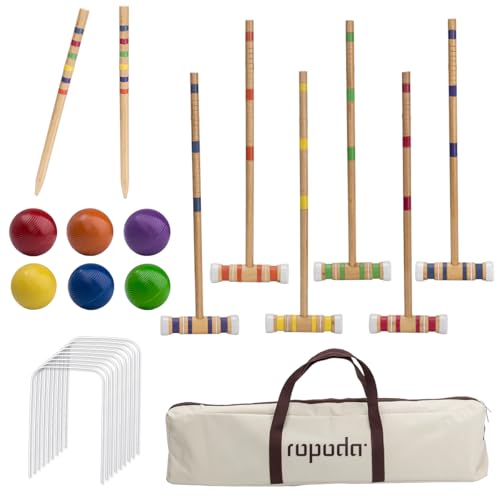
Best Croquet Sets for Adults: Complete Lawn Game Buying Guide
The best croquet sets for adults are the ones with solid hardwood mallets, durable balls, sturdy hoops, and enough equipment for the number of people who will actually play. For casual family games, a four-player hardwood set is the easiest fit; for regular doubles or club-style play, prioritize heavier mallets, regulation-size balls, and rigid steel hoops over a large accessory bundle.
Choose by the way you’ll play
Adult sets vary more in build and playing feel than their packaging suggests. Use this quick guide to narrow the field before comparing specific materials:
As an Amazon Associate we earn from qualifying purchases at no extra cost to you.


| Playing situation | What to look for | Good equipment target |
|---|---|---|
| Occasional backyard games, 2–4 people | Comfortable mallets, weather-resistant balls, simple storage | Four mallets, four balls, steel hoops about 12 in. high |
| Parties or larger families, 5–6 players | Enough complete playing pieces for simultaneous turns | Six mallets and six balls; check that hoop count has not been reduced |
| Frequent play on a lawn | Replaceable or durable components, solid construction | Hardwood mallets, polymer balls, thick steel hoops |
| Club-style or competitive play | Consistent dimensions and predictable contact | Regulation-style 3¾-in. balls and 36-in. mallets; verify the ruleset |
These are practical buying targets, not a claim that every game follows one standard. Croquet formats differ, so confirm the dimensions required by your chosen rules before buying a set for formal competition.
What matters most in an adult croquet set
Mallets: weight, head, and length
Mallets determine how controlled a shot feels. A heavier head can help send a ball through longer grass, but an overly heavy mallet is tiring and harder for new players to control. For most adults, a wooden head around 9–10 in. long and a shaft around 36 in. offers a useful starting point. Taller players may prefer a longer shaft; whenever possible, compare the grip height with the player’s comfortable stance.
Hardwood heads such as ash or maple generally resist dents better than soft, lightweight wood. Check how the shaft joins the head: a firmly fitted, replaceable shaft is preferable to a visibly loose or poorly secured connection. A protective end cap can reduce damage from ground contact, though it does not make a mallet weatherproof.
Balls: material and size
Wooden balls have a traditional feel but can split, warp, or lose their finish after repeated exposure to damp grass. For a set that will see frequent backyard use, durable polymer balls are usually the lower-maintenance choice. They withstand ordinary outdoor play better, though hard plastic can feel less traditional and may behave differently on uneven ground.
Size affects both handling and compatibility. Many adult sets use balls close to 3¾ in. in diameter, but some recreational sets use smaller balls. If you already own hoops or plan to follow a particular ruleset, check that each ball passes through the hoop with suitable clearance. A ball that barely fits can snag on a slightly misaligned hoop; too much clearance makes precise play less demanding.
Hoops: steel is usually the practical choice
Hoops take repeated contact with both balls and soil. Steel hoops hold their shape better than thin wire, while a durable coating helps limit rust. Look for legs long enough to anchor securely in your lawn and a diameter that matches the balls. A hoop that rocks or leans changes the challenge of a shot, so rigidity matters more than decorative finish.
Capacity: don’t confuse extra mallets with a better set
A standard recreational setup often supports two to four players, while six-mallet sets suit larger groups. But more mallets do not automatically mean the set is complete for the game you want: check the number of balls, hoops, stakes, and clips as well. For a four-player set, confirm there are four distinct balls and mallets, plus the hoops and stakes needed for the included layout. For six players, make sure the extra mallets come with matching balls rather than being spare accessories.
If you expect to play both small and large games, a six-player set can be flexible. If storage and cost matter more, a four-player set is usually the cleaner purchase; borrowing or rotating turns is often easier than storing two unused mallets all year.
Plan the court before buying
Many casual games use a court roughly 50 ft. by 100 ft., but a backyard layout can be scaled to fit. A smaller lawn is playable if there is enough room to move around the hoops and swing safely. For a quick proportional setup, measure the usable length and width, then place the hoops in the same general pattern as the intended ruleset rather than squeezing a full-size layout into an awkward space.
For example, if your clear lawn is 30 ft. by 60 ft., it is 60% of a 50 ft. by 100 ft. court in each direction. Reduce the spacing between hoops to about 60% of the full layout. This keeps the course coherent without requiring full-distance shots. Leave several feet around the boundary where possible, and avoid placing hoops close to trees, garden beds, windows, or hard edges where missed shots could cause damage.
Before play, press each hoop into firm soil and check that its opening is vertical and aligned with the intended direction of travel. On soft ground, a hoop may tilt during a game; reseat it rather than compensating with a difficult shot.
Storage and durability: match the case to your routine
A carrying bag or box makes a set easier to move, but it is not a substitute for proper drying. After playing on damp grass, wipe the mallet heads and balls, let them air-dry, and store them somewhere dry. Keeping wooden parts in a shed that gets wet or experiences large temperature swings can shorten their life. A bag with separate compartments also helps prevent mallet heads from rubbing against balls and loosening or scuffing over time.
For occasional use, a basic case and coated steel hoops are generally enough. For frequent play, prioritize solid mallets, a robust case, and components that can be replaced individually. Replacement availability matters: if a ball cracks or a mallet shaft loosens, replacing one part is less wasteful than buying a whole new set.
Which type should you buy?
- Best fit for most adults: a four-player set with hardwood mallets, polymer balls, sturdy coated steel hoops, and a carry bag.
- Best for larger groups: a six-player set only if it includes a matching ball for every mallet and a full hoop-and-stake layout.
- Best for traditional feel: a set with hardwood mallets and wooden balls, provided you are willing to keep the equipment dry and maintain it.
- Best for regular or competitive play: buy by dimensions and consistency, not by accessory count; verify ball size, mallet length, hoop opening, and the requirements of your ruleset.
Adult recreational sets are commonly sold across broad price bands: basic bundles are often around $50–$100, sturdier hardwood sets about $100–$250, and premium or competition-oriented equipment can cost more. Prices vary with materials, player capacity, and whether the set includes a protective case. Treat a surprisingly large accessory list with caution if the core mallets, balls, and hoops are lightweight.
Frequently asked questions
Can I use an adult croquet set on a smaller lawn?
Yes, you can scale the layout to fit a smaller lawn as long as players have room to move around the hoops and swing safely. Measure the usable length and width, then reduce the spacing between hoops proportionally. Leave several feet around the boundary where possible, and keep hoops away from windows, trees, garden beds, and hard edges.
How should I care for a croquet set after playing on wet grass?
Dry the equipment before storing it. Wipe the mallet heads and balls, let them air-dry, and keep the set somewhere dry. Avoid storing wooden parts in a shed that gets wet or experiences large temperature swings. A case with separate compartments can also prevent mallet heads from rubbing against balls and causing scuffs or loosening.
Are wooden croquet balls worth choosing for backyard play?
Wooden balls are worth choosing if you prefer a traditional feel and are willing to maintain them carefully. They can split, warp, or lose their finish after repeated exposure to damp grass. Durable polymer balls are usually the lower-maintenance option for frequent backyard use, although they may feel less traditional and behave differently on uneven ground.
What should I do if a croquet hoop becomes tilted during a game?
Reseat the hoop in firm soil instead of trying to compensate with a more difficult shot. A hoop that rocks or leans changes the challenge of play, and soft ground can cause it to tilt during a game. Before playing, check that every hoop is securely anchored, vertical, and aligned with the intended direction of travel.
Can I replace individual croquet set parts instead of buying a new set?
Often, individual replacement is the more practical option when replacement parts are available. A cracked ball or loose mallet shaft does not necessarily require replacing the entire set. When comparing equipment, check whether components can be replaced individually. This matters especially for frequent play, since replacing one worn or damaged part creates less waste than buying another complete set.
Final buying checklist
- Do the mallet length and weight suit the adults who will play?
- Are the balls durable, the right size for the hoops, and supplied one per player?
- Are the hoops rigid enough to stay aligned in your soil?
- Does the set include the complete layout and a practical way to store it?
- Can you replace worn or damaged parts without replacing the entire set?
For most casual adult players, the strongest all-around choice is a four-player hardwood set with polymer balls and coated steel hoops. Move up to six players or competition-grade dimensions only when your group size or rules make those upgrades useful.


