
The best hard water shower filters can reduce chlorine, sediment, odors, and some metals, but they generally cannot remove the calcium and magnesium that create true hard-water scale—that job requires a water softener or a certified ion-exchange system.
As an Amazon Associate we earn from qualifying purchases at no extra cost to you.


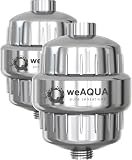

Top 3 picks at a glance
What a shower filter can—and cannot—do about hard water
“Hard water shower filter” is often used as a shopping term, but most shower filters are not water softeners. Hardness is primarily dissolved calcium and magnesium. Carbon, KDF, vitamin C, and similar media may improve smell, chlorine exposure, and the feel of the water, yet they do not reliably prevent white scale on glass, fixtures, or showerheads.
For easier maintenance, choose a filter according to the problem you actually have:
- Chlorine smell, dry-feeling skin, or dull hair: a carbon, KDF, or catalytic media filter may help.
- Rust, grit, or particles: choose a model with a sediment stage or screen.
- White crust and frequent descaling: use a water softener, whole-house treatment system, or a shower-specific ion-exchange cartridge where available.
- Low shower pressure: prioritize a high-flow design with a modestly restrictive cartridge.
Best hard water shower filters compared
| Filter or type | Main media | Typical flow | Typical cartridge life | Replacement cost | Best for |
|---|---|---|---|---|---|
| Sprite High Output universal filter | KDF copper-zinc media with specialty filtration media | About 2.5 gallons per minute, depending on plumbing | Usually about 6 months | Usually $20–$35 | Chlorine reduction with broad showerhead compatibility |
| Aquasana AQ-4100 series | Catalytic carbon and KDF-type media | Up to roughly 2.5 gallons per minute | About 6 months or 10,000 gallons, depending on model and use | Usually $20–$35 | Chlorine and water-quality improvement without a large housing |
| Culligan inline shower filter systems | Activated carbon and/or specialty media, model dependent | Commonly around 2.5 gallons per minute | Often about 6 months | Usually $15–$30 | Budget-conscious replacements and standard threaded connections |
| Jolie filtered showerhead | Proprietary multi-media cartridge, including KDF-type media | Model and restrictor dependent; commonly near standard shower flow | Often approximately 3 months | Usually $30–$40 | People who want the filter integrated into the showerhead |
| Shower filter with vitamin C media | Ascorbic acid cartridge, sometimes combined with carbon | Often 1.8–2.5 gallons per minute | Commonly 1–3 months | Usually $10–$25 | Reducing free chlorine, especially in warm water |
| Shower-specific ion-exchange filter | Cation-exchange resin, sometimes with sediment and carbon stages | Often 1.5–2.5 gallons per minute | Frequently shorter than carbon-only filters | Usually $20–$50 | Limited hardness reduction where a suitable cartridge is available |
Specifications vary by cartridge revision, restrictor, water temperature, and local water chemistry. Treat advertised gallon capacities as estimates rather than guarantees. Hot water, high sediment, and very hard water can shorten service life.
Head-to-head: which filtration media matters?
Activated carbon
Carbon is useful for chlorine, some taste-and-odor compounds, and certain organic contaminants. It is usually the most relevant medium for municipal water that smells strongly of chlorine. Standard carbon does not meaningfully soften water, and a small shower cartridge has limited contact time, so claims covering a wide range of contaminants should be checked against a specific performance test.
KDF copper-zinc media
KDF-style media can assist with chlorine reduction and may help control bacterial growth inside the filter. It is often paired with carbon because the two media address different issues. KDF is not a substitute for hardness removal, however; the calcium deposits on your shower door will usually remain.
Vitamin C
Vitamin C can neutralize free chlorine, but cartridges are consumed relatively quickly. It is less convenient for households with long showers or multiple users, and it is not a hardness treatment. A vitamin C filter makes the most sense when chlorine is the main complaint and low replacement cost is more important than long service intervals.
Ion-exchange resin
Ion exchange is the only category in this comparison that can directly target calcium and magnesium. The limitation is capacity: a compact shower cartridge contains far less resin than a whole-house softener. Performance can also depend on hardness, flow rate, pH, and competing ions. Look for a stated hardness-reduction capacity in grains or gallons, not merely “soft water” language.
Decision matrix: choose by the problem in your bathroom
| Your situation | Most sensible choice | What to expect | What not to expect |
|---|---|---|---|
| Strong chlorine odor but little visible scale | Carbon plus KDF filter | Less odor and potentially less chlorine exposure | Removal of calcium deposits |
| White scale appears within days | Water softener or ion-exchange shower filter | Some reduction is possible if capacity is documented | Whole-home softening from a small cartridge |
| Showerhead clogs with sand or rust | Sediment screen or washable prefilter | Fewer particles reaching the nozzles | Removal of dissolved hardness |
| Weak pressure in an older home | High-flow inline filter with a clean sediment stage | Less additional restriction | Higher pressure than the plumbing can supply |
| Renter who cannot modify plumbing | Inline threaded filter or integrated filtered showerhead | Tool-free or reversible installation | Guaranteed fit on unusual or damaged threads |
| Private well with unknown water quality | Water test before buying a shower filter | A treatment choice based on actual iron, hardness, and bacteria results | Reliable purification from a small consumer cartridge |
Worked cost calculation: the cartridge can cost more than the filter
Suppose a household uses a filter cartridge rated for six months and pays $28 per replacement. Over three years, it needs six replacement cartridges:
6 cartridges × $28 = $168
If the initial filter costs $45, the three-year cost is approximately $213, before any plumbing adapters. A three-month cartridge costing $18 may look cheaper, but it requires 12 replacements over the same period:
12 cartridges × $18 = $216
With the same $45 initial housing, that option costs about $261 over three years. Compare annualized cost, not just the price of the first cartridge.
Flow rate and pressure: the specification that affects daily use
Most shower filters are installed in series with the showerhead, so their internal passages add resistance. A cartridge that is heavily clogged with sediment can reduce flow well before its advertised replacement date. If your shower normally delivers 2.0 gallons per minute and a filter reduces it by 0.3 gallons per minute, a 10-minute shower uses approximately:
2.0 × 10 = 20 gallons without the filter
1.7 × 10 = 17 gallons with the filter
The lower flow saves water but may feel unsatisfying. Check whether the product includes a flow restrictor and whether its listed rate is measured at a particular pressure. In a low-pressure home, select a model rated for at least the flow you already receive rather than assuming a “2.5 GPM” label guarantees that output.
Installation and maintenance checklist
- Measure the connection. Most shower filters use standard 1/2-inch shower-thread connections, but confirm before ordering, especially with handheld bars or proprietary shower systems.
- Remove old fittings carefully. Use a cloth and adjustable wrench on the fitting, not on the decorative showerhead body. Avoid twisting the pipe inside the wall.
- Use the supplied washer. A flat rubber washer normally creates the seal. Excessive thread tape can prevent the washer from seating correctly.
- Flush the cartridge. Run cold or lukewarm water through the filter for the period specified by the manufacturer. This removes carbon dust and loose media.
- Check for leaks under pressure. Turn the shower on fully, inspect both threaded joints, and tighten only slightly if needed.
- Record the installation date. Replace by time, gallon capacity, or noticeable flow decline—whichever comes first. Do not wait for odor or color changes alone.
Do not install a shower filter as a replacement for a required treatment system for bacteria, nitrates, arsenic, or other well-water hazards. A shower filter is also not a reliable way to make contaminated water safe to drink.
Bottom line
For most city-water users, the best hard water shower filters are carbon-and-KDF models such as the Sprite High Output, Aquasana AQ-4100 series, or comparable Culligan inline units because they target chlorine and sediment while preserving normal shower flow. Jolie’s integrated design is convenient if you prefer a filtered showerhead rather than a separate inline housing. If scale is the central problem, skip vague “15-stage” claims and seek documented ion-exchange capacity—or invest in a properly sized water softener. The right filter depends less on the number of stages than on whether its media matches the contaminant you want removed.


