
Integrating a custom Network-Attached Storage (NAS) unit into your living space involves balancing form, function, and silent reliability. Beyond selecting standard enclosures and high-capacity hard drives, deciding between ecc vs non ecc ram for home nas setup builds is one of the most fundamental choices you will make. This decision directly impacts your budget, hardware flexibility, ambient noise levels, and—most importantly—how safely your household data sits tucked away on a shelf or inside a hallway utility closet.
While looking up server specifications online, home tech enthusiasts might occasionally cross paths with completely unrelated non-technical titles such as ECC Essentials: Teaching the Expanded Core Curriculum to Students with Visual Impairments ($87.98). However, in digital storage design, ECC refers strictly to Error-Correcting Code RAM—a technology built to detect and fix electrical memory corruption before it ever reaches your hard drives. Standard (non-ECC) memory is what powers typical desktop computers, prioritizing speed and cost-efficiency over hardware-level error correction. Choosing between the two determines whether your NAS can run seamlessly inside a sleek, low-power desktop chassis or requires specialized server-grade components.
As an Amazon Associate we earn from qualifying purchases at no extra cost to you. Product prices and availability are accurate as of the date shown and are subject to change.

Top 3 picks at a glance
Quick Verdict
For most residential applications—such as streaming 4K movies via Plex, storing game backups, or hosting local media—a non-ECC RAM setup is more than sufficient. It allows for lower power consumption, compact form factors (under 10 liters), minimal fan noise, and reduced initial investment. However, if your home storage array acts as an irreplaceable archive for high-resolution family photos, financial documents, or a ZFS file system handling multi-terabyte pools, an ECC RAM setup provides unmatched peace of mind by preventing silent bit corruption at the hardware level.
Side by Side
| Feature | ECC RAM Build | Non-ECC RAM Build |
|---|---|---|
| Comfort & Acoustics | Slightly higher fan noise due to enterprise board thermals (32–42 dBA) | Ultra-quiet ambient profile ideal for living areas (18–28 dBA) |
| Durability & Data Integrity | Maximum protection; corrects single-bit memory errors on the fly | Standard protection; relies on OS and storage volume integrity checks |
| Price Range | $120–$500+ for compatible motherboard, CPU, and RAM combination | $40–$180 for consumer-grade motherboard, CPU, and RAM |
| Maintenance | Low monitoring effort; automatic hardware error scrubbing | Moderate; occasional manual file scrubbing and checksum checks |
| Space Needed | Larger footprint (Micro-ATX or 19-inch 2U rack cases, 15–25L volume) | Compact footprint (Mini-ITX or small shoe-box cases, 5–12L volume) |
| Look & Aesthetics | Industrial green PCBs, matte rackmounts, or server-style enclosures | Modern minimalist consumer cases, sleek aluminum finishes, subtle LED accents |
| Resale Value | High retention among homelab enthusiasts and enterprise refurbishers | Moderate retention; broad appeal on general second-hand PC markets |
| Best For | Critical data vaults, long-term home archives, ZFS arrays | Media streaming, general home backups, budget-conscious apartments |
Where Ecc Wins
The primary advantage of ECC memory lies in silent data protection. Electrical fluctuations, cosmic radiation, or minor physical heat spikes can cause a single bit of memory to flip from a 0 to a 1. In standard RAM, if that bit flip occurs while the operating system is writing a file to disk, the corrupted data gets permanently committed to your storage array—a phenomenon known as “silent bit rot.”
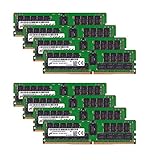
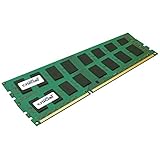
ECC memory actively detects and corrects these single-bit errors in real time without interrupting your system. For modern, advanced storage filesystems like ZFS or Btrfs—which keep massive amounts of metadata in RAM—ECC memory ensures that the filesystem indices themselves never get corrupted. High-end enterprise builds can scale dramatically to heavy-duty configurations like the Micron Memory Bundle with 256GB (8 x 32GB) DDR4 PC4-21333 2666MHz RDIMM (8 x MTA36ASF4G72PZ-2G6E1), Dual Ranked Registered ECC Memory ($1,599), though most home NAS configurations require far more modest kits. Even budget-conscious DIY builders repurposing older server gear often opt for affordable unbuffered modules like the Crucial 16GB Kit (8GBx2) DDR3/DDR3L-1600MT/s (PC3-12800) DR x8 ECC UDIMM Server Memory CT2KIT102472BD160B/CT2CP102472BD160B ($82.99) to build a budget-friendly, bulletproof storage vault.
Additionally, ECC builds offer exceptional server uptime. Because memory errors are intercepted at the hardware level, your home NAS won’t crash or trigger random Blue Screens / Kernel Panics during heavy nighttime file synchronization or parity re-silvering routines.
Where Non Ecc Ram for Home Nas Setup Wins
While data integrity sounds paramount, non-ECC setups dominate in spatial footprint, energy conservation, aesthetic versatility, and upfront pricing. Standard desktop components—such as Intel Core or consumer AMD Ryzen platforms—do not force you to source specialized, hard-to-find server motherboards.
A non-ECC NAS can easily be built inside a tiny, stylish enclosure measuring just 8 inches by 7 inches by 11 inches—small enough to sit gracefully on an open bookshelf, a walnut side table, or inside a media console next to a TV without demanding active intake ducts. Consumer motherboards engineered for non-ECC memory draw significantly less power at idle, often idling between 12W and 25W total system power compared to 45W to 80W for full enterprise-grade ECC server platforms.
Lower power consumption directly correlates to lower thermal output (measured in BTUs per hour) and near-silent operation. If your home server lives in a bedroom, study, or small living area, a quiet non-ECC build running whisper-quiet 120mm fans at 600 RPM will maintain a restful household environment while comfortably handling video streaming, photo syncing, and local network file sharing.
Cost Over 5 Years
Evaluating the total cost of ownership between ECC and non-ECC systems requires factoring in both initial hardware purchases and long-term electrical costs on your home utility bill.
- Initial Hardware Investment: A consumer-grade non-ECC core kit (motherboard, CPU, 32GB DDR4/DDR5 RAM) typically ranges from $180 to $280. A comparable consumer-friendly ECC kit (such as an AMD Ryzen motherboard supporting unbuffered ECC or dedicated server board with compatible CPU and 32GB ECC UDIMM RAM) generally ranges between $320 and $550.
- Electrical Power Draw: Assuming a standard U.S. average electricity rate of $0.16 per kilowatt-hour (kWh), a low-power non-ECC home NAS idling at 20 watts continuously costs roughly $28 per year to run ($140 over 5 years). An ECC server platform idling around 50 watts costs approximately $70 per year to run ($350 over 5 years).
- Maintenance & Replacements: Over a 5-year lifecycle, non-ECC consumer platforms are easily serviceable with off-the-shelf parts from local retailers. ECC setups offer high hardware longevity, reducing the risk of data corruption that could require costly off-site data recovery services.
Looking ahead in 2026, energy efficiency in home computing continues to drive design choices, making low-idle non-ECC setups increasingly popular for lightweight home setups, whereas ECC builds remain the premier choice for users managing critical multi-terabyte data pools.
Which One for Your Home
Small Apartment
In a compact studio or one-bedroom apartment where space is at a premium and the NAS must sit on an open desk or entertainment credenza, a non-ECC setup is ideal. A sleek Mini-ITX enclosure (around 7 to 10 liters in size) fits seamlessly into modern decor, draws under 20W at idle, and runs quietly without distracting fan noise during quiet evenings.
Family with Kids/Pets
For a busy family household where the NAS serves as a central hub for thousands of family videos, scanned documents, photo libraries, and automated phone backups, data integrity becomes crucial. An ECC setup housed in a ventilated hallway cabinet or basement utility desk ensures that accidental power bumps, continuous heavy write cycles, and long-term storage pools remain immune to silent memory corruption.
Rental
Renters who move frequently benefit from the flexibility and portability of standard non-ECC hardware. Off-the-shelf consumer enclosures are lightweight (often under 10 lbs unpacked), easy to reconfigure, and compatible with any basic home router setup without requiring dedicated rack enclosures or complex thermal management.
Long-Term Home
If you own your home and have a dedicated home office, smart-home wiring closet, or 19-inch AV rack, an ECC build is the definitive choice. Mounting a 2U or 4U rackmount chassis or solid mid-tower case backed by an Uninterruptible Power Supply (UPS) delivers enterprise-grade reliability, allowing your home storage network to operate seamlessly for years on end.
FAQ
Does ZFS strictly require ECC RAM for home NAS builds?
No, ZFS does not strictly require ECC RAM to function. ZFS will run normally on non-ECC memory and still provide checksumming against drive-level corruption. However, because ZFS caches heavy amounts of file data and metadata directly in RAM, having ECC memory prevents corrupted RAM data from being written to your storage pools.
How much extra heat and fan noise does an ECC NAS setup generate?
Dedicated enterprise ECC motherboards often feature server chipsets that generate slightly more thermal output, requiring fans to idle around 1,200 to 1,800 RPM (producing 30 to 38 dBA of sound). Consumer motherboards running non-ECC or unbuffered ECC RAM can use ultra-quiet 120mm desktop fans running below 800 RPM (under 22 dBA), keeping ambient noise imperceptible in a room.
Can I upgrade a non-ECC home NAS to ECC later without reformatting?
Yes. RAM operates strictly at the hardware system layer below your operating system and filesystems. As long as you upgrade to a motherboard and processor that support ECC memory, your existing storage drives and data pools (whether TrueNAS, Unraid, or custom Linux) can be plugged in and booted immediately without reformatting.
Will non-ECC RAM damage my hard drives or SSDs over time?
No, non-ECC RAM will not cause physical damage or mechanical wear to your hard drives or SSDs. The only risk associated with non-ECC RAM is logical software corruption—where incorrect bits stored temporarily in volatile memory get written onto healthy drive sectors during file saves or system updates.
