The best simple camera phone for most people is the Google Pixel 9a, because its main camera produces good photos in auto mode with almost no setup. If you want the easiest experience and already use Apple products, the iPhone 16e or iPhone 17 is the equivalent. If you want a cheaper Android with a reliable main camera, the Samsung Galaxy A56 is a sensible step down. “Simple” here means a phone that gets the shot right when you just point and tap, not one with the most lenses.
This guide treats “simple camera phone” as a phone whose camera needs little skill, with fast shutter response, consistent colour and a clean interface. It does not mean a flip phone with a basic camera. The picks below are real models. Their camera hardware is taken from the manufacturers’ published spec sheets, and prices are given only as budget, mid-range or premium bands because street prices change.
As an Amazon Associate we earn from qualifying purchases at no extra cost to you.

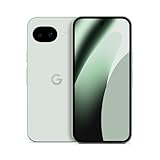


Top 3 picks at a glance
Quick comparison of the picks
| Pick | Best for | Key camera specs (per manufacturer) | Price band |
|---|---|---|---|
| Google Pixel 9a | Best overall for auto-mode quality | 48 MP main, 13 MP ultrawide, 13 MP front | Mid-range |
| iPhone 16e | Simplest iPhone, one-lens simplicity | 48 MP single rear camera, 12 MP front | Mid-range to premium |
| iPhone 17 | Best for family video and selfies | 48 MP main, 48 MP ultrawide, 18 MP front | Premium |
| Samsung Galaxy A56 | Best Android value with a bright screen | 50 MP main, 12 MP ultrawide, 5 MP macro, 12 MP front | Mid-range |
| Samsung Galaxy A16 5G | Best budget “good enough” camera | 50 MP main, 5 MP ultrawide, 2 MP macro | Budget |
| Google Pixel 10 | Best if you want simple plus a zoom lens | 48 MP main, 13 MP ultrawide, 10.8 MP 5x telephoto | Premium |
Best overall: Google Pixel 9a
The Pixel 9a suits people who want to open the camera, tap the shutter and get a usable photo in awkward light. Google’s processing handles HDR, skin tones and low-light scenes automatically, and the camera app has few menus. Its main weakness is that it has no dedicated zoom lens, so anything beyond about 2x relies on cropping and software upscaling. It also has only a basic ultrawide, which looks soft in dim rooms.
Best simple iPhone: iPhone 16e
Apple’s iPhone 16e has a single 48 MP rear camera. That means there is no lens switching to think about and the phone defaults to a sensible 12 MP output. It suits people who share photos mostly through Messages, who want consistent colour and who value stable video. The trade-off is that there is no ultrawide, so group shots in small rooms and landscape scenes are harder to frame. If you need that wider view, the standard iPhone 17 adds a 48 MP ultrawide and an 18 MP front camera that suits selfies and video calls.
Best for family video and selfies: iPhone 17
Video that looks the same whoever holds the phone is where iPhones still lead. Autofocus and stabilisation are predictable, and the front camera uses a wider sensor area, so you can fit more people in a selfie without turning the phone sideways. The trade-off is the price band and the storage tiers. The base storage fills quickly if you shoot 4K clips regularly, as the calculation below shows.
Best Android value: Samsung Galaxy A56
The Galaxy A56 has a 50 MP main camera, a 12 MP ultrawide and a 5 MP macro sensor. The main and ultrawide cameras do the useful work. The macro sensor is a low-resolution extra that most people can ignore. Samsung’s colour tuning is punchier and more saturated than Google’s, which many people like for social posts. The trade-off is that its processing is less consistent in low light, where shutter lag and softness show up more than on a Pixel.
Best budget: Samsung Galaxy A16 5G
This is the pick if you want a decent camera at a low price. It has a 50 MP main camera that is perfectly fine outdoors in daylight. The 5 MP ultrawide and 2 MP macro sensors are weak, and I would treat them as extras rather than reasons to buy. Expect slower focus and noisier photos indoors. It suits a first phone, a backup phone or a phone for someone who mostly photographs in daylight.
Best simple phone with a zoom lens: Google Pixel 10
The Pixel 10 keeps the same easy auto-mode approach as the 9a and adds a 5x telephoto camera. That helps with kids’ sports, stage events and pets that will not stay still. The trade-off is the price band, which is well above what someone who only wants simple photos needs to pay.
How to choose: decision matrix
| Your situation | Choose | Reason |
|---|---|---|
| Already use an iPhone, want the simplest option | iPhone 16e | One lens, no switching, consistent video |
| Already use an iPhone, want selfies and wide shots | iPhone 17 | Ultrawide plus a better front camera |
| Android user, best auto photos for the money | Pixel 9a | Processing does the work for you |
| Android user, lower budget, mostly daylight | Galaxy A16 5G or A56 | A solid 50 MP main sensor on both |
| Need zoom for events and pets | Pixel 10 | 5x telephoto is optical, not cropped |
| Mainly shoot dim indoor scenes | Pixel 9a or an iPhone | Better night processing than budget Android |
Worked example: how much storage do you need?
Storage is the spec that most often surprises people who buy a simple camera phone. These figures are rough, since file sizes vary with scene, format and phone. A default 12 MP photo is commonly in the range of 2 to 4 MB with efficient formats, and 4K video at 30 fps runs at roughly 170 MB per minute on many phones. Consider someone who takes 20 photos a day and records 10 minutes of 4K video a week.
- Photos: 20 photos x 3 MB x 365 days = about 21.9 GB a year.
- Video: 10 min x 170 MB = 1.7 GB a week, x 52 weeks = about 88 GB a year.
- Total: roughly 110 GB a year, before apps, system files and updates.
On a 128 GB phone that user would fill the storage within the first year without cloud backup. Switching video to 1080p at 30 fps, which is often around 60 to 70 MB per minute, cuts the video figure to about 34 GB a year. That brings the total to about 56 GB. The practical rule is to buy at least 256 GB if you shoot a lot of 4K, or to use automatic cloud backup and delete local copies.
Camera settings that keep things simple
- Leave the photo resolution at the default. The 12 MP output on a 48 or 50 MP sensor uses pixel binning, which gives cleaner low-light images and files about a quarter the size. Full-resolution mode is rarely worth it.
- Set video to 4K at 30 fps for family clips, or 1080p at 30 fps to save space. 60 fps doubles file size and only helps with fast motion.
- Use the efficient file formats. On iPhone, choose High Efficiency under Camera Formats. Efficient formats roughly halve file size compared with older ones, with no visible quality loss in normal use.
- Turn on the grid. It helps you keep horizons level, which improves photos more than any hardware spec.
- Clean the lens. Wipe it with a soft cloth before shooting. A fingerprint smear causes the hazy, flared look that many people blame on the phone.
What to ignore on the spec sheet
Megapixel counts above 12 MP rarely change everyday photo quality. Macro and depth sensors of 2 to 5 MP add little to image quality. Software processing, sensor size and stabilisation matter far more. For a simple camera phone, prioritise a good main camera, fast shutter response, a decent front camera, and enough storage and update support to keep the phone useful for years.
Frequently Asked Questions
What is a simple camera phone?
It is a phone whose camera produces good results in fully automatic mode, with an uncluttered app and little to learn. It does not need to have many lenses. A single strong main camera with good processing is often better than four weak ones.
Is the iPhone or the Pixel easier for photos?
Both are very easy, so the choice depends on your ecosystem. The Pixel often handles difficult light and group shots well in auto mode. The iPhone is usually more consistent for video and for colour that matches across devices.
Do I need a phone with three or four cameras?
No. For most people the main camera takes most of the photos, and a second ultrawide lens is the only useful addition. Extra macro or depth sensors on budget phones add marketing value more than image quality.
How much storage should a simple camera phone have?
With regular 4K video, 256 GB is a safe choice, because the example above shows about 110 GB of new media in a year for a moderate user. If you back up to the cloud and shoot mostly photos, 128 GB can work.
Is a budget phone camera good enough?
In daylight, yes, for sharing on social media and messaging. Budget phones struggle in dim rooms, with moving subjects and with video stabilisation. If you often shoot indoors or at night, a mid-range phone is worth the extra spend.
Should I buy a dedicated camera instead?
Only if you want optical zoom, a larger sensor or manual control. For everyday snapshots, a recent phone is more convenient and its processing is often better than that of a cheap compact camera.
Related guides
More from Amazon
Programs that pair well with the guide above. Offers and eligibility are set by Amazon and may change.
A free business account with business pricing and bulk-buying tools for work, shop or home office.
Create a business accountFree shipping on eligible items, Prime Video and more. Eligible new members can start with a free trial.
Start a Prime free trialAudiobooks and podcasts to listen to on the go. Eligible new members can start with a free trial.
Try Audible freeAd-free music streaming. Eligible new subscribers can start with a free trial.
Try Music Unlimited freeAs an Amazon Associate we earn from qualifying purchases.


