The best binoculars for hiking are a roof-prism 8×32 model: about 4 mm of exit pupil, a wide field of view, and a weight around 500-550 g. They are bright enough for dawn and dusk, steady enough to hold without a tripod, and light enough that you will not leave them at the trailhead. If you count every gram, an 8×25 pocket pair is the better trade. If you mostly glass open country from a viewpoint, an 8×42 is worth its extra weight.
As an Amazon Associate we earn from qualifying purchases at no extra cost to you.


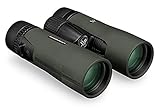
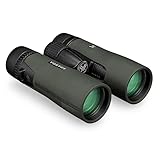
Top 3 picks at a glance
Quick comparison of the picks
Weights and fields of view below are approximate figures based on manufacturer spec sheets. Exact numbers vary slightly by production run and region, so check the current listing before buying. Price tiers are general market positioning.
| Pick | Best for | Key specs (approx.) | Price tier |
|---|---|---|---|
| Zeiss Terra ED 8×32 | Best overall | 4.0 mm exit pupil, roughly 540 g, ED glass, roof prism | Upper mid-range |
| Vortex Diamondback HD 8×32 | Best value all-rounder | 4.0 mm exit pupil, roughly 500 g, HD glass, roof prism | Mid-range |
| Nikon Prostaff P3 8×30 | Best budget | 3.75 mm exit pupil, roughly 450 g, roof prism | Budget |
| Zeiss Terra ED Pocket 8×25 | Best ultralight | 3.1 mm exit pupil, roughly 330 g, folds small | Upper mid-range |
| Nikon Monarch M5 8×42 | Best for open terrain and low light | 5.25 mm exit pupil, roughly 650 g, ED glass | Mid-range |
| Swarovski CL Pocket 8×25 | Best premium compact | 3.1 mm exit pupil, roughly 370 g, premium coatings | Premium |
Best overall: Zeiss Terra ED 8×32
This is the balance point for most hikers. The 8×32 format gives a 4 mm exit pupil and a twilight factor of 16 (see the math below). That is enough for a forest edge at dusk, and it still fits in a chest pouch or hip-belt pocket. ED glass keeps colour fringing down on bright rock and sky, which matters when you scan ridgelines.
Trade-off: It costs more than the budget picks. At roughly 540 g it is noticeably heavier than a pocket model on a long day.
Best value: Vortex Diamondback HD 8×32
This is a sensible choice if you want a full-size feel and a wide field at a mid-range price. Vortex backs the Diamondback line with its lifetime warranty, which is useful for gear that gets knocked on rocks. It suits hikers who carry binoculars on every trip but are not chasing the last bit of edge sharpness.
Trade-off: The optics are very good for the money but a step behind the Zeiss in edge sharpness and glare control. Check the current model year, since Vortex has revised this line over time.
Best budget: Nikon Prostaff P3 8×30
If you want something dependable that costs little, an 8×30 roof-prism pair like the Prostaff P3 is a good starting point. It is waterproof and fogproof per Nikon’s specification, and light enough for day hikes. The 30 mm objective gives a 3.75 mm exit pupil, which is fine in daylight.
Trade-off: It has no ED glass, so expect some colour fringing on high-contrast edges. It is also a little dimmer at dusk than a 32 or 42 mm model.
Best ultralight: Zeiss Terra ED Pocket 8×25
This is for thru-hikers and trail runners who would otherwise carry nothing. At roughly 330 g it is easy to forget in a pocket. Small prisms and a folding body make it easy to stow, and you will actually use it because it costs you no effort.
Trade-off: The 3.1 mm exit pupil gives a dim image in low light, and the narrower body is harder to hold steady. It is best as a daylight tool for peaks, trail junctions and distant wildlife.
Best for open terrain and low light: Nikon Monarch M5 8×42
An 8×42 gives a 5.25 mm exit pupil, which suits dawn and dusk wildlife and big alpine or desert views. The larger body is easier to grip and the image is brighter. This is the pair to pick if glassing is the point of the trip, not an extra.
Trade-off: At roughly 650 g, it is the heaviest pick here. It is better on a neck harness than around your neck on a strap all day.
Best premium compact: Swarovski CL Pocket 8×25
If you want pocket size without the usual dimness penalty, this model has the premium coatings and fit and finish that make compact optics look better than their numbers. It suits experienced hikers who carry optics on every trip and are willing to pay for it.
Trade-off: The physics of a 25 mm objective still apply, so it will not match a 32 or 42 mm model after sunset. You are paying for refinement, not extra light.
How to choose: the numbers that matter on a trail
Exit pupil: objective size divided by magnification
Exit pupil is the width of the light beam leaving the eyepiece. Your pupil is roughly 2-3 mm in bright daylight and 5-7 mm in dim light, so a larger exit pupil helps at dusk.
- 8×25: 25 / 8 = 3.1 mm
- 8×32: 32 / 8 = 4.0 mm
- 8×42: 42 / 8 = 5.25 mm
- 10×42: 42 / 10 = 4.2 mm
Twilight factor: a better low-light guide than size alone
Twilight factor is the square root of magnification multiplied by objective diameter. It is a rough guide to detail in poor light, and it shows why 10×42 and 8×42 both beat compacts.
| Format | Calculation | Twilight factor | Typical weight class |
|---|---|---|---|
| 8×25 | √(8 × 25) = √200 | 14.1 | 300-400 g |
| 8×32 | √(8 × 32) = √256 | 16.0 | 480-560 g |
| 10×32 | √(10 × 32) = √320 | 17.9 | 500-580 g |
| 8×42 | √(8 × 42) = √336 | 18.3 | 600-720 g |
| 10×42 | √(10 × 42) = √420 | 20.5 | 620-750 g |
The step from 8×25 to 8×32 adds about 14% to the twilight factor for a modest weight gain. The step from 8×32 to 8×42 adds another 14% for another 100-150 g or so. That is why 8×32 is the usual sweet spot, and 8×42 is the choice when low light matters more than weight.
Why 8x beats 10x on foot
Magnification multiplies hand tremor. A pair of 10x binoculars shakes about 25% more in the image than an 8x pair, and breathing hard after a climb makes it worse. Field of view also shrinks as power rises. A common 8×32 has a 7.5-8.0 degree field, and a field of view in degrees multiplied by 52.4 gives feet at 1,000 yards:
- 8.0 degrees: about 420 ft wide at 1,000 yd
- 6.5 degrees: about 340 ft wide at 1,000 yd
A wider field makes it easier to find a bird or a trail marker quickly. Choose 10x only if you mostly brace on a rock or trekking pole and view distant, still subjects.
Worked weight budget
Take a 6 kg day pack. An 8×42 at about 650 g adds roughly 11% to that load, while an 8×25 at about 330 g adds about 5.5%. The difference is only around 320 g, but where it hangs matters more than the number. Binoculars swinging on a neck strap tire the neck and shoulders over hours. A chest harness or hip-belt pouch removes most of that strain, which is why a heavier 8×42 can still work if you carry it properly.
Decision matrix: match the pair to your hike
| Your situation | Choose | Why |
|---|---|---|
| Day hikes, mixed uses, one pair | 8×32 roof prism | Best balance of brightness, field and weight |
| Thru-hike or ultralight pack | 8×25 compact | Around 300-400 g and pocketable |
| Dawn and dusk wildlife | 8×42 | 5.25 mm exit pupil, best low-light image |
| Alpine or desert viewpoints, braced on a pole | 10×32 or 10×42 | More reach on still subjects |
| You wear glasses | Any model with 15 mm+ eye relief | Full field of view with eyecups twisted down |
| Wet climates, frequent rain | Nitrogen- or argon-purged, waterproof | Prevents internal fogging |
| Tight budget | 8×30 or 8×32 entry roof prism | Gets the useful format without premium glass |
Other specs worth checking
- Waterproofing: look for sealed, gas-purged bodies. A “water-resistant” label is weaker than a waterproof rating.
- Eye relief: glasses wearers should look for 15 mm or more per the spec sheet.
- Close focus: 2-3 metres lets you check flowers, insects and lichen on the trail.
- Glass and coatings: ED or HD glass and fully multi-coated lenses reduce colour fringing and glare. They matter most in the mid-range and above.
- Rubber armour and warranty: a solid grip and a transferable warranty matter more than the extras.
Frequently Asked Questions
What size binoculars are best for hiking?
For most hikers, 8×32 is the best size. It balances brightness, a wide field of view and a weight of around 500 g. Choose 8×25 if you prioritise weight and 8×42 if you glass wildlife at dawn and dusk.
Is 8x or 10x better for hiking?
8x is better for most hikers. It gives a wider field of view and a steadier image when you are tired or out of breath. 10x gives more reach, but you need to brace it on a rock or trekking pole.
Are compact binoculars good enough for hiking?
Yes, in daylight. A good 8×25 gives a sharp image for peaks, trail junctions and birds. Their 3.1 mm exit pupil makes them dimmer at dawn and dusk, so they are a weight-saving compromise rather than an all-round tool.
Do I need waterproof binoculars for hiking?
Yes, if you hike in changing weather. Sealed, nitrogen- or argon-purged binoculars resist rain and stop internal fogging when temperature changes. Check the manufacturer’s spec for a waterproof rating, not just “water-resistant”.
What is the best way to carry binoculars on a trail?
A chest harness or a hip-belt pouch is better than a neck strap for anything over about 400 g. It keeps the weight off your neck and stops the binoculars swinging when you climb. Keep them within reach, because binoculars buried in a pack rarely get used.
Is it worth paying more for ED glass?
It helps if you often view high-contrast scenes such as birds against sky or snow and rock. ED or HD glass cuts the coloured fringes on bright edges and gives crisper detail. If you only glance at distant views occasionally, a good budget pair is enough.
Related guides
More from Amazon
Programs that pair well with the guide above. Offers and eligibility are set by Amazon and may change.
A free business account with business pricing and bulk-buying tools for work, shop or home office.
Create a business accountFree shipping on eligible items, Prime Video and more. Eligible new members can start with a free trial.
Start a Prime free trialAudiobooks and podcasts to listen to on the go. Eligible new members can start with a free trial.
Try Audible freeAd-free music streaming. Eligible new subscribers can start with a free trial.
Try Music Unlimited freeAs an Amazon Associate we earn from qualifying purchases.


