
Buying memory for a gaming PC sounds like a spec-sheet exercise, but it’s really a value decision: spend about $90 on a single 16GB stick and keep an upgrade path open, or spend $250–$480 on a matched 32GB kit that fills both channels from day one. The core question in the single channel vs dual channel ram gaming debate isn’t raw capacity — it’s whether you need the bandwidth that two sticks provide, and whether the extra cost fits your budget and your home setup.
Top 3 picks at a glance

Quick Verdict
Dual channel wins for almost every gamer building or upgrading in 2026. Running two sticks doubles memory bandwidth from roughly 25GB/s to 50GB/s on a DDR4-3200 setup, which typically delivers 5–15% higher average frame rates and noticeably better 1% lows in CPU-bound titles. Single channel only makes sense if your budget is extremely tight, you already own one stick, or your workload is light esports gaming at low settings. For a family or shared-use machine, dual channel’s smoother performance and stable pricing make it the clear recommendation.
As an Amazon Associate we earn from qualifying purchases at no extra cost to you. Product prices and availability are accurate as of the date shown and are subject to change.


Side by Side
| Factor | Single Channel | Dual Channel |
|---|---|---|
| Comfort (gaming experience) | Playable at 1080p; occasional stutter in open-world titles | Smoother frame pacing, better 1% lows across all resolutions |
| Performance difference | Baseline bandwidth (~25GB/s at DDR4-3200) | Typically 5–15% higher average FPS, up to 20–30% in CPU-bound games |
| Durability | Same lifespan per stick; one stick = one point of failure | Matched kits are binned together; two sticks means redundancy in diagnostics |
| Price range | $60–$100 for 16GB DDR4 | $250 for 32GB DDR4 kits; $480 for high-speed 32GB DDR5 kits |
| Maintenance | Minimal — one stick to reseat or update in BIOS | Equally low; kits need matching pairs if you expand later |
| Space needed | One DIMM slot, better clearance for large CPU coolers | Two slots occupied; check cooler clearance on compact boards |
| Look | Sparse interior, one visible stick | Balanced build with symmetric slots; RGB kits light both channels evenly |
| Resale value | Lower — buyers prefer matched pairs | Higher — complete 2x16GB kits sell faster on the used market |
| Upgrade path | Add a second stick later (mixing kits carries minor risk) | Effectively maxed for most users at 32GB |
| Best for | Budget builds, esports-only play, temporary systems | Nearly everyone else — AAA gaming, streaming, multitasking |
Where Single Channel Wins
Single channel isn’t obsolete — it wins in three specific situations. First, pure budget constraints: if your build fund is $600 total and you’re deciding between a single 16GB stick at $90 or a dual channel kit at $250, putting the $160 difference toward a better GPU will usually gain you more frames than the bandwidth would. Second, esports-only gaming: titles like CS2, Valorant, and League of Legends are rarely memory-bandwidth starved, and a single stick at 1080p low settings performs close to dual channel in many of them. Third, flexibility: one stick leaves DIMM slots and physical clearance free, which matters in small-form-factor builds where a tower cooler sits inches from the RAM slots.
There’s also a practical middle path: buy one 16GB stick now, add a second identical stick in six months when prices dip. Just be aware that mixing sticks from different production batches occasionally causes instability, so matching the exact model and speed matters.
Where Dual Channel Ram Gaming Wins
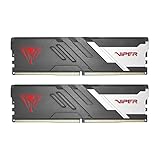
Dual channel is the standard for a reason. With two sticks, your CPU’s memory controller reads and writes across two independent 64-bit paths simultaneously, doubling theoretical bandwidth. In practice this shows up most in 1% and 0.1% frame times — the dips that feel like stutter. Open-world games such as Cyberpunk 2077, Baldur’s Gate 3, and Microsoft Flight Simulator are especially sensitive to bandwidth, and dual channel kits like the CORSAIR Vengeance LPX DDR4 32GB (2x16GB) at 3200MHz (around $250) or the Patriot Viper Venom DDR5 32GB (2x16GB) at 6000MHz CL30 (around $480) eliminate that bottleneck entirely.
Dual channel also wins if you multitask. Streaming while gaming, running Discord, Chrome with twenty tabs, and a browser-based walkthrough all compete for memory bandwidth. And for DDR5 platforms, dual channel is effectively mandatory — modern CPUs from both Intel and AMD are tuned around dual-stick configurations, with 6000MHz CL30 being the current sweet spot for AMD Ryzen X3D and recent Intel chips.
Matched kits also simplify life: sticks in a 2x16GB kit are tested together, timed identically, and configured with a single XMP or EXPO profile in BIOS. No trial and error.
Cost Over 5 Years
Memory is unusual among PC parts because it holds value well and rarely fails. A single 16GB DDR4 stick at $87.94 has essentially zero running cost — it draws roughly 3–5 watts, adds nothing to your electricity bill in any meaningful way, and needs no maintenance over five years. But its resale value in 2031 will be modest, since 16GB single sticks appeal to a shrinking audience.
A dual channel 32GB DDR4 kit at $249.99 costs about $50 per year over five years before resale. Used DDR4 32GB kits currently recoup 40–60% of their price, so your real five-year cost could land near $100–$150. The DDR5 route at $479.99 costs roughly $96 per year before resale, but DDR5 will remain relevant longer — the same kit might recoup $150–$250 in five years, putting its true cost closer to $230–$330.
The hidden cost of single channel is performance left on the table: if you later buy a second mismatched stick and it runs at a lower common speed, you lose some of the benefit you’d have gotten from a matched kit. Budget for the pair up front if you can.
Which One for Your Home
Small Apartment or Dorm
Space and budget both point toward a compact build, and a single 16GB stick keeps things simple — one slot, better cooler clearance, and about $90 spent. If you play mostly esports and indie titles at 1080p, this is genuinely fine. But if your small desk also hosts schoolwork, streaming, and side gigs, the $250 CORSAIR Vengeance LPX kit earns its keep; 32GB means fewer slowdowns when your browser is your second monitor.
Family with Kids or Pets
Shared family PCs take abuse — dozens of tabs, game launchers, video calls, and whatever your kids installed last week. Dual channel’s extra bandwidth keeps the system responsive under chaotic multitasking, and a 32GB kit means nobody fights over RAM. Durability-wise, memory has no moving parts and handles bumps in a tower on the floor better than most components. Go dual channel here without hesitation; the DDR4 kit at $249.99 is the value pick, or the DDR5 kit if you’re building new.
Rental or Temporary Setup
If you’re in a place for a year or two and your PC may move frequently, single channel’s simplicity is underrated — one stick is one less thing to dislodge during a move, and a $87.94 stick is a low-stakes investment you can carry into your next build. But note that RAM is the easiest component to transfer between systems, so a 2x16GB dual channel kit travels just as well and holds resale value better when you upgrade. If the machine is truly temporary, single channel; if the machine moves but stays, buy the kit.
Long-Term Home
For a permanent setup you’ll keep five or more years, dual channel is the answer every time. You’ll grow into the bandwidth as games get more demanding, 32GB is becoming the new baseline for AAA titles, and a quality kit like the Patriot Viper Venom DDR5 at 6000MHz CL30 will stay relevant across your next CPU upgrade. Buy the matched kit once, enable XMP or EXPO in BIOS, and forget about memory for the life of the build.
FAQ
How much FPS do I lose with single channel RAM?
It varies by game, but most benchmarks show 5–15% lower average frame rates in single channel, with the biggest gaps in CPU-bound scenarios — high refresh rate 1080p play and open-world titles. GPU-bound gaming at 1440p or 4K narrows the difference considerably, sometimes to just a few frames.
Can I add a second stick later to go dual channel?
Yes, in most cases. Install the second stick in the correct slot (check your motherboard manual — usually slots 2 and 4), and the board will run dual channel. Ideally use the identical model and speed; mismatched sticks will still work but run at the slower stick’s speed and timing, and occasional instability means testing with MemTest86 after installation.
Is 16GB enough for gaming, or do I need 32GB?
16GB still handles most games today, but several modern AAA titles exceed 12–14GB of usage with background apps running. For a dedicated gaming rig, 16GB single channel is a compromise; 32GB in dual channel is the comfortable standard and a better long-term buy at $250 for a quality DDR4 kit.
Does dual channel RAM use more power?
Only marginally. Each DDR4 stick draws roughly 3–5 watts, DDR5 slightly more, so adding a second stick increases system power draw by under 10 watts — about $1–2 per year in electricity at average U.S. rates. Power consumption should not factor into this decision.


