The best binoculars for birding for most people are 8×42 roof-prism models, and the Nikon Monarch M5 8×42 is the safest all-round pick. Choose an 8×32 such as the Zeiss Conquest HD 8×32 if weight matters more than low-light brightness. Choose a premium option like the Swarovski NL Pure 8×42 only if you bird daily and want the widest, sharpest view.
Gamers tend to over-index on numbers, and binocular specs invite the same habit. Higher magnification is not automatically better for birds. The sections below show which specs affect what you see in the field, with the math to back it up.
As an Amazon Associate we earn from qualifying purchases at no extra cost to you.
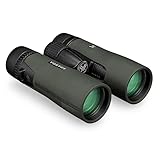


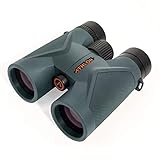
Our Top Picks
Top 3 picks at a glance
Quick comparison of the best birding binoculars
Specs are approximate and based on manufacturer spec sheets. Check the exact variant before buying, because makers revise models. Price classes are relative, not quotes.
| Pick | Best for | Key specs (approx.) | Price class |
|---|---|---|---|
| Nikon Monarch M5 8×42 | Best overall | 8x, 42 mm, ED glass, roughly 8° field, eye relief about 15 mm | Mid-range |
| Nikon Prostaff P3 8×42 | Best budget | 8x, 42 mm, roof prism, roughly 6.3° field, light body | Budget |
| Vortex Diamondback HD 8×42 | Best value step-up | 8x, 42 mm, HD glass, roughly 7.5° field, long eye relief, close focus about 5 ft | Budget to mid-range |
| Zeiss Conquest HD 8×32 | Best compact | 8x, 32 mm, about 4 mm exit pupil, noticeably lighter than 42 mm models | Upper mid-range |
| Swarovski NL Pure 8×42 | Best premium | 8x, 42 mm, very wide field, top-tier coatings and edge sharpness | Premium |
| Stabilized 10×30-class (Canon IS line) | Best for shaky hands | 10x, battery-powered image stabilization, heavier per aperture | Mid-range to upper mid-range |
Best overall: Nikon Monarch M5 8×42
The Monarch M5 8×42 hits the balance birders usually want: ED glass for reduced color fringing, a wide field of view, and eye relief that works with most glasses. Per Nikon’s spec sheet, it sits around 8° of field, which is generous for tracking a moving bird. It suits woodland, wetland and backyard birding. Its main trade-off is weight, since 42 mm binoculars of this class are around 600 g, which you notice after a full day on a neck strap. A harness fixes that.
Best budget: Nikon Prostaff P3 8×42
The Prostaff P3 8×42 is a good first pair. It is bright enough for dawn walks and light enough for casual use. The trade-offs are a narrower field of view (roughly 6.3°) and more color fringing on high-contrast subjects such as a gull against bright sky. A Celestron Nature DX in 8×42 or 8×32 is another sensible budget option. Both are worth considering if your budget is tight but you still want proper roof prisms and fully multi-coated optics.
Best value step-up: Vortex Diamondback HD 8×42
The Diamondback HD 8×42 offers HD glass, a roughly 7.5° field, long eye relief for glasses wearers and a close focus around 5 ft per the manufacturer. That close focus lets you watch butterflies, dragonflies and feeder birds at short range. It also helps anyone who birds in gardens. The trade-off is slightly less edge sharpness and less refined coatings than the Monarch M5. Vortex is also known for its warranty policy, which matters for gear that gets dropped.
Best compact: Zeiss Conquest HD 8×32
An 8×32 is the right call for kids, travel, long hikes and anyone with wrist or neck issues. The Conquest HD 8×32 keeps the 8x magnification and gives a 4 mm exit pupil, which is fine in daylight and decent at dawn. The trade-off is dimmer performance in deep forest shade and at dusk. The Swarovski EL 8×32 is a premium alternative if you want the same size in a higher class.
Best premium: Swarovski NL Pure 8×42
The NL Pure 8×42 is built for people who spend hours behind the glass. Its field is among the widest in the class, edge sharpness is excellent, and handling is refined. The Leica Noctivid 8×42 and Zeiss SFL 8×40 are in the same conversation. The trade-off is plain: the price is premium, and the gain over a mid-range ED model shows up mostly in edge-to-edge sharpness, glare control and comfort. Many birders find the jump from budget to mid-range bigger than the jump from mid-range to premium.
Best for shaky hands: stabilized 10×30-class binoculars
Image-stabilized models, such as Canon’s IS binoculars, let you use 10x or higher without the shake that makes 10x hard to hold. Press the button and the image steadies. They suit shorebirds, raptors at distance and seabird watching from boats. The trade-offs are weight, batteries, a bulkier build and a narrower field than good non-stabilized glass. For forest warblers, a wide-field 8x is still easier.
How to choose: the numbers that matter
1. Magnification: 8x versus 10x
Magnification shrinks the field of view and amplifies hand shake. A field of 1° covers about 52.4 ft at 1,000 yards. So 8×42 with a 7.5° field covers about 393 ft at 1,000 yards, while a typical 10×42 with 6.5° covers about 341 ft. That is about 13% less width to find a bird in. At a closer range of 100 yards, the difference is roughly 39 ft versus 34 ft. Fast-moving small birds in leafy cover are easier to find with the wider 8x view.
2. Exit pupil and low-light brightness
Exit pupil equals objective diameter divided by magnification:
- 8×42 = 5.25 mm
- 10×42 = 4.2 mm
- 8×32 = 4.0 mm
- 10×50 = 5.0 mm
Human pupils open to roughly 5–7 mm in dim light, depending on age, so an exit pupil near 5 mm is a good target for dawn and dusk. Twilight factor is a rough guide to detail in poor light: the square root of magnification times objective diameter. For 8×42 it is the square root of 336, about 18.3. For 10×42 it is about 20.5. For 8×32 it is 16. A higher number resolves more detail at dusk, but it comes with a narrower field and more shake. Treat it as a guide and not a verdict. Glass quality and coatings can swing real-world results more than this formula.
3. Eye relief for glasses
If you wear glasses, look for 15 mm or more of eye relief, with 16–17 mm preferred. Lower figures often mean you lose the edges of the view. Twist-up eyecups should have positive click stops. Eye relief figures from manufacturers are not always measured the same way, so check that the full circle is visible with your glasses on.
4. Weight and carry method
A 42 mm binocular at 600–850 g is fine for a few hours. Over a full day, a chest harness cuts the neck strain. If you are picking an 8×32 mainly for weight, note that the difference is often only 150–250 g, and a harness may solve the problem for less money than downsizing.
5. Close focus
Close focus matters for gardens, feeders and insects. Aim for about 6 ft (2 m) or less. Some models focus at 5 ft or closer, though the field can feel cramped there because of how the optics work.
6. Waterproofing and coatings
Look for nitrogen or argon purging and an O-ring seal, so fogging does not ruin a wet morning. Fully multi-coated lenses, phase-corrected roof prisms and dielectric prism coatings are standard at mid-range prices. Fully multi-coated is the label to look for on budget models.
Decision matrix: match your situation to a pick
| Your situation | Best spec class | Example pick | Why |
|---|---|---|---|
| First pair, mixed birding | 8×42 roof prism, budget | Nikon Prostaff P3 8×42 | Bright, forgiving, widely sold |
| Wear glasses | 8×42, 16 mm+ eye relief | Vortex Diamondback HD 8×42 | Full field with glasses on |
| Dense woodland, warblers | 8x, wide field (7.5°+) | Nikon Monarch M5 8×42 | Easier to find fast birds |
| Shorebirds, estuaries, raptors | 10×42 or stabilized 10x | Stabilized 10×30-class | More reach, steadier image |
| Travel or kids | 8×32, light | Zeiss Conquest HD 8×32 | Compact and comfortable |
| Daily serious birder | Premium 8×42 | Swarovski NL Pure 8×42 | Edge sharpness and comfort |
| Garden feeders, insects | 8x, close focus 6 ft or less | Vortex Diamondback HD 8×42 | Near-focus flexibility |
Worked example: what 8x gives you
A songbird about 12 cm long, at 30 m, looks the size it would be at 3.75 m with 8x binoculars (30 m divided by 8). With 10x it looks like it is 3 m away. That 25% extra apparent size helps with identification, but you lose about 13% of field width, as calculated above, and tremble becomes more visible. For most songbird work at typical distances of 10–30 m, 8x is the practical sweet spot. Open-country and water birding at 60–150 m is where 10x pays off.
Mistakes to avoid
- Buying on the “zoom” claim. Zoom binoculars usually trade away optical quality. Stay with fixed power.
- Buying very high magnification. 12x and up without stabilization is hard to hold steady.
- Ignoring fit. Interpupillary distance range and hinge comfort matter. If possible, try before you buy.
- Chasing specs over glass quality. Two 8×42 pairs with identical numbers can look very different in contrast and edge sharpness.
Frequently Asked Questions
Are 8×42 or 10×42 binoculars better for birding?
8×42 is better for most birders because it gives a wider field, a brighter image and a steadier view. 10×42 is better when you regularly watch distant birds, such as waders, waterfowl and raptors. If you only buy one pair, choose 8×42.
Is a 32 mm objective good enough for birding?
Yes, in daylight and most woodland conditions. An 8×32 has a 4 mm exit pupil, so it looks dimmer than an 8×42 at dawn and dusk. If you mostly bird mid-day or travel often, the lighter weight is worth the trade.
Do I need ED glass for birding binoculars?
You do not need it, but it helps. ED (extra-low dispersion) glass reduces color fringing on bright, high-contrast subjects, such as a bird against sky or water. Good budget models without ED are still enjoyable. Consider ED once you notice purple or green edges that bother you.
What is the best budget birding binocular spec to look for?
Look for an 8×42 roof-prism model with fully multi-coated lenses, waterproof and fog-proof sealing, and 15 mm or more of eye relief. Avoid zoom models and unbranded pairs with exaggerated claims. Check for a warranty that covers accidental damage or a clear repair policy.
Are image-stabilized binoculars worth it for birding?
They are worth it if you want 10x or higher and struggle to hold the image steady, or if you watch from a boat or in wind. They are heavier, need batteries and usually have a narrower field than good conventional binoculars. For general woodland birding, a quality 8x is usually the better tool.
How do I check binoculars fit before buying?
Adjust the hinge until you see one circle, set the diopter using your weaker eye, and check that the eyecups seat comfortably, with or without glasses. Test the focus wheel for smoothness and see if you can reach it without shifting your grip. If buying online, confirm the return policy so you can try them on real birds.
Related guides
More from Amazon
Programs that pair well with the guide above. Offers and eligibility are set by Amazon and may change.
A free business account with business pricing and bulk-buying tools for work, shop or home office.
Create a business accountFree shipping on eligible items, Prime Video and more. Eligible new members can start with a free trial.
Start a Prime free trialAudiobooks and podcasts to listen to on the go. Eligible new members can start with a free trial.
Try Audible freeAd-free music streaming. Eligible new subscribers can start with a free trial.
Try Music Unlimited freeAs an Amazon Associate we earn from qualifying purchases.


