The best sound card for a 1996-era gaming PC is a Sound Blaster AWE32 or AWE64 Gold, because it covers Sound Blaster digital audio, OPL FM music and General MIDI wavetable in one ISA card. Players who want authentic Roland music should pair a Sound Blaster 16 with a Roland Sound Canvas-class MIDI module. DOS fans chasing demoscene or Gravis-native titles should look at a Gravis UltraSound. This guide maps your situation to a card, with real resource numbers, so you avoid the usual retro-build mistakes.
As an Amazon Associate we earn from qualifying purchases at no extra cost to you.


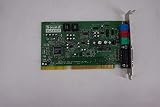
Our Top Picks
Top 3 picks at a glance
What “best sound card of 1996” means in 2026
Cards from 1996 are 16-bit ISA boards, with a few early PCI parts arriving just after. Games of that period target one or more of three standards: Sound Blaster digital audio (DMA-driven PCM), AdLib/OPL FM synthesis, and MIDI output, either General MIDI or Roland MT-32. “Best” therefore means the card that handles the most standards for the games you actually play, with the fewest driver and IRQ headaches. Raw audio fidelity matters less, since the 16-bit/44.1 kHz ceiling is shared by nearly all of these cards.
Quick comparison of the top picks
| Pick | Best for | Key specs | Typical used/market price |
|---|---|---|---|
| Sound Blaster AWE64 Gold | Best overall, DOS + Windows 9x | ISA, SB16-compatible, OPL3-style FM, EMU8000 wavetable, SoundFont support, RAM expandable, S/PDIF on Gold | Usually $100–$250 |
| Sound Blaster AWE32 | Best value all-rounder | ISA, SB16-compatible, EMU8000, 30-pin SIMM sockets (up to 28 MB), CD-ROM interfaces on many models | Usually $60–$150 |
| Sound Blaster 16 (ISA) | Best budget / pure SB compatibility | 16-bit/44.1 kHz stereo, OPL3 FM on most revisions, MPU-401 UART via wavetable header | Usually $30–$100 |
| Gravis UltraSound family | Best for demoscene and GUS-native games | ISA, 32-voice wavetable using onboard sample RAM, native GUS support | Often $150–$400 |
| SB16 + Roland Sound Canvas/MT-32 module | Best for authentic music | MPU-401 interface plus external MIDI module (SC-55 class or MT-32 class) | Often $250–$800 combined |
| PicoGUS (modern ISA/DIY device) | Best modern multi-emulation option | Microcontroller-based ISA card emulating GUS and other standards, per its community documentation | Varies by seller and build |
Best overall: Sound Blaster AWE64 Gold
The AWE64 Gold arrived late in 1996 and refined the AWE32 formula. It keeps Sound Blaster 16 compatibility for DOS games, adds the EMU8000 wavetable chip for General MIDI, and the Gold version adds a digital output and gold-plated RCA jacks. For a Windows 95 or 98 machine that also boots DOS games, it is the single card that avoids swapping hardware.
Who it suits: Builders who want one card to cover Doom, Duke Nukem 3D, Descent, Quake and most Windows titles of the period.
Trade-off: Its DOS driver and TSR setup is more fiddly than a plain SB16’s. Its wavetable ROM sounds good but is not Roland-accurate, so games scored for the MT-32 will not sound as the composer intended.
Best value: Sound Blaster AWE32
The AWE32 predates 1996 but was everywhere that year. It shares the EMU8000 engine with the AWE64 and has sockets for 30-pin SIMMs to hold custom SoundFont banks. Used examples are cheaper and easier to find than the Gold.
Who it suits: Anyone wanting wavetable MIDI plus SB16 compatibility without paying collector prices.
Trade-off: Many models carry a proprietary CD-ROM interface and jumpers or Plug and Play quirks, and 30-pin SIMMs are now a niche part. You can run it with no extra RAM, which is fine for General MIDI.
Best budget: Sound Blaster 16
If you play mainly digital-audio and FM-music games, a Sound Blaster 16 is the baseline the whole industry targeted. Look for revisions with a true Yamaha OPL3 chip. Some revisions are known to produce hanging MIDI notes in certain DOS games, and some later ViBRA-type boards emulate FM rather than using a dedicated chip, which can sound slightly different.
Trade-off: No onboard wavetable, so General MIDI needs an external module or a wavetable daughterboard.
Best for demoscene and GUS-native games: Gravis UltraSound
The Gravis UltraSound plays samples from onboard RAM with up to 32 voices, which made it the favourite of tracker-music and demoscene players. A number of DOS titles shipped with native GUS support. The card’s Sound Blaster emulation is software-based and unreliable, so treat it as a GUS-first card.
Trade-off: Weak SB compatibility, higher prices, and fussy setup. Buy it only if your library justifies it.
Best for authentic music: SB16 plus a Roland module
Many 1990s adventure and strategy games were composed for Roland’s MT-32 or for General MIDI devices like the Sound Canvas SC-55 series. A Sound Blaster 16 supplies digital effects and the MPU-401 interface, while an external module handles music. Modern MIDI modules such as the DreamBlaster line are an alternative to hunting for vintage Roland units.
Trade-off: It costs the most, needs cabling and desk space, and MT-32 and General MIDI scores are not interchangeable. Check which your games target.
Best modern multi-standard option: PicoGUS
PicoGUS is a community-driven ISA device built around a microcontroller that emulates several sound standards, including the Gravis UltraSound. It suits builders who want GUS support without paying original-card prices, and who are comfortable flashing firmware and reading documentation.
Trade-off: Compatibility depends on firmware version and your motherboard’s ISA timing. It is not a plug-and-forget purchase like a boxed AWE64.
Decision matrix: match your situation to a card
| Your build | Games you play | Choose |
|---|---|---|
| 486/Pentium DOS + Win95 box | Mixed shooters and adventures | AWE64 Gold or AWE32 |
| Pure DOS 486 | Early SB/AdLib games | Sound Blaster 16 (OPL3 revision) |
| Pentium with MIDI gear | Sierra/LucasArts MT-32 scores | SB16 + MT-32-class module |
| Pentium, tracker/demo fan | Demoscene, GUS-native games | Gravis UltraSound or PicoGUS |
| Board with no ISA slots | Late 1990s Windows games | Early PCI cards such as Sound Blaster PCI64-era boards, or an ISA-bridge setup |
Worked example: why ISA bandwidth and resources are not the problem
CD-quality stereo audio needs 44,100 samples × 2 channels × 2 bytes = 176,400 bytes per second, about 172 KB/s. A 16-bit ISA slot at 8 MHz has a theoretical peak near 16 MB/s (8 MHz × 2 bytes), and real-world throughput of roughly 4–8 MB/s is typical. That means one stereo 44.1 kHz stream uses only a few percent of the bus. A common low-quality DOS game setting of 8-bit mono at 22,050 Hz needs just 22,050 bytes/s.
What actually goes wrong is resource conflicts. The usual Sound Blaster defaults are port 220h, IRQ 5, 8-bit DMA 1 and 16-bit DMA 5, with MPU-401 at 330h and FM at 388h. If your network card or SCSI controller claims IRQ 5, music stops or the machine hangs. Moving the network card to IRQ 10 or 11 usually fixes this.
How to choose: a checklist with numbers
- Check your slots. You need a free 16-bit ISA slot. 8-bit-only slots cap some cards.
- Count IRQs. Sound card on 5, network on 10 or 11, and COM/LPT ports kept on their defaults, leaves enough free lines.
- Check the revision. For SB16, confirm a real OPL3 chip if FM accuracy matters. Model numbers like CT2770 and CT2290 vary in features.
- Inspect capacitors. Used 1990s cards often have aged electrolytics, so budget for a recap if you hear crackling or low output.
- Plan for the wavetable header. An SB16 with a 26-pin wavetable header lets you add a daughterboard later.
- Decide on MIDI. If you want an MT-32 sound, the card matters less than the external module.
Frequently Asked Questions
What was the best sound card in 1996?
For mainstream PC gamers it was the Sound Blaster AWE32, with the AWE64 line arriving late that year. Gravis UltraSound was the choice among tracker and demoscene fans, and Roland hardware was the choice for MIDI purists.
Is a Sound Blaster 16 good enough for DOS games?
Yes. Nearly every DOS game that supports sound supports the Sound Blaster family. It will play digital effects and FM music well, but General MIDI needs an external module or a wavetable daughterboard.
Can I use a 1996 sound card on a modern motherboard?
Generally no, because modern boards lack ISA slots. Retro builds use period motherboards that have ISA, or specialized adapters and emulation devices. For a modern PC, dedicated software emulators are usually easier than hardware.
Should I get an AWE32 or an AWE64 Gold?
Buy the AWE32 if price matters, since it has the same EMU8000 engine and good compatibility. Buy the AWE64 Gold if you want the later design, more refined audio and digital output, and are willing to pay collector-driven prices.
Is the Gravis UltraSound worth it?
Only if your library includes GUS-native games or you enjoy tracker music. Its Sound Blaster compatibility is poor, so it is a bad single-card choice for a general-purpose DOS machine.
Do I need an MT-32 for 1990s games?
No, but a number of adventure and strategy games were composed for it, and General MIDI devices play those scores differently. Check each game’s audio setup menu to see which devices it lists before you spend money on a module.
Related guides
More from Amazon
Programs that pair well with the guide above. Offers and eligibility are set by Amazon and may change.
A free business account with business pricing and bulk-buying tools for work, shop or home office.
Create a business accountFree shipping on eligible items, Prime Video and more. Eligible new members can start with a free trial.
Start a Prime free trialAudiobooks and podcasts to listen to on the go. Eligible new members can start with a free trial.
Try Audible freeAd-free music streaming. Eligible new subscribers can start with a free trial.
Try Music Unlimited freeAs an Amazon Associate we earn from qualifying purchases.


