The best mirrorless APS-C camera for most people in 2026 is the Sony a6700. It combines a 26MP sensor, AI-based subject-tracking autofocus, in-body stabilization and 4K 120p video with the largest lens ecosystem in the class. If you care more about resolution and handling, the Fujifilm X-T5 (40MP) is the better stills camera. If you want a cheap, light starter body, the Canon EOS R50 is the easy entry point.
This guide is organized around the decisions that actually separate these cameras: lens mount, stabilization, burst speed, video needs and what you will spend on lenses. Prices below are general market ranges and move with sales and bundles. Specs come from the manufacturers’ published spec sheets.
As an Amazon Associate we earn from qualifying purchases at no extra cost to you.

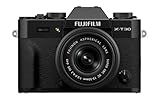


Top 3 picks at a glance
Quick comparison of the picks
| Pick | Best for | Key specs (manufacturer) | Typical body price |
|---|---|---|---|
| Sony a6700 | Best overall | 26MP, IBIS, 4K 120p, AI subject-detect AF, vari-angle screen | $1,300–$1,500 |
| Fujifilm X-T5 | Best for stills and detail | 40.2MP, IBIS, 15 fps mechanical, dual SD slots, 6.2K video | $1,500–$1,800 |
| Fujifilm X-S20 | Best for hybrid video/stills | 26MP, IBIS, 6.2K/30p, vari-angle screen, large battery | $1,100–$1,400 |
| Canon EOS R7 | Best for sports and wildlife | 32.5MP, IBIS, 15 fps mechanical / 30 fps electronic, dual SD | $1,300–$1,500 |
| Nikon Z50II | Best for ease of use | 20.9MP, EXPEED 7 processor, 4K 60p, tilt touchscreen, no IBIS | $900–$1,100 |
| Canon EOS R50 | Best budget / lightest | 24.2MP, 12 fps mechanical, no IBIS, vari-angle screen, around 375 g | $600–$800 (usually with kit lens) |
Best overall: Sony a6700
The a6700 is the safest all-round recommendation because it has no weak area. Its 26MP back-illuminated sensor, 5-axis stabilization and AI-driven autofocus that recognizes people, animals, birds, insects and vehicles handle portraits, travel, pets and video. It supports 4K up to 120p for slow motion, uses the long-running NP-FZ100 battery and has a fully articulating screen.
Trade-off: It has a single SD slot, and Sony’s menus have a learning curve. It is also less pleasant to hold than the Fujifilm bodies if you like dials. The E-mount advantage is real: you can mix Sony, Sigma, Tamron and Viltrox lenses, new or used.
Best for stills and detail: Fujifilm X-T5
The X-T5 has a 40.2MP sensor, up to 7 stops of stabilization by Fujifilm’s rating, dual UHS-II card slots and dedicated shutter-speed, ISO and exposure dials. It suits landscape, street and portrait shooters who crop a lot or print large. The high resolution lets you treat a 56mm-equivalent lens as a loose 85mm-equivalent crop and still keep a usable file.
Trade-off: It costs more than the a6700 and its autofocus tracking is good but not class-leading for fast, erratic subjects. Its screen tilts rather than fully articulates, which matters if you shoot vertical video. Files are large, so see the storage math below.
Best for hybrid video and stills: Fujifilm X-S20
The X-S20 puts stabilization, a vari-angle screen, 6.2K/30p video and a larger battery than its predecessor into a compact grip-forward body. It is a strong pick for YouTube, game-review B-roll and desk-camera use, with a mode dial that makes it approachable.
Trade-off: It has a single card slot and a 26MP sensor, so it does not match the X-T5’s detail. Prolonged 4K or 6.2K recording is where small bodies can run into heat limits, so check Fujifilm’s recording-time notes for your frame rate.
Best for sports and wildlife: Canon EOS R7
The R7 pairs a 32.5MP sensor with 15 fps mechanical and up to 30 fps electronic shooting, 5-axis stabilization, dual UHS-II slots and Canon’s subject-tracking autofocus. Canon’s 1.6x crop factor gives extra reach: a 200mm lens frames like roughly 320mm on full frame, versus about 300mm on a 1.5x body.
Trade-off: The RF-S lens lineup is thinner than Sony’s E-mount, and third-party autofocus lens support on RF is more limited, per the manufacturers’ licensing positions. Plan to buy mostly Canon glass, or adapt EF lenses.
Best for ease of use: Nikon Z50II
The Z50II brings Nikon’s EXPEED 7 processor, 4K 60p video, a bright OLED viewfinder, USB-C charging and strong subject detection into a small body at a mid-range price. It suits people stepping up from a phone who want results without a lot of menu work, and it has a good grip for its size.
Trade-off: There is no in-body stabilization, so you rely on lens VR, and the native DX lens lineup is small. Nikon’s full-frame Z lenses work on it, but they are bigger and costlier.
Best budget: Canon EOS R50
The R50 is a 24.2MP body that weighs about 375 g with battery and card. It has an electronic viewfinder, a vari-angle screen, 12 fps mechanical shooting and Canon’s autofocus, which makes it easy to get sharp pictures. Canon’s webcam utility also makes it usable as a streaming camera over USB.
Trade-off: There is no stabilization, a single UHS-I card slot and few physical controls. Canon’s 4K video is oversampled from 6K at 24p and 30p but there is no 4K 60p. It suits someone who values small size and price over features.
How to choose: decision criteria with numbers
1. Pick the lens mount first
You will keep lenses longer than bodies. Sony E and Fujifilm X have the broadest APS-C-specific native lenses, and Sony E adds the biggest third-party catalog. Canon RF-S and Nikon Z DX have fewer native APS-C lenses, so you will often buy full-frame glass that is larger and pricier.
2. Convert focal lengths with the crop factor
Sony, Fujifilm and Nikon APS-C sensors have a 1.5x crop; Canon’s is 1.6x. Multiply the focal length by the crop factor for the full-frame equivalent field of view.
- 23mm on Fujifilm: 23 × 1.5 = 34.5mm equivalent, a street-photography view.
- 56mm on Fujifilm: 56 × 1.5 = 84mm equivalent, a portrait lens.
- 18–135mm on Sony: 27–202mm equivalent, a travel zoom.
- 100–400mm on Canon RF-S via adapter or an RF lens: 160–640mm equivalent at 1.6x.
Depth of field scales the same way. An f/1.8 lens on APS-C gives roughly the depth of field of f/2.7 on full frame (1.8 × 1.5), so you get a bit less background blur but a smaller, cheaper lens.
3. Budget for card and storage cost
Worked example: a 40MP raw file from a camera like the X-T5 is on the order of 50–80MB depending on compression, so assume 70MB. A 128GB card holds about 128,000 ÷ 70 ≈ 1,800 raw frames. A 26MP raw file at around 40MB gives about 3,200 frames on the same card. For video, assume an all-intra 10-bit 4K bitrate of 200 Mbps. That equals 25MB/s, or 1.5GB per minute and about 90GB per hour. Bitrates vary by camera and mode, so check your menu, but this is why creators need 256GB+ cards and fast SSDs for editing.
Use a UHS-II card for burst shooting and high-bitrate video, especially on bodies with UHS-II slots (X-T5, R7, a6700). The R50 and Z50II are limited to UHS-I speeds or run slower with UHS-II cards.
4. Match the camera to your situation
| Your situation | Best choice | Why |
|---|---|---|
| One camera for photos, video and travel | Sony a6700 | Balanced specs, huge lens range, 4K 120p |
| Large prints, landscapes, heavy cropping | Fujifilm X-T5 | 40MP plus dual card slots |
| YouTube, vlogging, stream B-roll | Fujifilm X-S20 or Sony a6700 | Vari-angle screen, stabilization, good video modes |
| Fast action, birds, kids’ sports | Canon EOS R7 | 30 fps electronic, 1.6x crop reach |
| Upgrading from a phone on a budget | Canon EOS R50 or Nikon Z50II | Easy autofocus, low weight, low cost |
| Streaming webcam on a gaming desk | Any pick with a USB webcam mode | Canon, Nikon, Fujifilm and Sony all offer webcam utilities or UVC output; use a dummy battery for all-day use |
5. Check stabilization and low light
In-body stabilization (a6700, X-T5, X-S20, R7) lets you hand-hold at slower shutter speeds, which helps video and still subjects in dim rooms. Without it (R50, Z50II) you rely on lens stabilization or faster shutter speeds. As a rule of thumb, hand-hold at 1 ÷ equivalent focal length: a 56mm Fujifilm lens (84mm equivalent) needs about 1/90s without stabilization, and IBIS can buy you several stops below that.
6. Don’t overspend on the body
A $1,500 body with a kit lens is often worse value than a $900 body plus a $400 fast prime. For most people the lens is the bigger image-quality upgrade, so budget roughly 30–40% of your total for glass.
Frequently Asked Questions
Is APS-C good enough compared to full frame?
Yes, for most uses. APS-C offers smaller bodies and lenses, lower costs and plenty of image quality for web, social media and prints. Full frame gives better low-light performance and more background blur, but with larger, pricier kit.
Which APS-C mirrorless is best for video?
The Sony a6700 is the most versatile, with 4K 120p slow motion and AI autofocus. The Fujifilm X-S20 is a strong alternative with 6.2K/30p, a vari-angle screen and a roomy battery. Check each model’s recording-time limits and heat behavior for long takes.
Do I need in-body stabilization?
It is useful for handheld video, slow shutter speeds and unstabilized prime lenses. If you mostly shoot with stabilized zoom lenses or on a tripod, you can skip it and save money. The R50 and Z50II lack it, while the a6700, X-T5, X-S20 and R7 have it.
Which brand has the best APS-C lens selection?
Sony E-mount has the largest selection thanks to its own APS-C lenses plus a big third-party catalog. Fujifilm X has an excellent native lineup of compact primes and zooms. Canon RF-S and Nikon Z DX have fewer native APS-C lenses, so you may adapt or buy full-frame glass.
Can I use these cameras as a streaming webcam?
Yes. Canon, Nikon, Fujifilm and Sony all offer webcam software or USB video output, and clean HDMI output works with a capture card for higher quality. For long streams, use a dummy battery or USB power, and check that autofocus and auto-shutoff settings won’t interrupt the feed.
Is the Fujifilm X-T5’s 40MP worth it over 26MP?
It is worth it if you crop heavily, print large or shoot landscapes. The extra resolution also means larger files, so you will need more storage and a faster computer for editing. For general use, a 26MP body like the a6700 or X-S20 is plenty.
Related guides
More from Amazon
Programs that pair well with the guide above. Offers and eligibility are set by Amazon and may change.
A free business account with business pricing and bulk-buying tools for work, shop or home office.
Create a business accountFree shipping on eligible items, Prime Video and more. Eligible new members can start with a free trial.
Start a Prime free trialAudiobooks and podcasts to listen to on the go. Eligible new members can start with a free trial.
Try Audible freeAd-free music streaming. Eligible new subscribers can start with a free trial.
Try Music Unlimited freeAs an Amazon Associate we earn from qualifying purchases.


