The best dive watch for most people is a 200 m automatic or quartz diver with a unidirectional 60-minute bezel, such as the Orient Kamasu or Seiko Prospex SPB143. If you need a cheap beater, the Casio MDV106 is the safe pick. If you actually scuba dive and want decompression data, buy a dive computer like the Garmin Descent Mk3 instead of a mechanical watch.
This guide assumes you searched for “best diver watches” as a current buying question. Any year in the original phrase is ignored, because current models and prices matter more than a stale list. Prices below are general market ranges and move with retailer, region and used-market conditions.
As an Amazon Associate we earn from qualifying purchases at no extra cost to you.


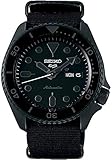

Top 3 picks at a glance
Quick comparison of the picks
| Pick | Best for | Key specs | Typical price range |
|---|---|---|---|
| Casio MDV106 | Cheapest real diver | Quartz, 200 m, about 44 mm case, resin strap | $50–$90 |
| Seiko 5 Sports diver-style (SRPD series) | First automatic | Automatic 4R36, 100 m, about 42.5 mm | $250–$350 |
| Citizen Promaster Diver (BN0150) | No battery changes | Eco-Drive solar, 200 m, about 44 mm | $250–$400 |
| Orient Kamasu | Best value overall | Automatic, 200 m, about 41–42 mm | $250–$400 |
| Seiko Prospex SPB143 | Best mid-range design | Automatic 6R35, 200 m, 40.5 mm, sapphire | $1,000–$1,400 |
| Tudor Black Bay 58 | Luxury, smaller wrists | Automatic, 200 m, 39 mm | $4,000–$5,500 |
| Omega Seamaster Diver 300M | Luxury, 300 m rating | Automatic, 300 m, about 42 mm | $5,500–$8,000 |
| Garmin Descent Mk3 | Actual scuba logging | Dive computer watch, depth and gas data | $800–$1,500 |
Specs are per each manufacturer’s published spec sheet. Case sizes and variants differ by reference, so check the exact model number before buying.
Best budget: Casio MDV106
The MDV106 is a quartz watch with a 200 m rating, a rotating bezel and a loud lume dial. It costs less than a decent dinner for two. It suits kids, snorkelers, travelers and anyone who wants a watch they won’t worry about at the beach.
Trade-off: It is a big, plasticky watch with a mineral crystal that scratches. It has no finishing worth admiring, and the resin strap isn’t comfortable for everyone.
Best first automatic: Seiko 5 Sports diver-style (SRPD series)
These watches carry a 4R36 automatic movement with day-date, a 42.5 mm case and a design borrowed from classic Seiko divers. They are easy to mod with aftermarket straps and bezels, so they suit someone who wants to learn about mechanical watches without spending much.
Trade-off: The rating is 100 m, not 200 m. That is fine for swimming and snorkeling but not what you want for scuba. The crystal is Hardlex, not sapphire, and the movement is not hand-windable on some versions.
Best no-maintenance pick: Citizen Promaster Diver (BN0150)
The Eco-Drive solar movement charges from any light, so it avoids both battery swaps and mechanical servicing. It has a 200 m rating, a proper dive-style bezel and a polyurethane strap. It suits people who want one watch to ignore for a decade.
Trade-off: It sits large on the wrist at about 44 mm. A solar cell will eventually wear out, though that usually takes many years.
Best overall value: Orient Kamasu
The Kamasu is a 200 m automatic with a clean dial, a solid bracelet option and a movement Orient makes in-house. It looks like a watch costing three times as much. It suits most first-time buyers who want a real mechanical diver.
Trade-off: Fit and finish on bracelets and clasps is the usual compromise at this price. Accuracy is typically within a few seconds per day, not chronometer-level.
Best mid-range: Seiko Prospex SPB143
The SPB143 is a modern take on Seiko’s 1960s 62MAS diver. It has a 40.5 mm case, sapphire crystal, 200 m rating and a 6R35 movement with a roughly 70-hour power reserve per Seiko’s spec sheet. It suits people who want a refined watch that still works as a tool.
Trade-off: It costs about three to four times as much as the Kamasu, and some buyers find the bracelet taper and clasp plain for the price.
Best luxury picks: Tudor Black Bay 58 and Omega Seamaster Diver 300M
The Tudor Black Bay 58 is a 39 mm diver, so it suits smaller wrists, and it keeps a vintage look with modern movement and finishing. The Omega Seamaster Diver 300M uses a wavy dial and a 300 m rating, and it has a helium escape valve on the case. Both are real tools that also work as statement pieces.
Trade-off: The cost is the main one, and neither adds much real-world diving capability over a $300 watch with a 200 m rating. You are paying for movement quality, finishing, brand and resale value.
Best for scuba: Garmin Descent Mk3
A mechanical diver’s bezel only tells you elapsed time. A dive computer such as the Garmin Descent Mk3 tracks depth, dive time and nitrogen loading, and it logs dives. If you dive with a tank, this is the safer choice. Check the exact variant for case size and gas support.
Trade-off: It needs charging, it has a screen instead of a dial, and it does not offer the mechanical-watch appeal.
How to choose: the numbers that matter
1. Depth rating: what 200 m really means
Water pressure rises by about 1 bar for every 10 m of depth, and surface air adds another 1 bar. At 40 m, the recreational scuba limit, absolute pressure is about 5 bar. A watch rated to 200 m is tested far beyond that. Under the ISO 6425 diver’s watch standard, a watch is tested at 125% of its rated depth, so a 200 m watch must hold at pressure equal to 250 m. That is 26 bar absolute, over five times what you’ll see at 40 m.
The practical conclusion: a 200 m watch has a large safety margin for recreational diving, while a 100 m watch is adequate for snorkeling and swimming. Rated depth is a static pressure test, so it does not account for dynamic pressure from jumping in. Rubber gaskets also age, so pressure testing every 2–3 years is sensible if you dive often.
2. Wrist fit: use lug-to-lug, not case diameter
Case diameter is misleading. Lug-to-lug length, which is the distance from the tip of one lug to the other, decides whether a watch overhangs. A simple rule is that lug-to-lug should not exceed the flat top of your wrist, measured side to side across the top.
| Wrist circumference | Approx. flat width | Max lug-to-lug | Typical case diameter |
|---|---|---|---|
| 6.0 in (15 cm) | about 45 mm | about 46 mm | 38–40 mm |
| 6.75 in (17 cm) | about 50 mm | about 50 mm | 40–42 mm |
| 7.5 in (19 cm) | about 55 mm | about 52–54 mm | 42–44 mm |
| 8.25 in (21 cm) | about 60 mm | about 54–56 mm | 43–46 mm |
These are rough guides, not hard limits, since wrist shape varies. A 39 mm Tudor Black Bay 58 and a 44 mm Casio MDV106 can have a very different feel even on the same wrist. Measure a watch you already own and compare its lug-to-lug before buying.
3. Using the bezel: a worked example
The bezel is a timing tool, and it turns only counterclockwise on a true diver so that a knock can only shorten the apparent time, not lengthen it. To use it, align the bezel’s triangle with the minute hand at the start of the dive. If your minute hand sits at 18 when you descend, line up the triangle there. If you check at the 18-minute mark and the minute hand now points to 36, you have been under for 18 minutes. Because the bezel can only be knocked to show less elapsed time, an error leaves you with an apparent shorter dive, which errs on the wrong side for decompression limits. That is why a bezel is a backup, not a substitute for a dive computer.
4. Decision matrix
| Your situation | Choose | Reason |
|---|---|---|
| Beach, pool, snorkeling, tight budget | Casio MDV106 | 200 m rating at lowest cost |
| Want to try mechanical watches | Orient Kamasu or Seiko 5 Sports diver | Automatic movement at entry price |
| Hate battery swaps and servicing | Citizen Promaster Diver | Solar charging |
| Wrist under 6.5 in | Seiko SPB143 or Tudor Black Bay 58 | Case about 39–40 mm |
| Recreational scuba diver | Garmin Descent Mk3 | Depth and dive logging |
| Want a lifetime piece | Omega Seamaster Diver 300M | Finishing and resale value |
5. Features worth paying for
- Screw-down crown: Essential for real water resistance.
- Sapphire crystal: Scratch resistance, usually included from the SPB143 upward.
- Lume: Look for bright, even luminous markers, since you’ll rely on them in dark water.
- Bracelet or strap: A bracelet with a diver’s extension fits over a wetsuit. Rubber and silicone straps work for water use and cost little to replace.
- Helium escape valve: Only matters for saturation divers, so skip it as a buying factor.
Frequently Asked Questions
What depth rating do I need in a dive watch?
For recreational scuba to 40 m, a 200 m rating gives a large safety margin, and ISO 6425 testing is done at 125% of the rated depth. For swimming and snorkeling, 100 m is enough. A rating above 200 m rarely matters unless you want it for marketing or collecting reasons.
Is a dive watch a replacement for a dive computer?
No. A mechanical diver’s watch with a bezel only shows elapsed time and cannot track depth or nitrogen loading. If you scuba dive beyond shallow depths, use a dive computer as your primary tool and treat the watch as backup.
Automatic or quartz: which is better for a diver?
Quartz is cheaper, more accurate and needs less service, so it suits pure utility. Automatic watches cost more and need servicing every several years, but they appeal to people who enjoy mechanical movements. Solar quartz, like Citizen’s Eco-Drive, is the low-maintenance option.
Can I wear a dive watch every day?
Yes. Dive watches are built to be durable and water-resistant, and many people wear them as everyday watches. Choose a size that fits your wrist, since thick cases can catch on sleeves.
How often should I service a dive watch?
Gaskets age, so get the water resistance tested every 2–3 years if you swim or dive regularly. Mechanical movements typically need a full service every 5–10 years, depending on the manufacturer’s recommendation. Follow the guidance in your watch’s manual.
Do I need sapphire crystal on a dive watch?
No, it is a convenience, not a necessity. Mineral or Hardlex crystals are fine for diving and are cheaper to replace, but they scratch more easily. Sapphire is worth the extra cost for a watch you plan to keep and wear daily.
Related guides
More from Amazon
Programs that pair well with the guide above. Offers and eligibility are set by Amazon and may change.
A free business account with business pricing and bulk-buying tools for work, shop or home office.
Create a business accountFree shipping on eligible items, Prime Video and more. Eligible new members can start with a free trial.
Start a Prime free trialAudiobooks and podcasts to listen to on the go. Eligible new members can start with a free trial.
Try Audible freeAd-free music streaming. Eligible new subscribers can start with a free trial.
Try Music Unlimited freeAs an Amazon Associate we earn from qualifying purchases.


