The best Android phones to buy on Alibaba are the global-ROM Xiaomi/Poco and Samsung Galaxy A-series models, because they have mainstream chipsets, Google services and predictable network bands. For most buyers the Poco X7 Pro is the best value and the Redmi Note 14 Pro 5G is the safest all-rounder. Rugged models such as the Blackview BV9300 suit field work. Alibaba is a wholesale marketplace, so the supplier, the firmware version and the landed cost matter as much as the phone.
As an Amazon Associate we earn from qualifying purchases at no extra cost to you.
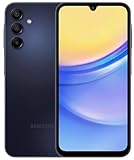


Top 3 picks at a glance
Quick comparison of the best Android phones on Alibaba
Specs below are from the manufacturers’ published spec sheets. Prices are general market ranges for new, unlocked, global-version units and move with order size, region and supplier.
| Pick | Best for | Key specs | Typical price |
|---|---|---|---|
| Poco X7 Pro | Best overall value / mobile gaming | Dimensity 8400-Ultra, 6.67″ 120Hz AMOLED, 6000 mAh, 90W | $250–$350 |
| Redmi Note 14 Pro 5G | Safest all-rounder for resale | Snapdragon 7s Gen 3, 6.67″ 120Hz AMOLED, 5110 mAh, 45W | $200–$300 |
| Redmi 14C | Best budget bulk buy | Helio G81 Ultra, 6.88″ 90Hz LCD, 5160 mAh, 18W | $90–$140 |
| Samsung Galaxy A16 5G | Best budget with brand support | Exynos 1330, 6.7″ 90Hz Super AMOLED, 5000 mAh, 25W | $140–$200 |
| Samsung Galaxy A56 5G | Best mid-range for business fleets | Exynos 1580, 6.7″ 120Hz Super AMOLED, 5000 mAh, 45W | $350–$450 |
| Blackview BV9300 | Best rugged / battery life | Helio G99, roughly 15,000 mAh, IP68/IP69K-class build | $200–$300 |
| RedMagic 10 Pro | Best flagship gaming phone | Snapdragon 8 Elite, 6.85″ 144Hz, about 7000 mAh, 100W | $600–$900 |
Best overall: Poco X7 Pro
The Poco X7 Pro pairs a Dimensity 8400-Ultra with a 6000 mAh battery and 90W charging. That is flagship-adjacent performance at mid-range pricing, and Poco/Xiaomi devices are among the most listed on Alibaba, so supplier competition keeps prices honest. It suits resellers and gamers who want smooth 120Hz play in popular titles. Published reviews typically show demanding games holding roughly 40–60 FPS at high settings, varying with the game, thermals and software version.
Trade-off: the global build often lacks some US-specific bands and carrier certification, and Xiaomi’s HyperOS ships with preinstalled apps you will want to audit.
Best all-rounder: Redmi Note 14 Pro 5G
This is the model with the broadest demand: AMOLED 120Hz screen, a capable Snapdragon 7s Gen 3 and a big battery. If you are buying 10–50 units to resell or hand out, it is the least likely to sit unsold. Trade-off: the 45W charging and mid-range chipset are a step behind the X7 Pro, and many listings mix this model with the similarly named Note 14 Pro+ or 4G variants. Confirm the exact suffix and chipset in the listing.
Best budget: Redmi 14C and Galaxy A16 5G
The Redmi 14C is the cheapest sensible bulk phone: a large 6.88″ screen, a 5160 mAh battery and a price that suits kiosks, kids’ phones and spare devices. The Galaxy A16 5G costs more but gives you a Samsung AMOLED panel and Samsung’s published software-update commitment. Trade-off: the 14C’s Helio G81 handles light games only, and the A16’s 25W charging is slow. Neither is a gaming phone.
Best mid-range for fleets: Galaxy A56 5G
The Galaxy A56 5G has a 120Hz Super AMOLED screen, 45W charging and Samsung’s service network behind it, which matters for company phones. Trade-off: Alibaba price advantages on Samsung are thin, since many listings are parallel imports or regional variants. Check that the model code (the SM-A566 prefix plus a regional suffix) matches your region’s bands.
Best rugged: Blackview BV9300
Rugged phones are the one category where Alibaba and the Chinese manufacturers have little real competition. The BV9300 offers a battery of about 15,000 mAh, which gives multi-day use. Trade-off: a Helio G99 is modest, the phone is heavy, and software updates are far less certain than from Samsung or Xiaomi.
Best flagship gaming phone: RedMagic 10 Pro
With a Snapdragon 8 Elite, an active-cooling fan and a 144Hz display, the RedMagic 10 Pro is the performance pick. The ASUS ROG Phone 9 is the alternative if you want a more established warranty route. Trade-off: flagship gaming phones are rarely cheaper on Alibaba than from the brand’s own store once shipping and duty are added, so buy here only when you need quantity or a specific configuration.
How to choose: a decision matrix
| Your situation | Choose | Check before ordering |
|---|---|---|
| Reselling 20+ units in Europe | Redmi Note 14 Pro 5G, Poco X7 Pro | Bands B1/B3/B7/B8/B20/B28 and n78; EU-version firmware |
| Single phone for personal use in the US | Usually buy retail; or Galaxy A-series US/unlocked variant | T-Mobile needs B2/B4/B12/B66 and n71; Verizon needs B13 |
| Cheap devices for staff or kids | Redmi 14C, Galaxy A16 5G | Update policy, 4G vs 5G variant, RAM/storage |
| Outdoor / warehouse work | Blackview BV9300 or similar rugged class | Real IP rating documentation, battery capacity |
| Mobile gaming | Poco X7 Pro, RedMagic 10 Pro | Chipset, cooling, charger plug type |
Worked example: what a phone really costs landed
A listing showing $255 per unit for the Poco X7 Pro looks like a bargain against $300–$350 retail. Here is the illustrative maths for 20 units, assuming 20% combined duty and VAT, which varies by country:
- Goods: 20 × $255 = $5,100
- Express air freight: about $140
- Duty and VAT: ($5,100 + $140) × 20% = $1,048
- Payment fee at about 3%: $153
- Total: $5,100 + $140 + $1,048 + $153 = $6,441, or about $322 per phone
- If one unit in 20 is dead or wrong, cost per working unit is $6,441 ÷ 19 ≈ $339
That lands at or above the retail range, with no local warranty. Alibaba pays off mainly at higher volumes, when duty is lower or reclaimable (such as business VAT), or when you need a variant retail doesn’t carry. Always ask the supplier for the full price including shipping before comparing.
How to vet an Alibaba phone supplier
- Order through Trade Assurance. It ties payment protection to the agreed specs and delivery date. Avoid paying by direct bank transfer outside the platform.
- Order a sample first. Pay the higher sample price for 1–2 units before committing to a bulk order.
- Get the exact model number, ROM version and condition in writing. Terms like “new”, “refurbished” and “99% new” are common, and the last two are not new.
- Be suspicious of prices far below the market range. A flagship at half price is usually a clone, a refurbished unit or a scam.
- Check supplier history. Look at years on the platform, transaction volume and whether the company is a manufacturer, a trading company or a one-person reseller.
Checks to run when the sample arrives
- Dial *#06# and compare the IMEI with the box and Settings > About phone. A mismatch indicates a tampered or refurbished device.
- Check the model, chipset and RAM in a hardware info app. Clone phones often misreport specs in the Settings screen.
- Confirm Google Play and Play Protect certification in the Play Store settings. China-market ROMs may lack Google services.
- Check Widevine security level. L1 is needed for HD streaming from services like Netflix; L3 caps you at SD.
- Run a battery check: a 1-hour video at fixed brightness should drain roughly 6–10% of a 5000 mAh phone. A much bigger drop points to a smaller or fake cell.
- Confirm the bands by inserting a local SIM and testing calls, 5G and data at your location.
Frequently Asked Questions
Is it safe to buy Android phones from Alibaba?
It can be safe if you use Trade Assurance, buy from an established supplier and test a sample first. The main risks are refurbished units sold as new, clone devices and the wrong regional firmware. Avoid prices that are far below the normal market range.
Is Alibaba cheaper than buying a phone at retail?
Not always. For one or two phones, shipping, duty and the lack of a local warranty usually erase the saving. Bulk orders, business VAT recovery and hard-to-find variants are where Alibaba makes sense.
Will an Alibaba phone work on my carrier?
Only if it supports your carrier’s LTE and 5G bands. Compare the phone’s band list on the manufacturer’s spec sheet with your carrier’s required bands. US buyers need to be especially careful with Verizon and AT&T, which often require certified devices.
What is the difference between Alibaba and AliExpress for phones?
Alibaba is mainly a business-to-business platform with minimum order quantities and negotiated prices. AliExpress is aimed at single-unit consumer purchases with a buyer-protection process. If you only want one phone, AliExpress or a local retailer is usually simpler.
Do phones from Alibaba get software updates?
That depends on the version you receive. Global-ROM Xiaomi, Poco and Samsung phones receive official updates under the manufacturer’s policy, while China-market ROMs and small rugged brands are less predictable. Check the update status in Settings after the first boot.
Which Alibaba Android phone is best for gaming?
The Poco X7 Pro is the best value, and the RedMagic 10 Pro is the stronger flagship with active cooling. Sustained performance depends on thermals and the game, so expect results to vary between titles and software updates.
Related guides
More from Amazon
Programs that pair well with the guide above. Offers and eligibility are set by Amazon and may change.
A free business account with business pricing and bulk-buying tools for work, shop or home office.
Create a business accountFree shipping on eligible items, Prime Video and more. Eligible new members can start with a free trial.
Start a Prime free trialAudiobooks and podcasts to listen to on the go. Eligible new members can start with a free trial.
Try Audible freeAd-free music streaming. Eligible new subscribers can start with a free trial.
Try Music Unlimited freeAs an Amazon Associate we earn from qualifying purchases.


