The best AMD CPU cooler for most Ryzen gaming builds in 2026 is a dual-tower air cooler such as the Thermalright Peerless Assassin 120 SE. It handles everything up to Ryzen 7 9800X3D-class chips at a low price. Step up to a 360mm AIO like the Arctic Liquid Freezer III 360 or a Noctua NH-D15 G2 for 16-core Ryzen 9 chips, and drop to a cheap single-tower for 65W processors. Match the cooler to your chip’s real power limit (PPT), not its printed TDP.
As an Amazon Associate we earn from qualifying purchases at no extra cost to you.

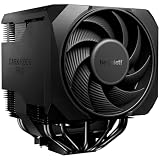
Our Top Picks

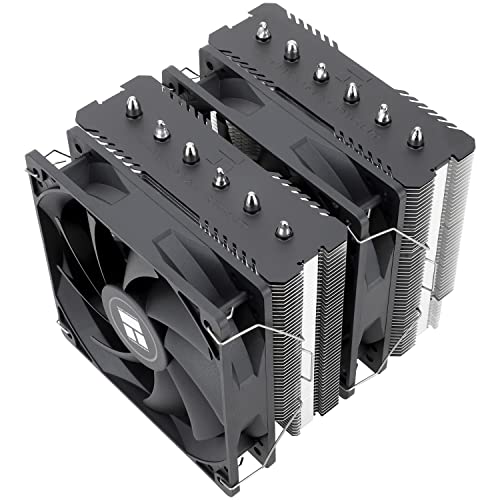
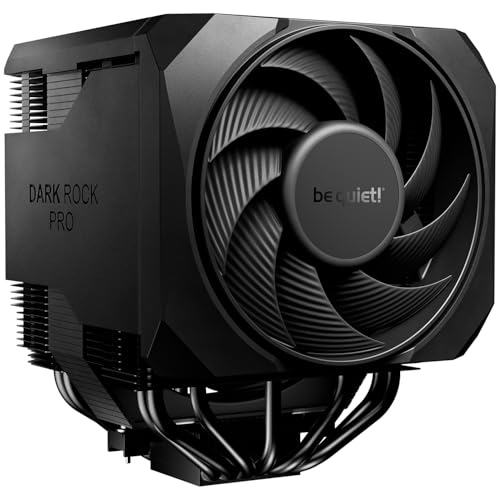
Top 3 picks at a glance
Quick comparison of the best AMD CPU coolers
| Pick | Best for | Key specs | Typical price |
|---|---|---|---|
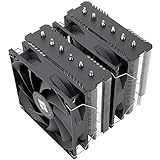
| Thermalright Peerless Assassin 120 SE | Best overall (air) | Dual tower, 2x 120mm fans, 6 heat pipes, roughly 155mm tall | $30–$45 |
| Thermalright Assassin X 120 R SE | Best budget | Single tower, 120mm fan, 4 heat pipes, roughly 148mm tall | $15–$25 |
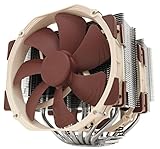
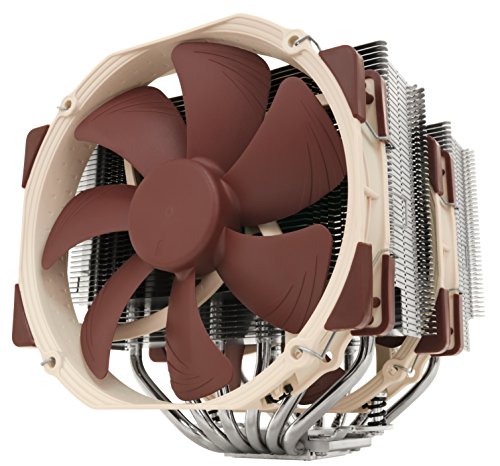
| Noctua NH-D15 G2 | Best premium air, quiet | Dual tower, 2x 140mm fans, roughly 168mm tall, AM5 mounting included | $130–$160 |
| Arctic Liquid Freezer III 360 | Best AIO for Ryzen 9 | 360mm radiator, 3x 120mm fans, VRM fan on the pump block | $90–$130 |
| Noctua NH-L9a-AM5 | Best small-form-factor | Low-profile, roughly 37mm tall, 92mm fan, 65W-class chips | $45–$65 |
Prices are general market ranges and shift with sales and region. Dimensions and specs follow each manufacturer’s published sheets, so check them against your case before buying.
Step 1: Work out how much heat your Ryzen really makes
AMD’s printed TDP does not tell you how much heat the chip produces. On AM4 and AM5, AMD’s own spec says the socket power limit (PPT) is about 1.35 times the TDP. That PPT figure is the maximum the chip will pull under a sustained all-core load, and it is what your cooler has to handle.
| Example CPU | Listed TDP | PPT (TDP x 1.35) | Cooler class that fits |
|---|---|---|---|
| Ryzen 5 9600X / Ryzen 7 9700X | 65W | about 88W | Budget single tower, or low-profile if you cap power |
| Ryzen 7 5800X3D / Ryzen 9 7900 | 65W–105W | about 88W–142W | Quality single tower or entry dual tower |
| Ryzen 7 7800X3D / 9800X3D / Ryzen 9 9900X | 120W | about 162W | Dual tower or 240mm–280mm AIO |
| Ryzen 9 9950X / 9950X3D | 170W | about 230W | Large dual tower or 360mm AIO |
Worked example: a Ryzen 7 9800X3D has a 120W TDP, so 120 x 1.35 = 162W of potential sustained heat. Games usually load it far below that, but rendering, compiling or shader-compilation bursts can approach the limit. Leave about 20% headroom: 162 x 1.2 is roughly 195W. That points to a dual-tower air cooler or a 240mm+ AIO rather than a small single tower. For a Ryzen 9 9950X3D, 230 x 1.2 is roughly 275W, which is where 360mm AIOs and the biggest dual towers make sense.
The 1.2x headroom factor is a rule of thumb, not a manufacturer standard. Cooler “TDP ratings” on boxes are not measured the same way across brands, so treat them as marketing and use the class of cooler as the guide.
Best overall: Thermalright Peerless Assassin 120 SE
This dual-tower cooler is the default recommendation for Ryzen 5 through Ryzen 7 X3D builds. Its six heat pipes and twin 120mm fans give it cooling in the same league as coolers costing several times more. Published reviews commonly show it close to far pricier air coolers on 8-core Ryzen chips.
Who it suits: gamers with a Ryzen 7 9800X3D, 7800X3D, 9700X or 9900X who want strong cooling without paying for an AIO. Trade-off: it is tall, so check your case’s CPU cooler height limit. It is also wide enough that it can crowd the first RAM slot if you use tall heat-spreader memory. Fan noise is acceptable but not as refined as Noctua’s at high load.
Best budget: Thermalright Assassin X 120 R SE
For 65W-class chips such as the Ryzen 5 7600, 9600X or 5600, a single-tower cooler is enough, and this one costs about as much as a sandwich. Four heat pipes and a 120mm fan keep an 88W PPT chip in a comfortable range in a case with decent airflow.
Who it suits: budget builds and anyone replacing a stock Wraith cooler. Trade-off: it runs out of headroom above roughly 140W sustained, so it is a poor match for a 9800X3D under heavy all-core loads. Fan noise rises quickly if you push it.
Best premium air: Noctua NH-D15 G2
The NH-D15 G2 is the choice when noise matters as much as temperatures. Its two 140mm fans and large fin stacks give strong cooling for even 170W-TDP chips, and Noctua includes AM5 mounting hardware in the box. It also uses a pressure-tuned design that handles high-load sessions without the harsh whine of smaller fans.
Who it suits: Ryzen 9 9950X or 9950X3D owners who want to avoid liquid cooling, and quiet-PC builders. Trade-off: price and size. It is roughly 168mm tall and heavy, so it needs a wide case, and it costs 3–4x the price of the Peerless Assassin for a modest performance gain on 8-core chips.
Best AIO: Arctic Liquid Freezer III 360
A 360mm AIO spreads the heat of a 230W-PPT chip across a larger radiator than any air cooler can offer, so it holds up better in sustained renders and compiles. Arctic’s design includes a small fan on the pump block to cool the VRMs and surrounding area, which helps on boards that normally rely on CPU-cooler airflow. The 280mm and 240mm versions suit Ryzen 7 chips if you want a smaller radiator.
Who it suits: Ryzen 9 9950X/9950X3D builds, and anyone who wants a clean look with no tower blocking the RAM. Trade-off: you need a case with a 360mm radiator mount, and an AIO adds a pump that can fail eventually. For pure gaming on an X3D chip, air cooling costs less and gives similar results.
Best compact: Noctua NH-L9a-AM5
This low-profile cooler, roughly 37mm tall, fits mini-ITX cases where full towers cannot. It is designed for 65W-class chips, and Ryzen processors can be capped through the BIOS (Eco Mode or a PPT limit) to keep temperatures in check.
Who it suits: small-form-factor builds with a Ryzen 5 or Ryzen 7 65W part. Trade-off: a small 92mm fan means limited headroom. Do not pair it with a 170W chip unless you cap power heavily.
How to choose: decision matrix
| Your situation | Choose | Why |
|---|---|---|
| Ryzen 5 / 65W chip, standard ATX case | Assassin X 120 R SE | 88W PPT is easily covered by a single tower |
| Ryzen 7 X3D, standard case with 155mm+ clearance | Peerless Assassin 120 SE | Covers 162W PPT plus headroom at the lowest price |
| Ryzen 9, wants quiet and no liquid | NH-D15 G2 | Handles 230W PPT with low noise |
| Ryzen 9, case supports a 360mm radiator | Liquid Freezer III 360 | Best sustained heat dissipation |
| Mini-ITX under 40mm clearance | NH-L9a-AM5 | Only option that fits; cap power |
| Tall RAM heat spreaders | AIO or a coolers with raised fan mounts | Avoids clearance conflicts |
Compatibility checks before you buy
- Socket: AM5 kept the same cooler hole spacing as AM4, so many AM4 coolers fit with their original brackets. Confirm that your cooler lists AM5 explicitly, since some older models need a mounting kit.
- Case height: compare the cooler’s height to your case’s maximum CPU cooler height, and leave a few millimeters of margin.
- RAM clearance: dual-tower coolers can overhang the first memory slot. Check the cooler’s stated memory clearance, or choose low-profile RAM.
- Radiator placement: a 360mm AIO needs a front or top mount that does not collide with RAM or VRM heatsinks.
- Thermal limits: most modern Ryzen CPUs boost until they reach about 95°C by design, while some earlier X3D chips cap at 89°C. A temperature in the 80s under load is normal, so judge the cooler by temperatures and noise together rather than by a number alone.
Frequently Asked Questions
Do I need an AIO for a Ryzen 7 9800X3D?
No. A good dual-tower air cooler is enough for gaming on a 9800X3D, since the chip typically runs well below its 162W PPT in games. An AIO mainly helps for long all-core workloads or if you prefer the look and RAM clearance.
Will my AM4 cooler work on an AM5 motherboard?
Usually yes, because AMD kept the same cooler mounting hole spacing, and many brands supply AM5 brackets. Check the manufacturer’s compatibility list for your exact model, as some older coolers need a mounting kit or a replacement backplate.
Is the stock AMD Wraith cooler good enough?
For 65W chips in light gaming, the Wraith Stealth or Spire can be adequate, though noisy under load. It is not suitable for higher-power parts, and many current Ryzen CPUs ship without a cooler at all, so budget for one.
What matters more, cooler size or fan quality?
Both matter, but fin area, heat pipe count and fan pressure decide how well a cooler handles heat. A larger tower with good fans lets those fans spin slower, which keeps the system quieter at the same temperature.
How often should I replace thermal paste on a Ryzen CPU?
Every few years is typical, or when you notice temperatures rising by 5–10°C compared with when you built the PC. The paste pre-applied on most coolers is fine for the first installation.
Related guides
More from Amazon
Programs that pair well with the guide above. Offers and eligibility are set by Amazon and may change.
A free business account with business pricing and bulk-buying tools for work, shop or home office.
Create a business accountFree shipping on eligible items, Prime Video and more. Eligible new members can start with a free trial.
Start a Prime free trialAudiobooks and podcasts to listen to on the go. Eligible new members can start with a free trial.
Try Audible freeAd-free music streaming. Eligible new subscribers can start with a free trial.
Try Music Unlimited freeAs an Amazon Associate we earn from qualifying purchases.


