The best tower speakers under $1,000 are usually a balanced 2.5-way pair with a sensitivity near 90 dB, an 8-ohm load and a soft-dome tweeter. Klipsch’s RP-5000F II is the pick for loud, dynamic movies and games, and the Q Acoustics 3050i suits mixed music and gaming. For tighter budgets or smaller rooms, look at the Elac Debut Reference and Polk Signature Elite towers. This guide reads “1000” as a budget of about $1,000 per pair, and prices below are general market ranges that change with sales and regional pricing.
As an Amazon Associate we earn from qualifying purchases at no extra cost to you.

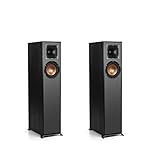


Our Top Picks
Top 3 picks at a glance
Quick comparison of the picks
| Pick | Best for | Key specs (per manufacturer, check current listing) | Typical price per pair |
|---|---|---|---|
| Q Acoustics 3050i | Best overall, music plus gaming | 2.5-way, 8 ohm nominal, roughly 90 dB sensitivity class, about 1 m tall | $900–$1,200 |
| Klipsch RP-5000F II | Best for movies and loud dynamics | Horn-loaded tweeter, 8 ohm, mid-90s dB sensitivity class | $900–$1,300 |
| Elac Debut Reference (DFR52 class) | Best value | 3-way/2.5-way tower, 6 ohm class, high-80s to 90 dB range | $500–$900 |
| Polk Signature Elite slim towers | Best for small rooms and home theater | Slim cabinets, Hi-Res certified tweeters, 8 ohm class | $600–$1,000 |
| Powered or active tower class | Best for PC desks without a receiver | Built-in amps, USB/optical/Bluetooth inputs | $600–$1,000 |
Tower models are revised often, so treat the model names as starting points and confirm the current version, sensitivity and impedance on the manufacturer’s spec sheet before buying.
Best overall: Q Acoustics 3050i (balanced 2.5-way class)
A balanced 2.5-way tower gives the most predictable result at this price. The tweeter is smooth, the bass goes low enough for most games and music without a subwoofer, and the cabinet is rigid. The 3050i is the usual example, and it suits a living room or a large desk setup driven by an AV receiver or a stereo amplifier. The trade-off is that its sensitivity is moderate, so a 50 W-per-channel amp is the sensible minimum. Its cabinet also needs some space behind it to avoid boomy bass.
Best for movies and loud play: Klipsch RP-5000F II
Horn-loaded tweeters play loudly and cleanly from little power, which helps explosions, gunfire and film dialogue stay clear at high volume. Per Klipsch’s spec sheet, the RP-5000F II sits in the mid-90s dB sensitivity range. That means even a modest receiver can drive it to loud peaks (see the power calculation below). The trade-off is a brighter, more forward treble. Some listeners find it fatiguing in a small room or at close desktop distance, and it rewards a bit of toe-in and a softer room.
Best value: Elac Debut Reference class
If you want towers closer to $600 than $1,000, Elac’s Debut Reference line is the usual recommendation. These speakers give good detail and a wide soundstage for the price. The trade-off is that the lower impedance class (around 6 ohm nominal) asks more of an entry-level receiver. Check that your amp is rated for 6-ohm loads, or leave headroom and avoid pushing it hard.
Best for small rooms: Polk Signature Elite slim towers
Slimmer cabinets fit narrow spaces and next to TVs or monitors. Polk’s Signature Elite towers are a common choice for home theater setups that want a front pair with a matching center and surrounds. The trade-off is less bass output from the smaller cabinets, so plan on adding a subwoofer for 5.1 or action-heavy games.
Best for PC desks without a receiver: powered towers
Passive towers need an amplifier, and a receiver or amp plus cables adds $150–$400 to the budget. Powered or active towers include the amps and take a USB, optical or Bluetooth connection directly from a PC. They cost more per unit of sound quality, but the total system is simpler and the amps are matched to the drivers. The trade-off is less upgrade flexibility, since you can’t swap in a better amp later.
How much amplifier power do you actually need?
Sensitivity is the volume a speaker produces at 1 meter from 1 watt (2.83 V), and it determines how much amp you need. Each doubling of power adds 3 dB. Each doubling of distance subtracts 6 dB. The formula is: peak SPL = sensitivity + 10 × log10(watts) − 20 × log10(distance in meters).
Worked example: you sit 2.5 m from the speakers and want 100 dB peaks for movie and game dynamics. Distance loss is 20 × log10(2.5) ≈ 8 dB, so the amp must deliver (100 − sensitivity + 8) dB above 1 W.
| Sensitivity | dB above 1 W needed | Watts per speaker needed | Typical fit |
|---|---|---|---|
| 87 dB | 21 | ≈125 W | Strong stereo amp or mid-range receiver |
| 90 dB | 18 | ≈63 W | Most entry AV receivers (good headroom) |
| 93 dB | 15 | ≈31 W | Almost any decent amp |
| 96 dB | 12 | ≈16 W | Small amps work, even a low-power one |
Two speakers playing the same bass add roughly 3 dB, and room gain adds more, so real needs are lower than this table. A desktop at 1 m with 90 dB speakers and a 95 dB target needs only about 3 W. Use the table for the living room, and don’t buy an amp for peaks you will never play.
Decision matrix: which tower for your situation
| Your situation | Choose | Why |
|---|---|---|
| Living room, entry AV receiver, mixed content | Balanced 2.5-way, 8 ohm, ~90 dB | Easy load, even tonal balance |
| Movies and shooters at high volume | Horn-loaded, 94 dB+ | Low-power amp reaches high peaks |
| Budget around $600, good receiver | Value 3-way tower | More drivers per dollar, check 6-ohm support |
| Narrow room or beside a TV | Slim tower plus sub | Fits the space, sub covers bass |
| Desk, 1 m listening, no receiver | Powered tower or bookshelf plus stand | Near-field needs little power, tower bass often overpowers |
| Small room under about 12 ft wide | Avoid large 3-way towers | Bass boom with walls close |
What to check before buying
- Impedance: 8 ohm is the safest. A 4–6 ohm load can overheat budget receivers at high volume.
- Sensitivity: compare it with the table above. A difference of 3 dB means double the amplifier power.
- Cabinet size: measure the room. Towers with rear-firing ports need 30–50 cm of clearance from the wall.
- Tweeter type: horns are brighter and louder, soft domes are smoother and less fatiguing.
- Matching speakers: if you plan 5.1, buy from a line that has a matching center and surrounds, so the voices stay consistent.
- Connections: a PC needs a DAC or amp. Use USB or optical into a receiver, or HDMI eARC through a TV or receiver.
- Total budget: if the amp costs $300, you may want $700 towers rather than $1,000 ones.
Setup tips that matter as much as the speaker
- Keep the towers 30–60 cm from the front wall. The closer they are, the more the bass swells.
- Form an equilateral triangle with your listening position, with speakers at roughly the same distance apart as they are from you.
- Angle (toe-in) the speakers slightly toward your ears. This reduces the brightness of horn tweeters and sharpens imaging.
- Use the receiver’s setup microphone if it has one, and set the crossover near 80 Hz if a subwoofer is used.
Frequently Asked Questions
Are tower speakers better than bookshelf speakers for gaming?
Towers play lower bass and louder without a subwoofer, which suits large rooms and movies. On a desk, 1 m away, bookshelf speakers on stands or a pair of near-field monitors often sound clearer because towers can over-excite the room’s bass. The best choice depends mainly on room size and listening distance.
Can I connect tower speakers directly to my PC?
No, passive towers need an external amplifier. Connect the PC to a stereo amp or AV receiver through a USB DAC, optical, or HDMI, then wire the speakers to the amp. Powered towers skip this step because the amps are built in.
How much amplifier power do I need for towers around $1,000?
For a typical 90 dB speaker at 2.5 m, about 60 W per channel reaches 100 dB peaks, while 96 dB horn-loaded towers need only about 16 W. At a desk, a few watts is enough. Pick an amp that is stable at your speaker’s impedance, not just one with a big power number.
Do I need a subwoofer with tower speakers?
Often not for stereo music, but yes for demanding movies and games with deep effects. Most towers in this price range reach down to roughly 40–50 Hz, and a subwoofer extends well below that. If you add one, set the crossover around 80 Hz and keep the towers on “large” or full-range only when the receiver supports it.
Is it worth spending the full $1,000 on the speakers?
Only if the amp and room are ready. A $700 pair on a good amp in a treated, well-positioned room often beats a $1,000 pair on an underpowered receiver. Allocate the budget to the whole signal chain, then use any leftover for a subwoofer or room treatment.
Related guides
More from Amazon
Programs that pair well with the guide above. Offers and eligibility are set by Amazon and may change.
A free business account with business pricing and bulk-buying tools for work, shop or home office.
Create a business accountFree shipping on eligible items, Prime Video and more. Eligible new members can start with a free trial.
Start a Prime free trialAudiobooks and podcasts to listen to on the go. Eligible new members can start with a free trial.
Try Audible freeAd-free music streaming. Eligible new subscribers can start with a free trial.
Try Music Unlimited freeAs an Amazon Associate we earn from qualifying purchases.


