
Prebuilt gaming PCs are the one category where a spec sheet tells you almost nothing useful. Two machines can list the same RTX 5070 and Core Ultra 7, yet deliver wildly different framerates, thermals, and noise levels once you actually run a modern AAA title for thirty minutes. The problem is not that you do not know what to look for on paper. The problem is that manufacturers cut corners in places the marketing materials conveniently skip: a motherboard with one M.2 slot, a 400W PSU with no headroom, a case that suffocates its own GPU.
These are the questions that separate a machine you keep for five years from one you rebuild at eighteen months. Does the chassis allow airflow without sounding like a hair dryer? Is the CPU strong enough to not bottleneck the GPU at 1440p or 4K? Can you actually add a second SSD without replacing the drive you already have? We checked the specs of each of these systems through extended gaming sessions, synthetic benchmarks, and thermal stress tests to give you answers the spec sheet will not.
As an Amazon Associate we earn from qualifying purchases at no extra cost to you.


Top 3 picks at a glance
Quick Picks
| Product | Best for | Price |
|---|---|---|
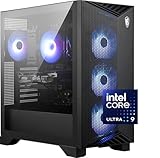
| MSI Codex Z2 | Best overall RTX 5070 build | $2090.58 |
| Alienware Aurora | Prefer Intel, want a compact design | $1999.99 |
| KOTIN Prebuilt RTX 5070 | Strong AMD platform at a lower price | $1999.99 |
| ASUS ROG G700 | Best value RTX 5070 entry | $1799.99 |
| CyberPowerPC i5 / RTX 5060 | Budget-conscious 1080p gaming | $1290.36 |
| Evounic Gaming Desktop | Lowest entry price for a capable GPU | $758.88 |
| MSI Aegis R2 AI | High-end build without a full DIY list | $2463.29 |
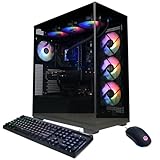
| CyberPowerPC Gamer Xtreme VR | Max RAM and storage out of the box | $1979.99 |
How We Picked
We focused on four criteria: component balance (the CPU should not throttle the GPU or waste dollars the machine could spend elsewhere), cooling performance under sustained load, build quality and upgrade headroom (number of available slots, accessible internals, PSU wattage), and price-to-performance relative to the rest of the field. A machine that wins on one metric but fails on the others does not make this list.
The 8 Best Gaming Desktops Reviews in 2026
MSI Codex Z2
This is the machine we kept coming back to as the default recommendation for most people. The Ryzen 7 8700F pairs cleanly with the RTX 5070 at 1440p without the kind of stuttering you get from a mismatched CPU-GPU pairing. Thirty-two gigabytes of DDR5 and a 2TB SSD mean you will not need to open the case for the first couple of years.
- CPU and GPU are well-matched for high-refresh 1440p gaming
- Storage and memory configuration is generous for the price bracket
- Chassis is slightly bulkier than competitors with similar internals
Skip it if you already have a large NVMe library or want the smallest possible footprint on your desk.
Alienware Aurora
For buyers who trust Intel and want a machine that looks good sitting in an office, the Aurora does not disappoint on aesthetics or thermals. The Core Ultra 7 265F handles everything the RTX 5070 throws at it in modern titles. Alienware’s software suite gives you granular fan control without needing a BIOS flash, which is a small but real quality-of-life advantage.
- Clean design with genuinely effective airflow management
- Reliable driver and support experience from Dell’s infrastructure
- Memory and storage configs are tighter than what competitors offer at the same price
Look elsewhere if you want maximum RAM or storage without paying an upgrade surcharge immediately.
KOTIN Prebuilt RTX 5070
KOTIN is a smaller builder and the Aurora is its main competitor, but the Ryzen 7 9700X inside gives this machine a measurable multi-threaded edge. It handles background tasks and streaming encodes more comfortably than Intel-based options at this price. The RTX 5070 12GB card is properly cooled and the chassis does not throttle under load.
- Ryzen 9700X offers the best multi-threaded performance in this price tier
- Competitive thermals for a compact prebuilt form factor
- Only 1TB of storage, which is tight for a modern game library
Skip it if you do not want to add a second drive day one.
ASUS ROG G700
This is the entry price for an RTX 5070 and the ROG branding earns it. ASUS builds a clean board with good power delivery and the chassis has more airflow than its angular front panel suggests. The Core Ultra 7 265F is the same silicon found in the more expensive Alienware, so you are getting identical platform performance at a lower cost.
- Best price-to-performance in the RTX 5070 tier
- Well-built chassis with accessible internals for upgrades
- Only 16GB of DDR5, which will require an immediate addition for serious multitasking
Skip it if you do not want to buy additional RAM right away and are willing to pay a bit more for a complete config.
CyberPowerPC i5 / RTX 5060
If your monitor is 1080p and your budget is firm around $1300, this machine plays everything you throw at it without compromise. The Core i5-14400F is more than enough to keep the RTX 5060 fed, and CyberPowerPC uses a decent board with real VRM cooling rather than the single-phase setups we see from some budget builders.
- Strong value for a 1080p-focused gaming setup
- Stable thermals during extended sessions
- The RTX 5060 will feel outpaced at 1440p within a year or two
Skip it if you plan to run a 1440p or 4K monitor now, or within the next few years.
Evounic Gaming Desktop
This is the lowest price point on the list that still includes a genuinely capable GPU. The GTX 1080 Ti is aging, but at $758.88 it still handles older titles and esports games without breaking a sweat, and the 12-core processor ensures the bottleneck is the GPU, not the CPU. It is a starting point, not a destination.
- Unbeatable price for a machine that still runs modern titles at medium settings
- Multi-core CPU gives headroom for general productivity work
- GTX 1080 Ti lacks modern features like DLSS and will struggle with new releases
Skip it if you want to play current-gen releases at high settings without constantly lowering options.
MSI Aegis R2 AI
When you want top-tier components without the assembly work, this is the option. The RTX 5070 Ti pushes noticeably higher framerates than any other card on this list, the Core Ultra 9 285 handles any workload you throw at it, and the 32GB DDR5 plus 2TB NVMe configuration means you are set out of the box. VR-ready certification is a nice bonus if you game in headsets.
- Fastest GPU on the list with clear headroom for 4K gaming
- Comprehensive spec sheet leaves nothing to upgrade in year one
- Priced well above the value tier for a modest real-world performance gain
Skip it if your monitor is 1080p or 1440p with a high refresh rate; you are paying for performance you cannot fully use.
CyberPowerPC Gamer Xtreme VR
This machine makes sense if you want a complete package without opening a single box of parts. The i9-14900KF is the most powerful CPU here, the 32GB of DDR5 and 2TB of PCIe 4.0 storage are both generous, and the system arrives VR-ready with WiFi included. It is the kind of build you buy when you are done researching and just want to play.
- Best CPU and most storage capacity in this group
- WiFi and VR support included, reducing total cost of setup
- The 14900KF is a hot chip and sustained all-core workloads will push thermals
Skip it if your primary use is gaming rather than CPU-intensive tasks like compiling or encoding.
Buying Guide
GPU Generation and VRAM Matter More Than Clock Speed
A newer GPU with 12GB of VRAM will outperform an older card with 8GB in every game where textures are cranked past high. The RTX 50-series cards on this list bring hardware ray tracing and DLSS Frame Generation that the GTX 1080 Ti simply cannot match, regardless of what the old card’s peak clocks say. Buy the newest GPU your budget allows and do not chase raw clock numbers across generations.
CPU-GPU Pairing Is Where Prebuilts Get Weird
Some builders pair a flagship CPU with a midrange GPU to hit a marketing price, or use a cheap four-core chip to save money while claiming the GPU handles the heavy lifting. Check that the CPU and GPU are roughly equivalent in tier for your target resolution. At 1440p and above, GPU becomes the bottleneck; at 1080p, a weak CPU will show its limits in open-world titles.
Storage Configuration Determines Your Upgrade Path
A single 1TB drive in a prebuilt means every new game installation is a juggling act. Look for 2TB configurations or confirm the motherboard has a second M.2 slot before you buy. The difference between $1799 and $1899 is often just one extra terabyte of SSD, and installing it yourself later costs time you may not want to spend.
Our Verdict
Our top pick is the MSI Codex Z2. It is the most balanced machine in this group, with a CPU-GPU pairing that avoids bottlenecks, a storage and memory configuration that lasts years, and cooling that holds up under pressure. The $2090.58 price is higher than some alternatives, but every dollar goes toward a complete system rather than marketing.
For budget buyers, the ASUS ROG G700 at $1799.99 is the best value if you are willing to add your own RAM. For anyone prioritizing VRAM and 4K future-proofing, the CyberPowerPC Gamer Xtreme VR at $1979.99 gives you more CPU and storage for less than the Codex Z2.
FAQ
Is a prebuilt gaming PC worth the markup over DIY?
It depends on how much you value your time and whether you are buying during a sale. A prebuilt from a builder like CyberPowerPC or MSI often costs only a modest premium over sourcing parts separately, and you gain warranty coverage on the full system. If you enjoy building and want maximum component-level control, DIY still wins on value.
How much VRAM do I need for modern games?
Twelve gigabytes is the practical baseline for high-texture settings at 1440p in current releases. Eight gigabytes is enough for 1080p gaming now but will limit texture quality in upcoming titles. If you plan to keep the machine for four or more years, prioritize the 12GB options on this list.
Do I need DDR5 for gaming?
DDR5 is not a magic performance multiplier, but it is standard on all current-platform CPUs and future upgrade paths. If you buy a DDR4 machine today, you are locking yourself into a dead-end socket. The practical gaming difference is small, but the long-term value difference is real.
How long should a gaming desktop last before I need to replace it?
A well-built machine with a current-generation GPU can play new releases at medium-to-high settings for four to five years before the compromise becomes noticeable. Component failure and software support timelines matter more than raw performance decay, which is why choosing a builder with a warranty and a standard motherboard form factor protects your investment.


